Freak Out
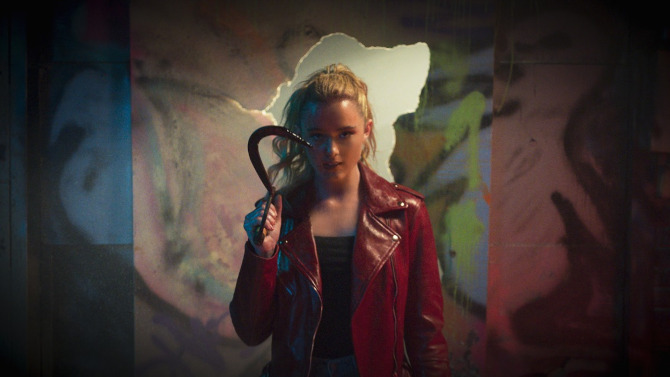
If you’ve ever wanted to see what Freaky Friday mixed with Friday the 13th would look like (outside of a Wheel of Fortune ‘Before & After’ category), then you’re in luck, as 2020's Freaky, which deftly mixes horror and comedy, is for you. Co-written and directed by Christopher Landon, Millie (Kathryn Newton) is a senior in high school. . . a girl struggling with her depressed, alcoholic mother, Paula (Katie Finneran) – who is recently widowed, a group of manipulative female bullies, a prick of a teacher, Mr. Bernardi (Alan Ruck – channeling his inner Mr. Rooney), and going seemingly unnoticed by her crush, Booker Strode (Uriah Shelton). . . plus it doesn’t help that she is known as the school’s beaver – no, this isn’t some sort of hussy-infused sexual slang, she is actually their mascot (the majestic, often Canadian associated buck-toothed rodent). In fact, if it wasn’t for her two besties, Nyla (Celeste O’Connor) and Josh (Misha Osherovich), she’d be completely lost.
Unchartered Terrain
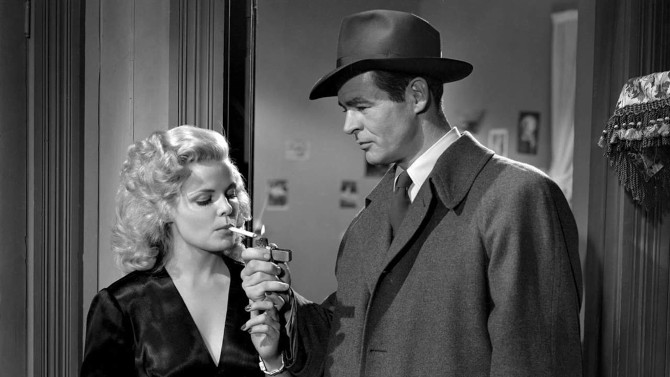
A film noir that flips the script (transforming into something very different in the second act), Nicholas Ray’s On Dangerous Ground (1951), written by A.I. Bezzerides (Kiss Me Deadly), follows the director’s penchant for looking at tortured, lonely individuals (think In a Lonely Place; Rebel Without a Cause), our main figure initially placed against the backdrop of a busy metropolis. Jim Wilson (Robert Ryan) is a hardened police officer on the beat, a man who is as serious as cyanide, as lonely as the night, as cynical as, well. . . a cop. Surrounded by lowlifes, dangerous dames, and violent criminals, sadly, it is the only thing he has seen for years, twisting his spirit into a near inhuman, Guantanamo Bay-like level of hatred (physical abuse is his first step in getting answers) . . . all this has him closing in on a breakdown.
Criminal Minefield
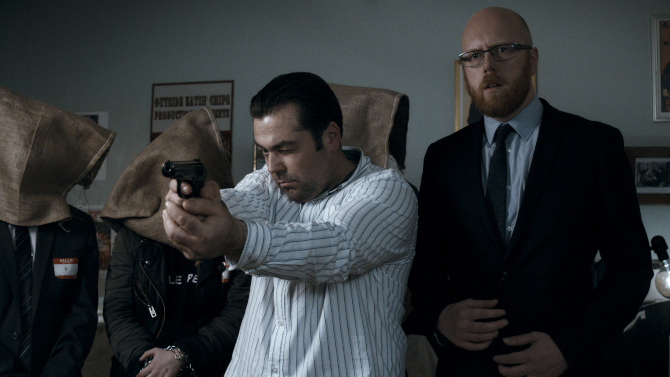
Another intriguing indie coming out of the U.K., 2019's Criminal Audition, co-written and directed by Samuel Gridley, is a highly original, uniquely twisted mystery drama with a subtle undercurrent of dark humour running just below the surface – something the British are so bloody good at. A little like an intricately written stage play, Gridley drops us into a most claustrophobic setting. . . first introducing us to a dilapidated, soon to be flattened old theatre during the hyper-stylized opening credits, this soundproof tomb is the location chosen by twitchy, highly stressed criminal mastermind, William (Rich Keeble). Though he’s the boss pulling the strings, our eyes are those of Ryan (Luke Kaile – the other co-writer of the script), a much younger grunt worker who knows William and his operation all too well.

Missed the Bloody Cut: 2020 (Part 3)
The final Missed the Bloody Cut of this October (and this year), enjoy these three out-there horror movies that didn’t make the grade, but deserve to be recognized for a number of reasons anyway. Happy Halloween everyone!

Catch Latch
When given a specific set of instructions, it is always best to follow them. . . after all, Ikea furniture can look pretty daunting if you’re missing that annoying Allen key and have to improvise. But, as horrific as the above scenario might sound, of course I’m actually talking about horror movies – specifically, a hair-raising four minute short film called Latch (2017), written and directed by Landon Stahmer. It all starts off simple enough – here are the instructions: “Hold out the match and say ‘show me the light or leave me in the darkness’. . . If you hear something, turn away, light the match and wait. DON’T LOOK BACK. . . but if you look, you might see something looking back at you”. A somewhat typical game teens might play late into the night during a sleep over, our girl receiving said instructions is Sofia (Sarah Bartholomew), a prototypical ‘I’m not scared of anything’ kind of teen. . . her brother, Daniel (Brandon Johnston), the one seemingly trying to spook her. But we know better, there is no Narnia in the wardrobe she is entering, but rather, she is playing with some sort of folkloric ritual.
Back in Black Lace
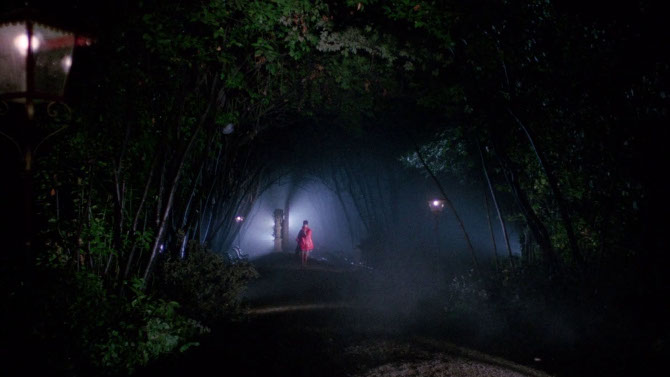
With a retrospective gaze back in time, there is no denying that Mario Bava’s Blood and Black Lace (1964) is one of the key influences on the giallo. Though it had very little success upon its initial release, and it did not cause a boom for this Italian genre immediately. . . instead, these mystery/thrillers were less focused on the intoxicating style found in Bava’s feature, looking more into the psychosexual realm while pulling from films from other countries (the works of Hitchcock, Clouzot’s Diabolique, the krimi or crime movies out of Germany). It was not until Dario Argento caused a giallo explosion with 1970's The Bird with the Crystal Plumage (which was influenced by Blood and Black Lace), that things changed. . . the visual panache of these two pictures giving 1970's Italian film makers something more close to home to serve as inspiration. And boy is this film sumptuous. Usually I wouldn’t start with the opening credits, but they are one of the best you’ll ever see. Creepily beautiful, Bava, along with cinematographer Ubaldo Terzano (the director, though uncredited, also helped with the lighting – after all, he was a director of photography before becoming a director), design a visual menagerie to introduce all of our main actors to us.