 Films That Matter

The Thick of Things
Based upon the 1992 novel of the same name by Alasdair Gray, as well as clearly taking some inspiration from Mary Shelley’s “Frankenstein”, Yorgos Lanthimos’ Poor Things (2023) is not the horror path one might expect from the monster book/movie referenced above, instead, it feeling like a coming of age sci-fi fantastical fairy tale that also dabbles in the realm of psychology, romance, drama, and even comedy. Set in an eccentric world trapped somewhere between Victorian England and some sort of steampunk futuristic alternative, Bella Baxter (Emma Stone – Bugonia; La La Land) is the latest dynamic if out there scientific experiment by the deformed Dr. Godwin Baxter (Willem Dafoe – Nosferatu; The Lighthouse). A grown woman in body, but with the mind of something closer to a baby, it does seem like she is developing at a quicker pace compared to a normal human child.
-

The Thick of Things
Poor ThingsSeptember 14, 2026Based upon the 1992 novel of the same name by Alasdair Gray, as well as clearly taking some inspiration from Mary Shelley’s “Frankenstein”, Yorgos Lanthimos’ Poor Things (2023) is not the horror path one might expect from the monster book/movie referenced above, instead, it feeling like a coming of age sci-fi fantastical fairy tale that also dabbles in the realm of psychology, romance, drama, and even comedy. Set in an eccentric world trapped somewhere between Victorian England and some sort of steampunk futuristic alternative, Bella Baxter (Emma Stone – Bugonia; La La Land) is the latest dynamic if out there scientific experiment by the deformed Dr. Godwin Baxter (Willem Dafoe – Nosferatu; The Lighthouse). A grown woman in body, but with the mind of something closer to a baby, it does seem like she is developing at a quicker pace compared to a normal human child.
-
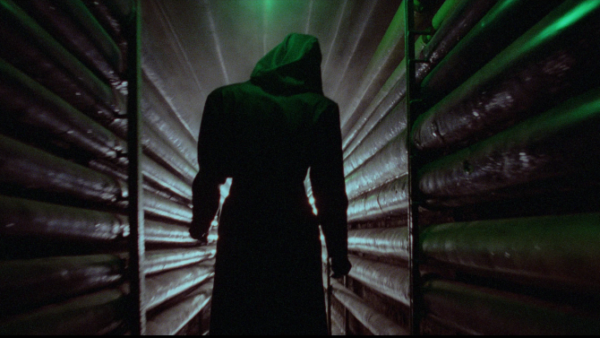
What Could Have Been: Obsession: A Taste for Fear
July 16, 2026With an idea of fusing a semi-futuristic, sexy gialli murder mystery plot into the world of the ever growing MTV music video era that kicked off in 1981, producer Jacques Goyard hired music video director Piccio Raffanini to co-write and direct these loose ideas into what became Obsession: A Taste for Fear (1987). Basically looking like an hour and thirty-two minute music video infused with a hint of a mystery thriller plot, the cinematography and camera work actually frequently looks great, but Raffanini’s talent at what he does best cannot properly translate into a cinematic language.
-
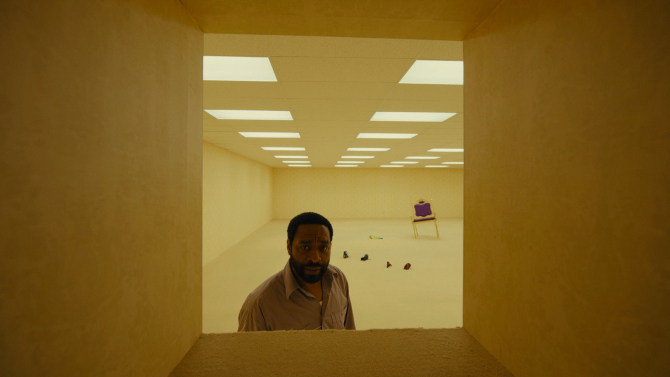
Square Footage
BackroomsJune 8, 2026While viewing today’s movie, a quote revolving around The Doors and their band name popped into my head, “There are things you know about and things you don't, the known and the unknown, and in between are the doors – that's us”. With links to Aldous Huxley’s The Doors of Perceptions, and before that the even more apropos William Blake’s 18th century poem The Marriage of Heaven and Hell, one line from it reads, “If the doors of perception were cleansed, everything would appear to man as it is: infinite.” It only seems fitting that this rather abstract lineage which discusses both reality and exploring expanded consciousness somehow links to the sci-fi psychological horror film Backrooms (2026), co-written and directed by 20 year old Kane Parsons.
-
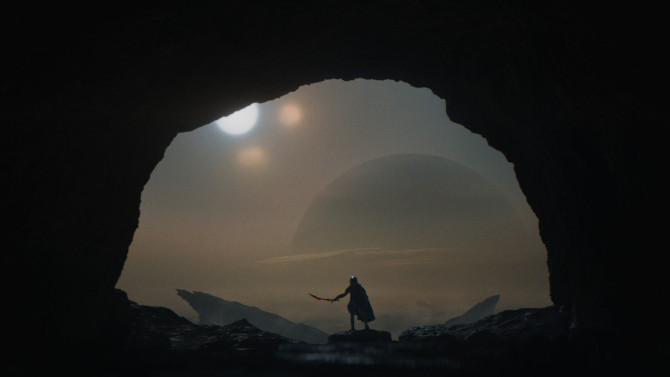
Wolf Pack
Predator: BadlandsMay 19, 2026After the success of 2022's eighteenth century set Prey, director Dan Trachtenberg has returned to the Predator franchise once more, this feature titled Predator: Badlands (2025), again coming up with a wholly different concept that transports the story in an engaging new direction. Taking place about as far away as possible from his previous effort (a concept developed by Trachtenberg and Patrick Aison, the latter then writing the screenplay), this one opens on Yautja Prime, the home planet of the Predators (who are formally known as Yautja), where the audience meets Dek (Dimitrius Schuster-Koloamatangi) – the weakling runt of the family who hasn’t earned his camouflaging cloak... which, if you known Predator culture, is not a good thing.
-
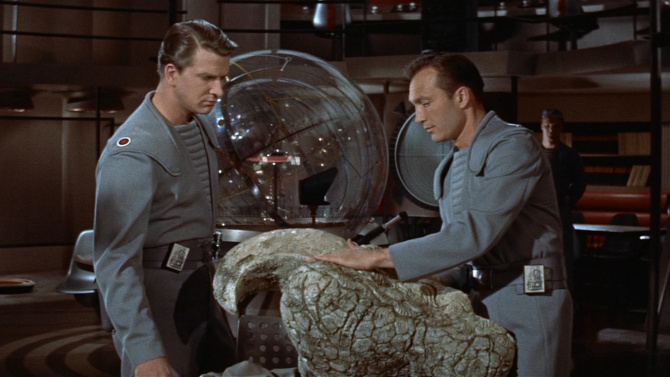
Tempest FugID
Forbidden PlanetApril 21, 2026hough today’s feature is immediately sited as a science fiction classic, Fred M. Wilcox’s Forbidden Planet (1956) is perhaps just as well remembered for its majestic original robot and pinup infused movie poster design (that is still, to this day, a costly collectible)... though the art is quite misleading when you know what the movie is actually about. Following a narrative loosely inspired by William Shakespeare’s “The Tempest”, which, for those who do not know, is about a man forced to live stranded upon a magical island with his daughter, until he causes a shipwreck that brings with it possible rescue (and a man who may fall in love with his daughter)... this futuristic feature follows a somewhat similar sci-fi blueprint.
-
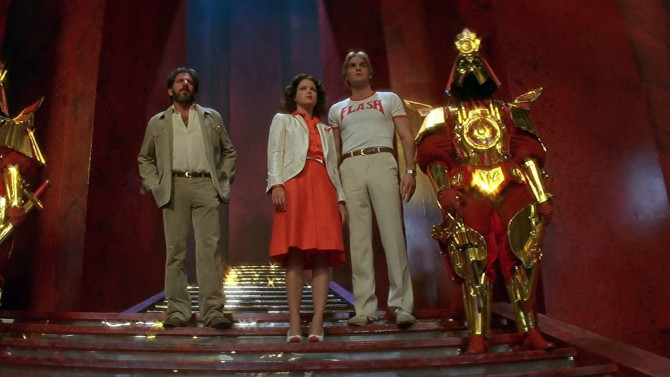
Flash – Saviour of the Universe
Flash GordonMarch 23, 2026An over the top, campy kitsch cult classic that plays like a wildly fun rock opera, Flash Gordon (1980), directed by Mike Hodges, and based on the Alex Raymond comic strip first published in 1934, is perhaps most intriguing for attracting the rock band Queen to compose and perform the theme song and score with the help of orchestral scorer Howard Blake (though much of his work was cut in favour of Brian May). Produced by the famed Dino De Laurentiis, this would be his third and final creation of a former comic strip, with the first two being Barbarella and Danger: Diabolik, both released in 1968