 Films That Matter
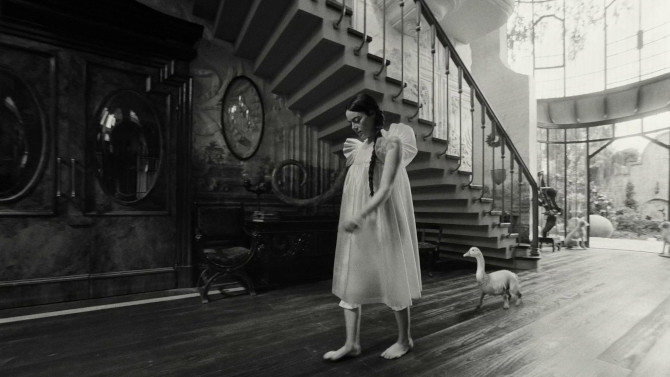
The Thick of Things
Based upon the 1992 novel of the same name by Alasdair Gray, as well as clearly taking some inspiration from Mary Shelley’s “Frankenstein”, Yorgos Lanthimos’ Poor Things (2023) is not the horror path one might expect from the monster book/movie referenced above, instead, it feeling like a coming of age sci-fi fantastical fairy tale that also dabbles in the realm of psychology, romance, drama, and even comedy. Set in an eccentric world trapped somewhere between Victorian England and some sort of steampunk futuristic alternative, Bella Baxter (Emma Stone – Bugonia; La La Land) is the latest dynamic if out there scientific experiment by the deformed Dr. Godwin Baxter (Willem Dafoe – Nosferatu; The Lighthouse). A grown woman in body, but with the mind of something closer to a baby, it does seem like she is developing at a quicker pace compared to a normal human child.
-
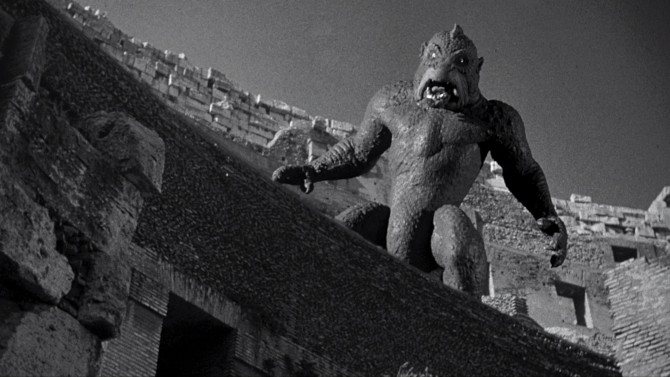
Ymir Fear in Roma
20 Million Miles to EarthOctober 23, 2025Despite not being written or directed by the famed special effects expert Ray Harryhausen, that latter honour going to Nathan Juran instead, there is no denying that the magic man’s hands are all over this horror infused sci-fi monster bash. Spawning the unique concept originally titled as The Giant Ymir, while also suggesting it be set in Rome, Italy instead of the United States (why you may ask... he simply always wanted to vacation there), whilst also being in charge of the stop-motion animation that makes this feature succeed, the final product eventually became known as 20 Million Miles to Earth (1957). A strong warning of the fears of moving too quickly into ‘futuristic’ ways, which is clearly a callback to ample anxiety revolving around the atomic bomb... which, with it, could bring possible nuclear annihilation, here we have the result of space exploration of the planet Venus.
-
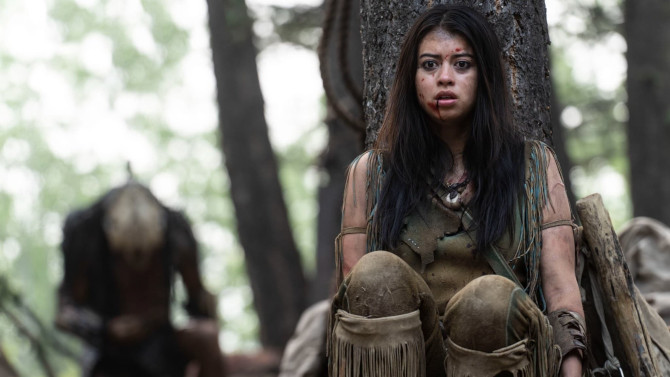
Fall Prey To
PreyOctober 9, 2024A clever reworking of the Predator franchise, 2022's Prey, a prequel co-written and directed by Dan Trachtenberg (10 Cloverfield Lane), is set some 250 years prior to what we thought was the alien species first arrival opposite human beings on Earth. Set in the vast Great Plains in 1719, the story follows Naru (Amber Midthunder), a young Comanche woman who has been trained as a healer, though not so secretly yearns to be a hunter. Overshadowed by her successful bow and arrow wielding brother Taabe (Dakota Beavers), she uses whatever free time she has to continue training at the useful skill. It is worth noting that the familial relationship is nicely crafted, not simply one of brutish sibling rivalry (like we’ve seen in other motion pictures), instead holding within it a nuanced combination of direct competition, hunting mentorship, and much needed cooperation.
-

Eternity Box
Creep BoxJanuary 22, 2024An Indie sci-fi film on the precipice of where we might be heading, Creep Box, written and directed by Patrick Biesemans (and based upon his own short from 2022), ruminates on a hybrid artificial intelligence that is both intriguing and terrifying. Following Caul (Geoffrey Cantor), a PHD in psychology and parapsychology at HDTH Corp, he is currently working on a sleek black tech box... a device that can be used to collect the memories of the dead, which are then fused with an A.I. that can utilize the past of the deceased to not only communicate with loved ones, but also gather information that could lead to solving crimes of those who have been murdered.
-

Watch The Skies
The Thing from Another WorldOctober 29, 2023Before there was John Carpenter’s The Thing (1982), there was The Thing from Another World (1951). If you know John Carpenter, it is not overly surprising that he would remake this film, for when I interviewed him back in 2017, he could not stop speaking of his love for film maker Howard Hawks (citing him as a major influence on his career, he was enamoured with his genre jumping films – be it western, drama or horror)... and Hawks’ fingerprints are all over the 1951 version. It is also worth noting that Carpenter, just five years before making The Thing, had Hawks’ original make a screen appearance in his legendary Halloween. Still debated as to whether it was Hawks who directed the film or the co-credited Christian Nyby, not even the cast has been able to agree. Some called Nyby the director but Hawks the boss, while other recollections remembered Hawks doing most of the work. Without ever having a true answer, it seems most likely that Nyby directed under the tutelage of Hawks, with the elder statesman taking charge from time to time (hence why the film has such a feeling of the veteran film maker’s work). There is no denying that he co-wrote and co-produced the film.
-

New Otherworldly Planetary Extraterrestrials
NopeAugust 24, 2022This is a tricky one to judge. Jordan Peele’s third writing/directorial effort, Nope (2022), is a highly creative and original concept that delves into the science fiction alien field... but is missing something to make it a truly effective effort. With its critics likely pointing to its title as an apt description, the word in fact references character reactions to some sort of alien craft seen in the sky. Though it still might have people pondering whether it means something else – perhaps, ‘Not of Planet Earth’, ‘Newly Ordained People Eaters’, or ‘Never Offer Predators Equines’. Set on a vast horse ranch in rural California, the Haywood family have been providing horses for Hollywood productions since day one (a cool reference back to the original moving picture – a galloping horse ridden by an African American jockey created by Eadweard Muybridge).
-
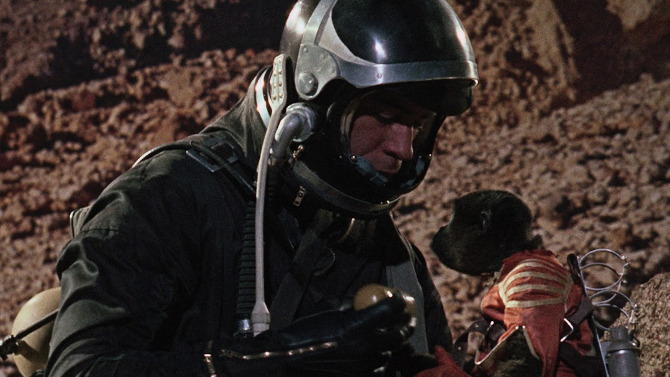
Monkeying Around on Mars
Robinson Crusoe on MarsMay 31, 2022An intriguing reworking of Daniel Defoe’s classic 1719 novel “Robinson Crusoe”, director Byron Haskin, who in 1953 brought aliens from Mars to Earth with the epic The War of the Worlds, this time flips the script and takes us to the red planet with the sci-fi cult classic Robinson Crusoe on Mars (1964). Though falling comfortably within the sci-fi genre, Paramount’s promotional team clearly reveled in the movie’s attempted accuracy – the trailer and advertising posters reading: “This film is scientifically authentic. It is only one step ahead of present reality”. And, in many ways, it was impressively accurate for what was known at that moment. Released at the perfect time in history, 1964 was just one year prior to the first spacecraft fly by of Mars... before that, all that we knew was by way of observation through telescope.