 Films That Matter

The Thick of Things
Based upon the 1992 novel of the same name by Alasdair Gray, as well as clearly taking some inspiration from Mary Shelley’s “Frankenstein”, Yorgos Lanthimos’ Poor Things (2023) is not the horror path one might expect from the monster book/movie referenced above, instead, it feeling like a coming of age sci-fi fantastical fairy tale that also dabbles in the realm of psychology, romance, drama, and even comedy. Set in an eccentric world trapped somewhere between Victorian England and some sort of steampunk futuristic alternative, Bella Baxter (Emma Stone – Bugonia; La La Land) is the latest dynamic if out there scientific experiment by the deformed Dr. Godwin Baxter (Willem Dafoe – Nosferatu; The Lighthouse). A grown woman in body, but with the mind of something closer to a baby, it does seem like she is developing at a quicker pace compared to a normal human child.
-
Spinning a Sequel
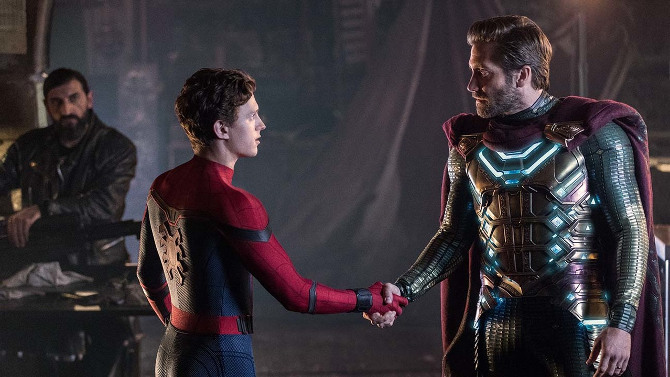
Spider-Man: Far from HomeJuly 12, 2019Walking a tightly strung web all the way from Queens, New York to historic Europe, Spider-Man: Far From Home has a few stumbles, but miraculously stays balanced on its epic journey. A sequel to 2017's Spider-Man: Homecoming, this 2019 adventure, which is also helmed by director Jon Watts, takes place almost immediately following the events of Avengers: Endgame (fear not, still no spoilers – though there are in this film), with Peter Parker’s Spider-Man (Tom Holland) struggling with his newfound fame (after all, he is still just a high school student). Dealing with questions like, ‘Is he an Avenger?’, or ‘What part does he play following the outcome of Endgame?’, he is like a spider in the headlights. . . looking for some much needed time off.
-
Control Freak
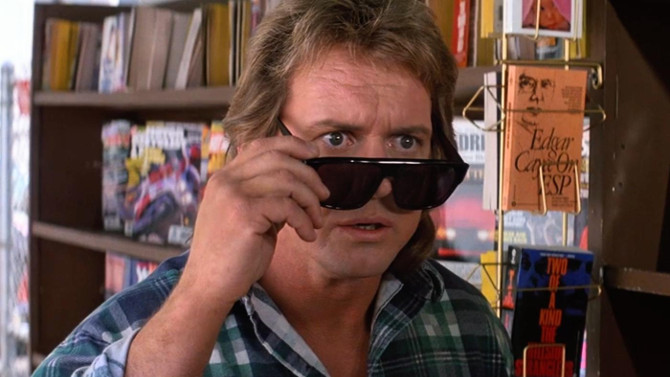
They LiveJune 30, 2019Let’s face it, some movies don’t age too well, but if they’ve got the three main ingredients – solid writing, visuals, and acting, usually they can stand the test of time. One film that is still as timely today as it was back in 1988 is John Carpenter’s horror tinged sci-fi action film They Live. Welcome to Reagan era America, all trickle down economics, high unemployment rates and rising poverty. Set in ‘any city’ USA, Nada (Roddy Piper) is an out of work drifter looking for a semblance of the American dream. . . a job would be a start. Finally finding some employ on a construction site, fellow hard worker Frank (Keith David) takes him to a sort of shantytown, where the long travelling man can find a warm meal and a night’s rest.
-

Queen of the Galaxy
BarbarellaMay 22, 2018Like an episode of Star Trek on Viagra, 1968's Barbarella is an exploitative romp in space, a journey that will take you far past the gaseous crevices of Uranus and into another sci-fi tinged dimension. Written by a pair of era icons (and seven other collaborators), two time Oscar nominee Terry Southern and Roger Vadim (also the director), you will likely never see another movie have an opening credits sequence like this one – a 401st century astronaut, Barbarella (Jane Fonda – Vadim’s wife at the time), slowly removes her spacesuit whilst floating in a gravity-less craft. . . a most sultry, slow-motion striptease (the effect was achieved by having Fonda lie on a large piece of plexiglass with an image of the spaceship underneath her. . . filmed from above, it flawlessly reenacts the semblance of zero gravity).
-

Back Space
It Came from Outer SpaceFebruary 4, 2018To provide a reference point, 1953's It Came From Outer Space comes off like a mix between an episode of The Twilight Zone and Star Trek, a science fiction horror tale with a message at its heart. A prime example of the way in which horror movies transformed in the Atomic Age (the fear of nuclear annihilation on the collective consciousness throughout North America and around the world), yet with a unique twist, director Jack Arnold brings Ray Bradbury’s story (adapted into a screenplay by Harry Essex) to vivid life. After the title explodes onto the screen, we meet amateur astronomer John Putnam (Richard Carlson – Hold That Ghost; Creature From the Black Lagoon) and his teacher girlfriend, Ellen Fields (Barbara Rush – she won Most Promising Newcomer - Female, for this film at The Golden Globes), who spot a giant meteor that hits the desert close to his home.
-

The Legend Grows
Star Wars: The Last JediDecember 15, 2017After a much lauded rebirth of the Star Wars franchise with 2015's The Force Awakens (directed by J.J. Abrams), it is understandable why the 2017 sequel, Star Wars: The Last Jedi, this time written and directed by Rian Johnson (Looper), is one of the most anticipated films of the year. To keep your mind at ease, I will attempt to keep this one mostly spoiler free. Picking up almost immediately after the 2015 offering ended (the first time a Star Wars film has done this), the remaining Resistance fighters are being mercilessly tracked soon after a First Order fleet has attacked their planetary base. Led by the unifying Princess Leia Organa (Carrie Fisher), she must try to navigate them away from General Hux (Domhnall Gleeson). By her side is the fast talking, wild-card hero fighter pilot Poe Dameron (Oscar Isaac), who is no less spontaneous. Finn (John Boyega), having recovered from his injuries, has his own secret mission with Rose Tico (Kelly Marie Tran) – a new addition to the franchise.
-

THORoughly Enjoyable
Thor: RagnarokNovember 8, 2017The third feature in the Thor franchise, 2017's Ragnarok, directed by New Zealander Taika Waititi (the talented filmmaker behind the comedic horror mockumentary What We Do in the Shadows), is like a well buttered (as in oiled) popcorn flick (of a machine). . . an entertaining, humorous, action-packed sci-fi extravaganza that does not take itself too seriously, all while showing an impressive amount of ingenuity and creativity for a multi-film Marvel saga. With three movies in this particular series (as well as several other mash-ups within the ever growing Marvel Universe), these actors, who we have known for some time, have grown into their respective parts, feeling fully meshed with their onscreen personas. Through the writing of Eric Pearson, Craig Kyle, and Christopher Yost, as well as by way of the flowing direction of Waititi, the comedy is so smooth in Ragnarok that it feels as if we are watching a well-seasoned vaudeville act hitting every mark as they try to explain exactly ‘who’s on first?’ It is a very different tone that works, meshing with recent excursions in The Guardians of the Galaxy franchise and Spider-Man: Homecoming.