 Films That Matter

The Thick of Things
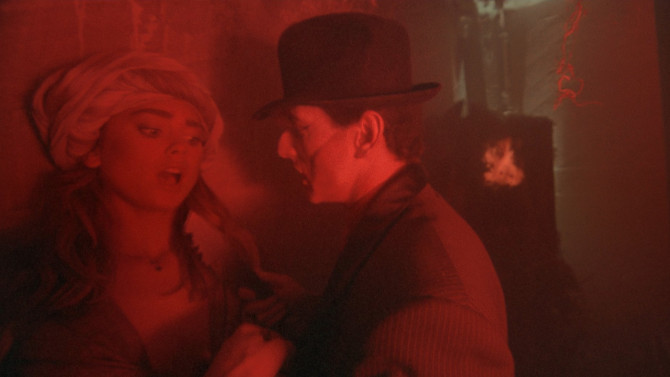
Based upon the 1992 novel of the same name by Alasdair Gray, as well as clearly taking some inspiration from Mary Shelley’s “Frankenstein”, Yorgos Lanthimos’ Poor Things (2023) is not the horror path one might expect from the monster book/movie referenced above, instead, it feeling like a coming of age sci-fi fantastical fairy tale that also dabbles in the realm of psychology, romance, drama, and even comedy. Set in an eccentric world trapped somewhere between Victorian England and some sort of steampunk futuristic alternative, Bella Baxter (Emma Stone – Bugonia; La La Land) is the latest dynamic if out there scientific experiment by the deformed Dr. Godwin Baxter (Willem Dafoe – Nosferatu; The Lighthouse). A grown woman in body, but with the mind of something closer to a baby, it does seem like she is developing at a quicker pace compared to a normal human child.
-

Sand Lot
DuneJanuary 27, 2022There is a real sense that the four classical elements – fire, water, earth, and air – play a subtle but pivotal role in Denis Villeneuve’s 2021 remake of Frank Herbert’s iconic science fiction novel Dune. Entrenched within the universal visuals, waves gently lap upon the tranquil shore, scorched earth suggests the utter inhospitality of a new planetary home, wind brings the seemingly endless sand dunes to moving life, fire violently lights up the pitch black night’s sky, and, despite the endless clash of good versus evil, a certain mystical harmony arises through Villeneuve and his team’s stunning use of cinematography, camera placement/movement, editing, and the like.
-
Missed the Bloody Cut: 2021 (Part 3)
October 22, 2021Part 3 of my Missed the Bloody Cut horror selections, here are some more horror movies that did not meet my strict criteria (a rating of 7.0 or higher). . . but are still entertaining films (horror fanatics may enjoy) that do not deserve to be left behind like an alien who needs to phone home – and that they are definitely worth a watch (just maybe not several re-watches).
-
The Awkward Squad
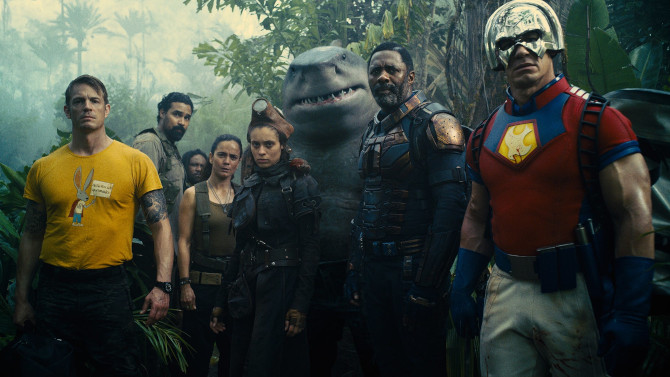
The Suicide SquadSeptember 6, 2021What do you get when you hand The Suicide Squad reins over (with carte blanche, I might add) to James Gunn.? .? .? an R rated, Guardians of the Galaxy-like extravaganza that dusts curse-laden comedy over the somber DC verse, throwing pails of blood (and even a few blink and you’ll miss it pieces of male and female anatomy) at the screen to wash away its predecessor’s flat formula. Going ‘out-there’, and that’s saying something for this type of feature, Gunn’s gonzo, go-for-broke style finds intelligence spook Amanda Waller (Viola Davis) sending two teams, or should I say squads, of suiciders onto the island of Corto Maltese – a country that has just seen a coup take out their leader, replaced by a non-American ally. Wave one finds Colonel Rick Flag (Joel Kinnaman); daddy’s lil monster Harley Quinn (Margot Robbie); Captain Boomerang (Jai Courtney); long haired Savant (Michael Rooker); piecemeal T.D.K. (Nathan Fillion); Blackguard (Pete Davidson); a javelin carrying guy who is aptly named Javelin (Flula Borg); and, without further ado, a human-flesh loving walking Weasel (Sean Gunn – he also makes a cameo as prisoner Calendar Man).
-
Glass Half Full or Empty?
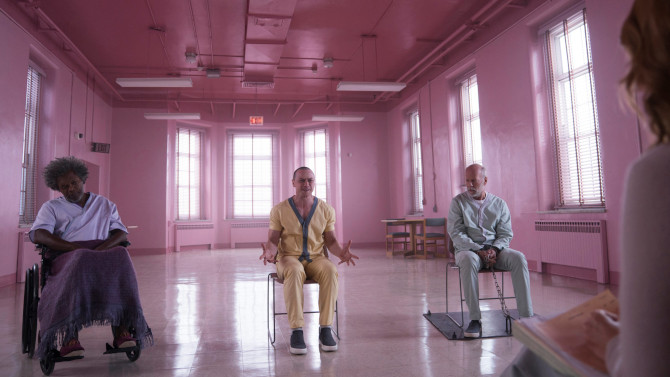
GlassApril 28, 2021Let’s face it, M. Night Shyamalan’s Glass (2019) was always going to find itself in a precarious position. Following arguably his second most lauded film, 2000's Unbreakable, and the unexpected hit sequel to it, 2016's Split, the movie could be considered as fragile as the title itself. For the most part panned by critics, yet more respected by its audience, over the past two or so years, it has become one of those love it or hate it type of features. And perhaps rightfully so, for it highlights both the best and worst of what Shyamalan has offered us over his decades long career – well planned out and most scrumptious visuals, his patented cameos, showing off the sights in and around his hometown of Philadelphia, talky dialogue, as well as those controversial third acts (including those hit or miss twists).
-
Through Adversity to the Stars
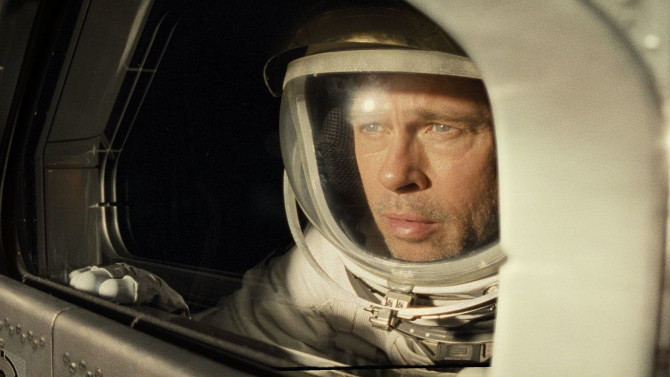
Ad AstraApril 6, 2021Upon viewing Ad Astra some two years after its initial release, it is not completely surprising that it was a failure at the box office. A film rooted in cinema of the sixties and seventies (you should notice connections to 2001: A Space Odyssey and Apocalypse Now), co-writer and director James Gray (Lost City of Z) takes his time building a familial drama set around space travel. Not the adrenaline rush that was Gravity, nor containing the outward scope of Interstellar, Gray’s story (which he co-wrote with Ethan Gross) looks inward at a man struggling with the bond he has with his father. This man is Roy McBride (Brad Pitt), a successful Major who has always lived in the shadow of his legendary father, H. Clifford McBride (Tommy Lee Jones – perfect casting) – the man to lead the Lima Project to the outer reaches of our solar system (specifically Neptune) to do research on possible extraterrestrial life.
-
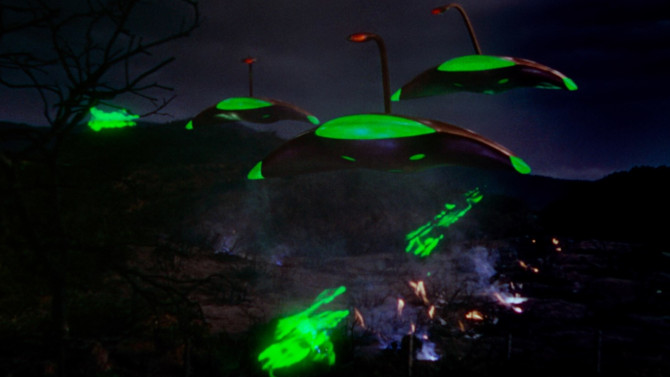
W.O.W.!!!
The War of the WorldsJanuary 24, 2021Talk about a buildup. . . starting with the First World War, then came the Second World War, it all leading to. . . The War of the Worlds!!! A gargantuan and ballsy way to introduce your film, these black and white reels from the first half of the twentieth century give way to garish colours of the Atomic Age in Byron Haskin’s modernized 1953 take on the iconic H.G. Wells novel. Controlled by ambitious producer George Pal (who both produced and directed The Time Machine), he obtained the material after it sat on legendary director Cecil B. DeMille’s desk for some three decades (it was always a dream project for him). Bringing in a talented team of creative individuals, it was longtime special effects man turned director Byron Haskin who was his choice.