 Films That Matter

The Thick of Things
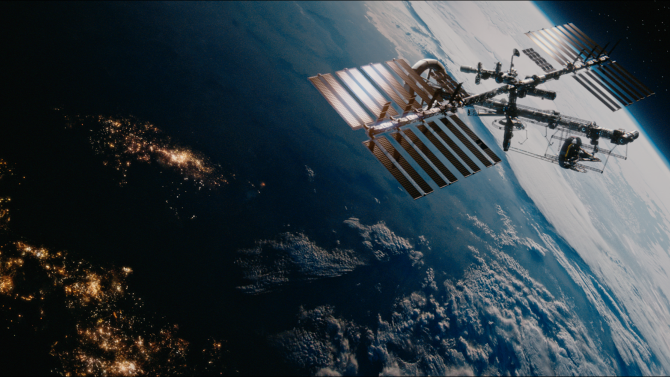
Based upon the 1992 novel of the same name by Alasdair Gray, as well as clearly taking some inspiration from Mary Shelley’s “Frankenstein”, Yorgos Lanthimos’ Poor Things (2023) is not the horror path one might expect from the monster book/movie referenced above, instead, it feeling like a coming of age sci-fi fantastical fairy tale that also dabbles in the realm of psychology, romance, drama, and even comedy. Set in an eccentric world trapped somewhere between Victorian England and some sort of steampunk futuristic alternative, Bella Baxter (Emma Stone – Bugonia; La La Land) is the latest dynamic if out there scientific experiment by the deformed Dr. Godwin Baxter (Willem Dafoe – Nosferatu; The Lighthouse). A grown woman in body, but with the mind of something closer to a baby, it does seem like she is developing at a quicker pace compared to a normal human child.
-
Flashback Slashback
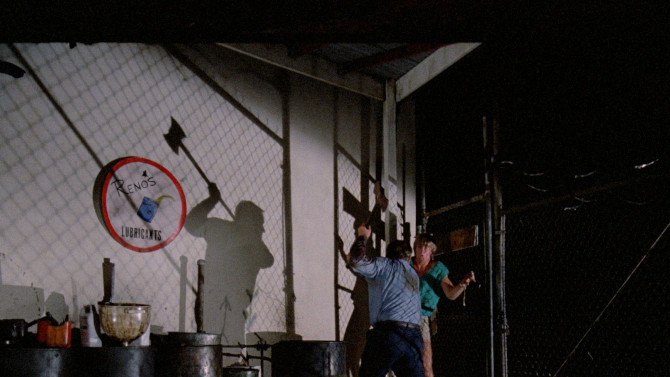
Evils of the NightOctober 13, 2020A bizarre, below B grade indie horror/sci-fi/teen sex comedy hybrid, 1985's Evils of the Night, co-written and directed by Mardi Rustam, attempts to bring in the most popular genre films of the decade – think a combination of Friday the 13th, The Thing, and Revenge of the Nerds (minus the nerds), making for a surprisingly entertaining, if poor film (that all revolves around a battle of the ages – notice I used the word ‘of’ instead of ‘for’). An overly excessive, gloriously pushed to the brink example of the 80s indie horror scene, you’ll see more legs and breasts than in a family size bucket of KFC chicken, more hair than a twenty-four pack of Busch beer, and, as it is mostly set in a picturesque forest, you’ll see more hardwood than softwood – if you catch my drift. Of course, I’m talking about the raucous teen party going on here, including some fetching young men and women – engaged couple Ron (Keith Fisher) and Heather (Bridget Holloman), as well as poor Brian (David Hawk), who endlessly struggles to win over ditzy blonde Connie (G.T. Taylor) and the slightly less ditzy Nancy (Karrie Emerson). Now, before you feel too sorry for the girls in regards to the nudity, for these young actresses, fear not – ringers, and by that, I mean pornstars (i.e. Amber Lynn, Crystal Breeze), were brought in for the edgier stuff.
-

Turning Back Time
TenetAugust 30, 2020A title with so many connotations – of course, it speaks to the fascinating time tinkering found in Christopher Nolan’s new film Tenet, but it also refers to a pre-Covid time. . . a place where people nonchalantly made the trek to movie theatres where packed crowds would communally enjoy the newest blockbusters. Whether Tenet will be able to turn back time and safely fill cinemas during this new normal is yet to be seen. A mesmeric and visually stunning spectacle that finds Nolan playing within his favourite themes, Tenet is clearly self-indulgent, yet not to its own detriment. Following up works like Memento, The Prestige, Inception, Interstellar, and, to a lesser degree, Dunkirk, Tenet, for lack of a better description, is a sort of password. . . an entry by fire into a small group of people who are attempting to prevent World War III. It is a CIA agent simply known as The Protagonist (John David Washington – BlacKkKlansman), who is introduced into this precarious, mind-bending new world.
-

Live on the Edge
Edge of TomorrowMay 3, 2020What was once 2014's Edge of Tomorrow has somehow become known as Live Die Repeat. I’m still not exactly sure how this has happened (my guess is that it would be partly due to the fact it didn’t do very well upon its U.S. release), as you would think a title is a title. . . yet, with a simple catchy tagline (that, in essence, is a definition of the film’s narrative), it has overshadowed the original title – meaning that, by the time posters, DVD and Blu-Rays were released, the slogan featured more predominantly than the original title. . . it is rare hearing anyone even refer to it by Edge of Tomorrow anymore. A clever alien reworking of D-Day fused with a Groundhog Day premise, it brings two of Tom Cruise’s favourite people together to craft a perfect vehicle for the action superstar. Chistopher McQuarrie (who has worked with the actor seven times. . . and has three more projects in the works with him), who co-writes along with brothers Jez and John-Henry Butterworth (adapting the piece from Hiroshi Sakurazaka’s manga “All You Need Is Kill”), and director Doug Liman (who has made two recent movies with Cruise. . . and has another in the works), bring this sci-fi world to vivid life.
-

I Left My Heart in San Francisco
Time After TimeFebruary 23, 2020I know you’ve all been desperately waiting for it – my in depth retrospective on the career of Cyndi Lauper. . . alas, you will have to continue to wait. So then, you must all be wondering what exactly the above quote has to do with today’s film. The above song, Time After Time, was inspired by a movie of the same name. . . Lauper writing the hit tune soon after seeing the title in TV Guide. Adapted and directed by Nicholas Meyer (a screenwriter best known for directing two Star Trek films – yet this was his first directorial effort), and inspired by Steve Hayes and Karl Alexander’s story (the latter had a yet unfinished novel of the same name at the time), this highly original premise finds the great H.G. Wells (Malcolm McDowell – a far cry from his previous film, Caligula) living his life in the late nineteenth century while Jack the Ripper stalks his prey in the streets of London (the opening scene, featuring a lengthy single take, sets the mood – the entire film done tastefully with limited violence shown).
-
What Could Have Been: The Ice Pirates
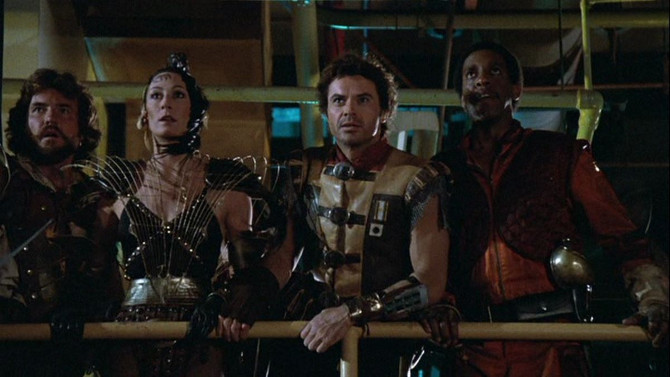
February 19, 2020The year is 1977. . . and several movies are being hyped – none of which is Star Wars. Smokey and the Bandit, Close Encounters of the Third Kind, The Spy Who Loved Me. . . the list goes on and on, yet the George Lucas feature was not expected to go anywhere. Lucas had shown it to many of his friends (before it was even close to finished), Brian De Palma bluntly saying, “I don’t mean to sound harsh, but …what is this shit?". As the rest of his buddies concurred, the lone voice of support came from the one and only Steven Spielberg – seeing the potential and future for his friend’s creative vision. With a studio equally as unenthused – they released it on Wednesday, May 25th, in just over thirty theatres. . . Lucas decided to lick his wounds on the beaches in Hawaii. Yet, as you know, the unexpected occurred, and a little film called Star Wars became a worldwide juggernaut.
-
Sci-Fi to the Core
 The AdeptFTLSeptember 10, 2019
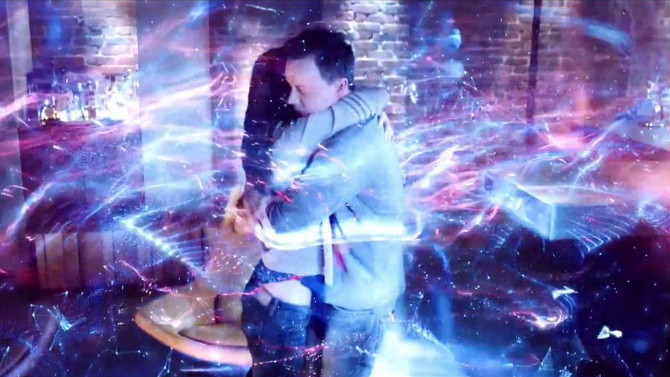
A double feature that will only run you twenty-four minutes, writer/director Adam Stern (a visual effects guru, whose production house Artifex Studios has worked on everything from Mission to Mars and The Core, to television series, including Continuum and Wayward Pines) has developed two intriguing short sci-fi films that deal, in different ways, with discovering the unknown (and how very dangerous that can be). Feeling a little bit like entering the Twilight Zone, 2015's The Adept follows scientist couple Ben (Adam Greyson Reid) and Maddy (Jennifer Spence) as they ruminate on their most recent theoretical physics project. Before going to do the dishes, Ben wants to show Maddy his newest card trick. . . not overly interested, she continues to discuss their work. As they spitfire ideas off of each other, the multitasking Ben mysteriously makes the cards disappear – where to? – not even he is sure.