
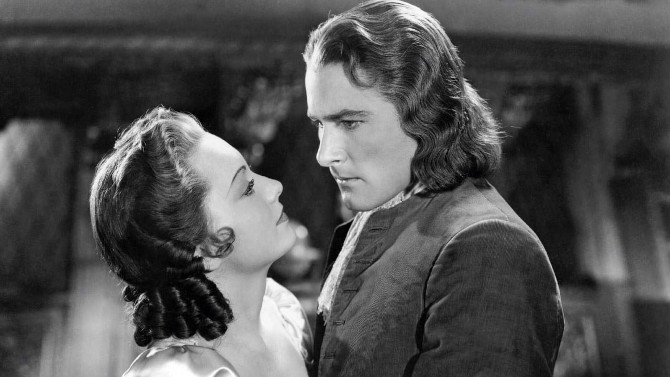


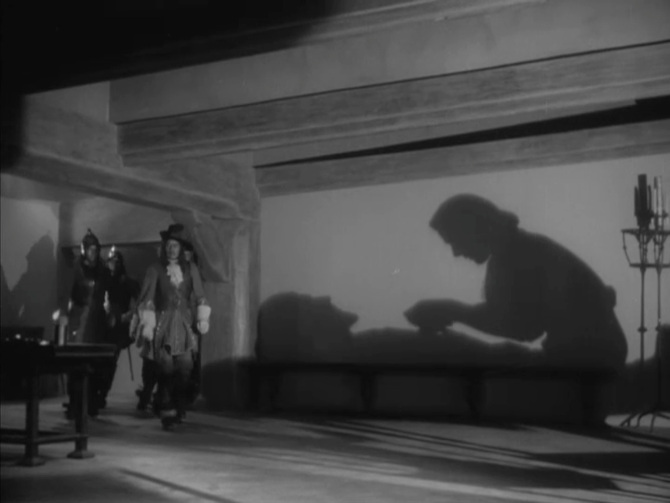
Dr. Peter Blood: [Treating Gov. Steed’s gout] “I’m going to have you well by midnight if I have to bleed you to death.”
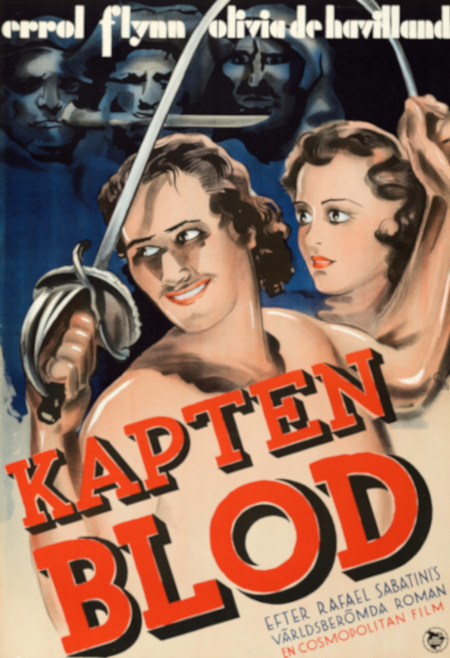
The amazing original Swedish one sheet movie poster for Captain Blood
A very important film from 1935 that is probably not as well known today as it should be, the swashbuckling action adventure Captain Blood, directed by Michael Curtiz (The Sea Wolf, The Breaking Point), featured numerous important happenings that would leave rippling effects on the industry for many years to come.
Though Curtiz had immigrated to the United States years before, having some success in the silent era with Noah’s Ark (1928) and with the early sound pictures Doctor X (1932) and Mystery of the Wax Museum (1933), it was this bigger budget extravaganza that would help him become a top tier film maker, someone who would go on to make an inordinate number of future classics, including The Adventures of Robin Hood, Angels with Dirty Faces. Yankee Doodle Dandy, Mildred Pierce, and perhaps most importantly, Casablanca. . . among others.
When it came to casting, it was then no names Errol Flynn – as the titular Captain Blood, and Olivia de Havilland as the leading lady – Arabella Bishop, who ended up getting the leads. . . a big risk at the time to make a million dollar production with no star power involved. After just a few unimportant roles, this was Flynn’s first big break (he was so nervous, they ended up re-shooting the first two weeks of filming as it was extremely noticeable), while de Havilland was only appearing in her fourth motion picture. No one could have known that their chemistry would become gold, making them one of the most popular pairings of all-time – they would make seven more movies together over the next six years. In hindsight, thankfully star Robert Donat dropped out due to health concerns and the originally slated Jean Muir lost the spot after de Havilland’s screen test with Flynn. . . for cinema history was made.
The picture also helped bring back the swashbuckling epic, its story (based upon a 1922 novel of the same name by Rafael Sabatini), set in 1685, follows a retired soldier/sailor and now an excellent Irish doctor, Peter Blood, who, after some bad luck while doing his job, followed by a bit of a wittily uncivil tongue (especially when under the unpopular reign of King James II), is sentenced to death. . . before the verdict is changed to being sold into slavery in the West Indies.
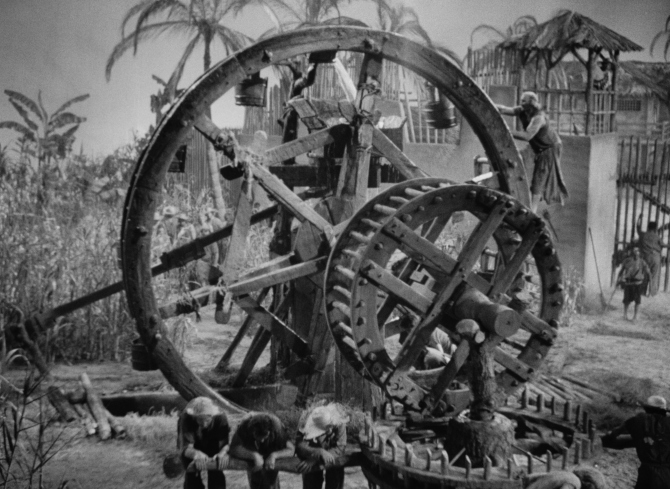
After numerous hardships in the hands of Colonel Bishop (Lionel Atwill – The Ghost of Frankenstein; Pardon My Sarong), who just so happens to take control of Blood after his rather insolent niece Arabella (de Havilland) purchases him – might it also be a bit of love at first sight, the now indentured sly talker makes friends and becomes a sort of leader to his fellow slaves, including former navigator Jeremy Pitt (Ross Alexander) and former Master Gunner Henry Hagthorpe (Guy Kibbee).
Despite recovering some decency by being made the doctor for Governor Steed (George Hassell) and his gout, Blood has still come up with the bold goal of leading his fellow entrapped men to freedom by way of a ship. Through some unlikely happenings, they become the most feared crew sailing the seven seas, apart from the equally as frightful French pirate Levasseur (Basil Rathbone – Sin Takes a Holiday; Son of Frankenstein. . . and known as the finest fencer in Hollywood at the time). Will Captain Blood be able to use his superior brain and passion to lead his men to be pirates with a conscience? Might he rue the day he left his kind ‘owner’ in Arabella? Could he be friend or foe with fellow pirate Captain Levasseur? And, what will the wrathful Colonel Bishop’s reaction be to losing his many slaves?
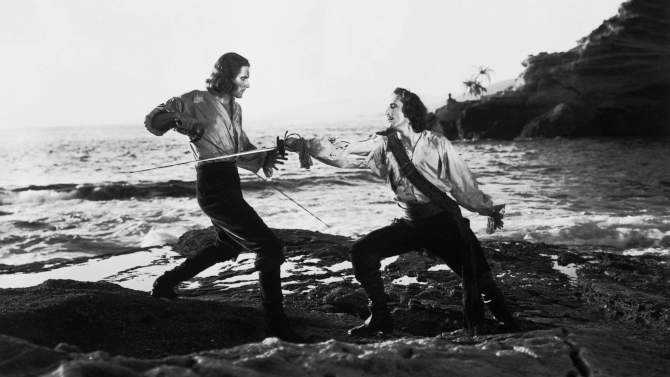
Crafted with great care, not only does Curtiz capture the glint in Flynn’s eye, or the will they/won’t they romance of the very different could be couple, but, being European, he brings a certain German expressionism to the feature – with mesmeric black and white cinematography, and stunning shadow and light with the help of cinematographers Ernest Haller and Hal Mohr. With the studio building full sized ships within one of their stages, they also matched that with impressive eighteen foot miniatures to depict all the action. It is also worth noting that an intense sword duel was shot at Three Arch Beach in Laguna Beach – an almost unheard of on location shoot for this era. With everything already quite polished for the time, check out further swashbucklers from this director – The Adventures of Robin Hood and The Sea Hawk, to see how Curtiz further redefined the sub-genre.
An impressive feat for any era (though it might have a bit too much history, if decently accurate, for some), Captain Blood was not only nominated for five Academy Awards, but also helped leave an even longer lasting impact – its score by Erich Wolfgang Korngold is considered one of the first fully symphonic original scores, helping to define the sound of the action adventure genre – capturing heroic, romantic, action, and other leitmotifs that influenced numerous composers for years to come (and impressively, he finished the whole composition in only three weeks). So, all hands on deck for this swashbuckling action adventure, it’s well worth sparing its life.