
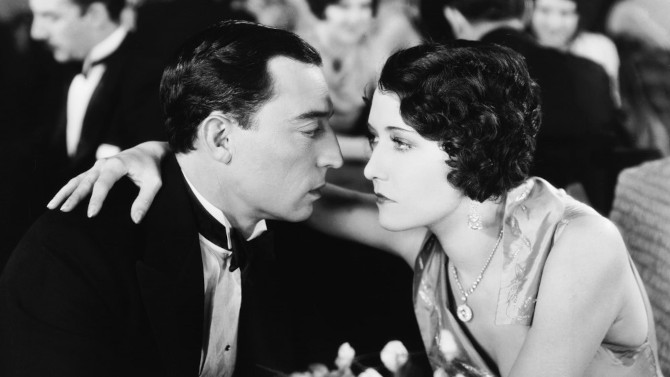


In 1928, after falling under some financial pressure, Buster Keaton moved away from his own independent productions and merged things with MGM. . . a most profitable decision, yet a choice that he later called the, “ worst mistake of his career”. Going from the creative genius behind his own projects to a cog in the studio system with limited creative control over his projects, it went well enough on their first feature, The Cameraman (reviewed here on Filmizon), but with their next effort, Spite Marriage (1929), sadly that freedom was mostly gone.
Directed by Edward Sedgwick, with a star like Keaton there is still some magic here, though that feeling of spontaneity, charm, and warmth feels confined within the structured, more efficient MGM production. Following Elmer Edgemont (Keaton – The General; Steamboat Bill Jr.), he is seen every night at the same theater, looking wealthy in his Sunday best. In reality, simply working for a dry cleaning business, each evening, he dons someone else’s tuxedo and uses the little money he has to purchase a front row ticket – all with the desire of gazing upon actress Trilby Drew (Dorothy Sebastian). . . and though she takes note of him, it is not with any true verve.
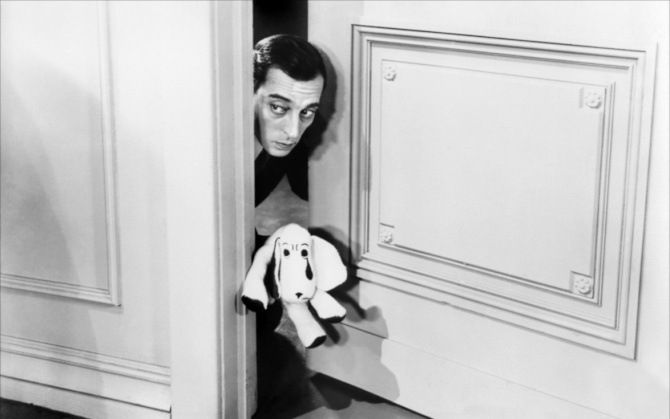
Trilby is thoroughly smitten with Lionel Benmore (Edward Earle), though unluckily for her, he has fallen for blonde socialite Ethyl Norcrosse (Leila Hyams – Freaks; Island of Lost Souls). After learning that they are engaged to be married, out of spite, she turns to the only person around who has shown any interest in her – the seemingly wealthy man always watching her from the front row, one Edward Sedgwick.
After their marriage, Trilby’s manager learns that the man that she has married is a nobody, thereby quietly orchestrating their divorce before the scandal hits the papers. Funnily enough, after the divorce, Elmer keeps finding himself in the same places as his depressed ex. Will these chance meetings lead to further trouble for the ordinary man? Could the rather haughty Lionel find his way back into the picture? Or, might Elmer finally show himself in a better light whilst in front of the promising actress?
The final silent movie of Buster Keaton’s career (outside of the Canadian silent short The Railrodder from 1965 – which was produced to showcase the nation’s beauty as well as promote travel), The Great Stoneface actually wanted this to be a ‘talkie’, but MGM rejected that idea (though a score and some sounds for effect were used). When combined with their demands on a much lower budget, a strict script that needed to be followed, and using their own team, it was really no longer a Buster Keaton project, unlike The Cameraman.
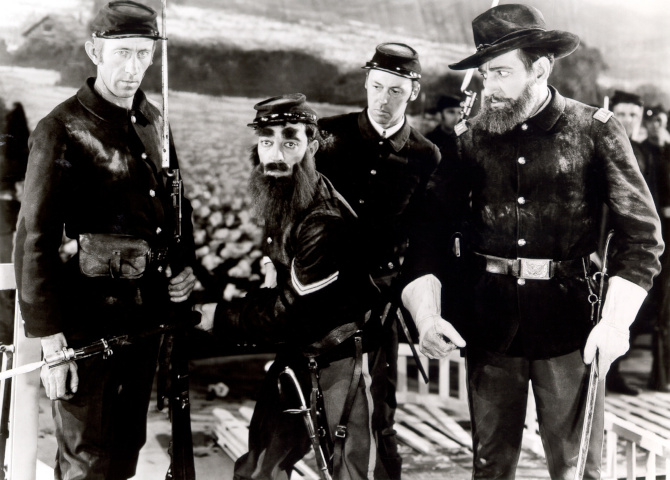
Despite this, Buster Keaton still had some magic left in his acting. Standout moments still popped out, like his escape from the cast and crew as he severely screws up their play – not only providing some of his classic comedic movement, but also giving an entertaining look behind the scenes of a theatre (a bit reminiscent of Steamboat Bill Jr.), or an interaction with his drunken wife after a rough night out on the town. This moment might have been a bit too on the nose, as actress Dorothy Sebastian was known as ‘Slam’ or ‘Slambastian’, as she couldn’t hold her alcohol and often passed out. It’s also worth noting a few dangerously impressive stunts he does on a ship later in the picture.
Never matching his earlier movies, Spite Marriage still has enough moments that captured his pre-studio days. A fun touch actually finds all of the key names used in the film being pulled from the iconic Barrymore family – ‘Lionel’, ‘Ethel’, and Georgina ‘Drew’. So, don’t hold much spite towards this movie, instead find some true value within this late Buster Keaton romantic comedy.