
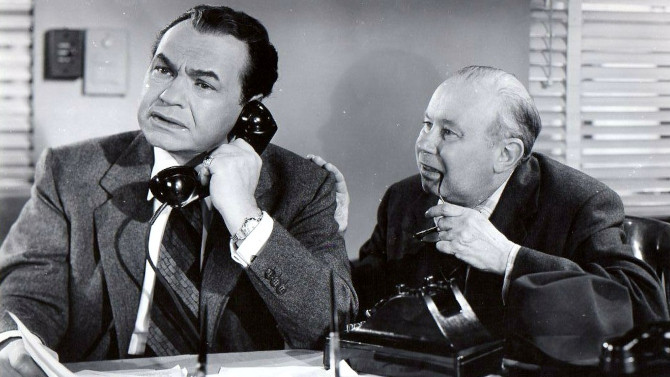


Taking place over a most pressing twenty-four hour time period, director Arnold Laven’s film noir crime thriller Vice Squad (1953) – sometimes known as The Girl in Room 17 and based on Leslie T. White’s 1937 novel “Harness Bull”, places the viewer inside the police captain’s office as he tries to solve numerous complex problems occurring in Los Angeles.
After a cop gets fatally shot in the back while a car is being stolen in the middle of the night, Capt. ‘Barnie ‘ Barnaby (Edward G. Robinson – Double Indemnity; Illegal) starts the day off with even further complications when he gets a tip from a desperate rat with a long rap sheet, Frankie Pierce (Jay Adler – The Killing; Illegal), suggesting a bank robbery could be happening any time. . . meanwhile, there may also be a possible bluebeard named Count Alfredo Giovanni de Montova (John Verros) who is putting the moves on a well respected older lady in the community.
With a measly funeral director being the only witness to the murder, Jack Hartrampf (Porter Hall – Double Indemnity; Sullivan’s Travels) is twitchily happy to feign not seeing anything – as he wasn’t even supposed to be in town that day (what was he up to?). Immediately evident to Barnaby, he decides to make his day a long and miserable one, despite being up against his top attorney, Dwight Foreman (Barry Kelley – The Asphalt Jungle).
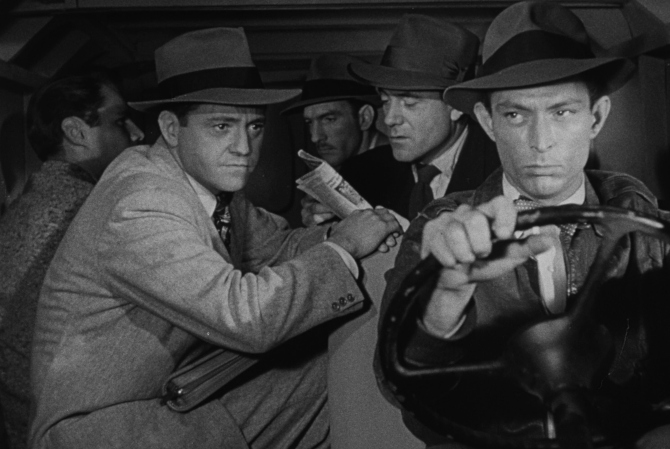
As the little weasel delays things, this leaves gang leader Al Barkis (Edward Binns – 12Angry Men), his right hand man driver Pete Monty (Lee Van Cleef – For a Few Dollars More; Guns Girls and Gangsters), young hotshot ladies man Marty Kusalich (Adam Williams), and the rest of them to continue their conniving. . . could they have something to do with that possible bank robbery?
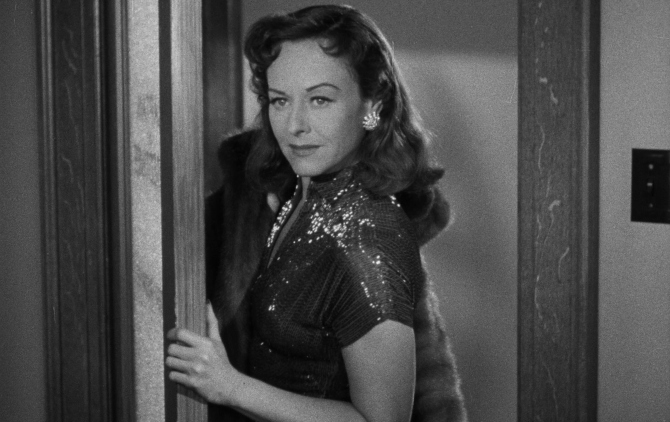
Lacking any true leads, Barnaby calls in a favour with escort agency madam Mona Ross (Paulette Goddard – Modern Times; The Ghost Breakers), a well connected dame with allies on both sides of the fence. Happy to work with the Capt. – that is, as long as the kickback is lucrative enough, might she be able to aid the investigation, or can she even be trusted?
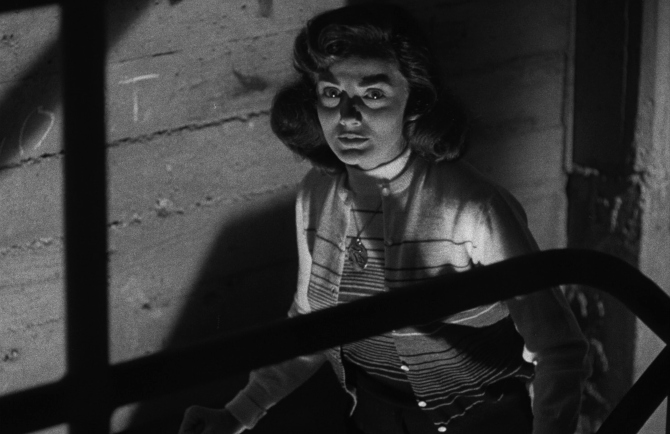
Layered with absolutely striking chiaroscuro from cinematographer Joseph F. Biroc (It’s a Wonderful Life), nearly every shot is etched with moody shadow or bright light, as well as the classic barring theme, capturing the clear desperation, rampant corruption, gun-strewn violence and sleazy temptation found throughout the big city with a most visual cinematic point.
Quite a solid B film noir that combines its classic cynical themes with the growing desire for almost documentary-like police crime dramas that started to emerge in the late 1940s and into the 50s, Vice Squad gets a strong performance from wily, strong willed Edward G. Robinson, a small but fun role for twitchy-eyed Van Cleef, a sassily quasi-classy Goddard, and numerous other character actors to add some of that much needed ‘character’ found within that term. It is also worth noting a final little tidbit – the enticing score composed by Hershel Burke Gilbert was reused frequently in different ways when he was hired several years later to compose the music for the classic television western The Rifleman (1958-1963) – starring Chuck Connors. So, don’t implicate this one for hiding in the dark shadows, it deserves to be discovered just like those possible bank robbers.