
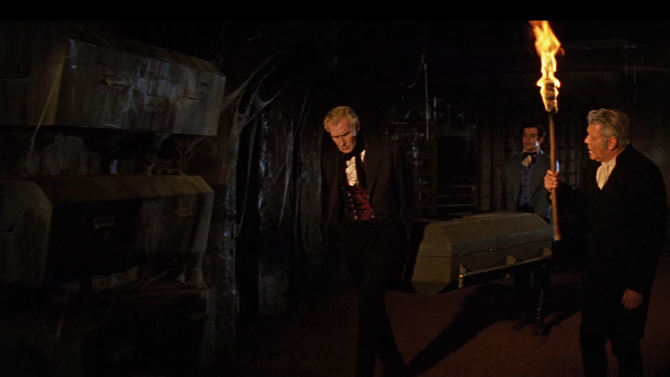


Roderick Usher: “This house. The pall of evil which fills it is no illusion. For hundreds of years, foul thoughts and foul deeds have been committed within its walls. The house itself is evil now.”
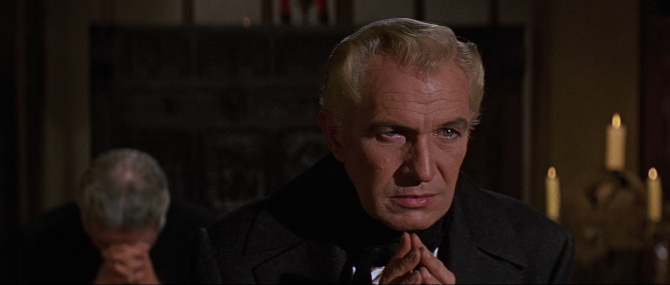
The first of Edgar Allan Poe’s famed horror stories to come to life at American International Pictures with Roger Corman at the helm and Vincent Price in the starring role, House of Usher (1960), was a huge success. . . spawning numerous gothic Poe adaptations that would bring the team back together in the near future.
With Price taking on the role of the titular Roderick Usher, the man is an utter emotional mess, belying his impeccably manicured appearance. Severely sensitive to noise, light, and taste, he demands hushed voices, minimal natural or candle light at all times, and bland gruel as the meal of choice. With pale skin and jarringly platinum hair, the family estate, much like the family itself, is in rough shape. . . almost as if it is sinking into the quagmire it sits upon (though ‘settling’ is the term they like to use), much like Roderick, who seems to be fading away.
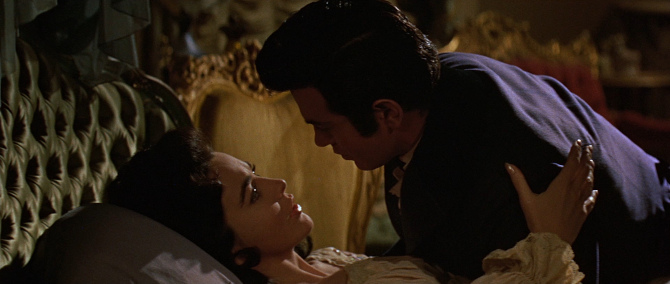
Outside of Roderick, the crumbling estate also houses the man’s sensitive sister, Madeline (Myrna Fahey), as well as the family’s hobbling caretaker Bristol (Harry Ellerbe). Much to Roderick’s chagrin, Philip Winthrop (Mark Damon), shows up from Boston and demands to see the patriarch’s sister. . . as they have been engaged to be married.
Starting with an opening shot of Philip riding through an eerie countryside, it was just good timing that there was a forest fire in Los Angeles at the time. . . with Corman and Damon heading out the next day to shoot the scenes to add great dramatic flair to the introduction. Matched by the amazing set work of the Usher home – its historic maze like design, vividly gothic colours, and its body-strewn crypt resting in the basement making for an ominously eerie atmosphere.
Despite Philip forcing his way in for an extended stay, Roderick seems unwilling to let Madeline leave with him to get married. . . citing their heinous historic bloodline and the cursed house as two particular reasons. And it does seem like there may be some truth to the latter perspective, for as soon as Philip enters the sinister abode, the house seems to be trying to kill him (with a falling chandelier being just one example).
As the two forceful perspectives butt heads, things don’t get any more straightforward. With Roderick demanding that she stay in the house until she dies, while Philip fiercely tells her to pack up and leave her domineering brother behind, who will win this battle of wills? Is there some truth in the story of the haunted house, or is it all in the seemingly warped mind of Roderick?
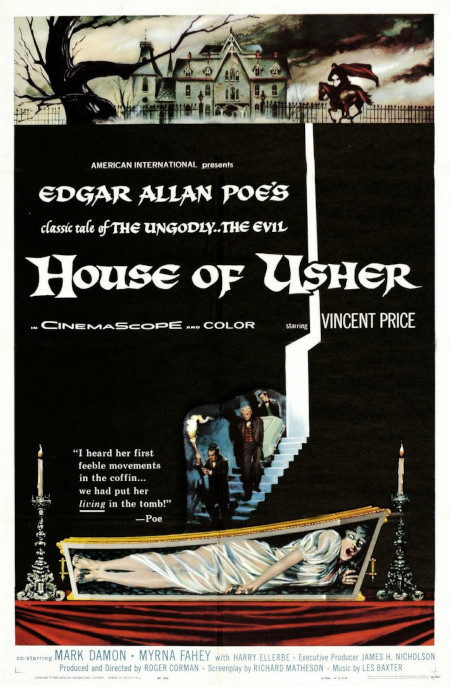
A gothic tinged melodramatic horror picture from the king of B movies – which he filmed in just fifteen days, Corman made House of Usher for AIP’s highest budget to date: $270,000 – which would still be considered a very minuscule budget at the time. Filled with foggy dry ice, unnerving abstract paintings of the unhinged Usher ancestors (done by Burt Shonberg), haunting dream sequences, and so much more, this was a turning point for the director. . . who would go on to make seven more Poe features over the next four years. There is also no denying that the movie poster designed by famed artist Reynold Brown very much helped, for it is still unbelievably popular all these years later. So, don’t bury this horror classic, it’s most definitely still alive!