
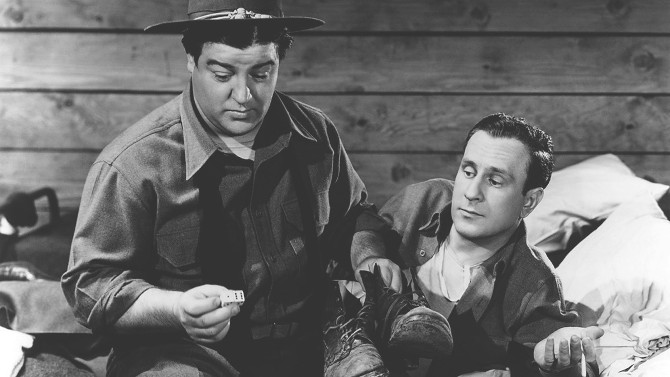


Herbie Brown: “You got a lollypop?”
Judy Gray: “Mm-hmm. You like lollipops?”
Herbie Brown: “I’m a sucker for them.”
Celebrating its 85th anniversary this year, Arthur Lubin’s Buck Privates started Bud Abbott and Lou Costello on their path to superstardom. Though they had already gained some fame on the vaudeville and burlesque comedy circuits, as well as gathering some traction on the radio (and lest we forget their small roles in their first film, One Night in the Tropics, the year before), things would be wholly different soon after.
Combining their very different talents as the perfect straight and funny men (their longtime writer and ideas man John Grant came along for the ride – and would be involved on most of their future movies), it also didn’t hurt that cinema goers found plenty of comedic fun in its topical premise as tensions grew around the fears of the lengthening World War II – making Universal the most money it had ever earned up until that point (four million dollars – a lot of cash when tickets were between ten cents and a quarter depending on the location).
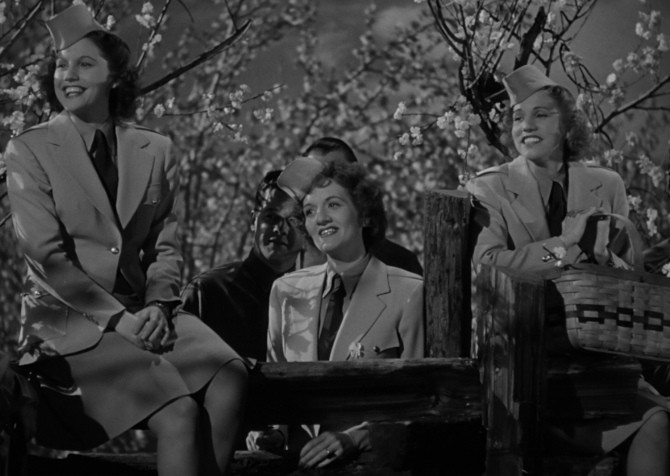
Bringing with them arguably the biggest musical act during the lengthy conflict – The Andrews Sisters (though the record sales from that era were not stellar, some experts have said that they were the biggest selling group of all-time before The Beatles arrived on the scene), this buddy comedy has enough singing moments in it that would ostensibly make it a musical of sorts.
Following fly by night peddlers Slicker Smith (Abbott) and Herbie Brown (Costello), after trying to avoid the cops, they find themselves unknowingly signing up for enlistment with the army. Unfortunately, the cop they were trying to avoid, Michael Collins (Nat Pendleton), will be their Sergeant.
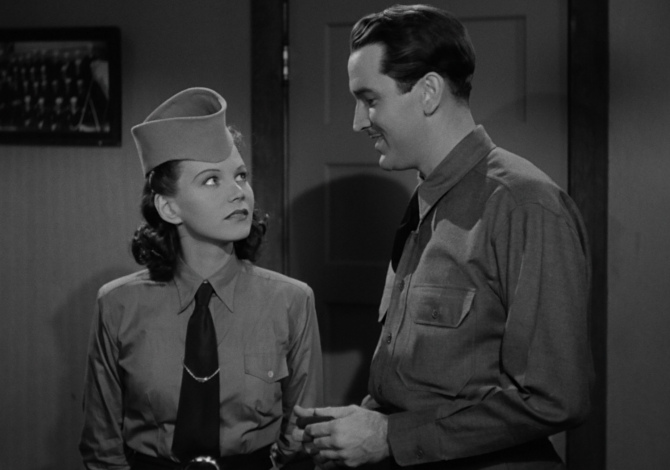
Meanwhile, cocky playboy Randolph Parker III (Lee Bowman) is grudgingly forced to join as well (at least until his wealthy father can pull some strings), while his disgruntled frustrated valet, Bob Martin (Alan Curtis – Phantom Lady), signs up as well. . . which will be further complicated when they both fall for the same gal, camp hostess Judy Gray (Jane Frazee).
As Slicker and Herbie continue their hijinks throughout training, the camp quickly turns on uninterested Randolph, as his talented military skills are frequently left on the sidelines during competitions against other units as he chases after women. Will the libertine ever be able to grow up and regain the respect of Bob and his other fellow future soldiers? Could drifters Slicker and Herbie maybe do the same?
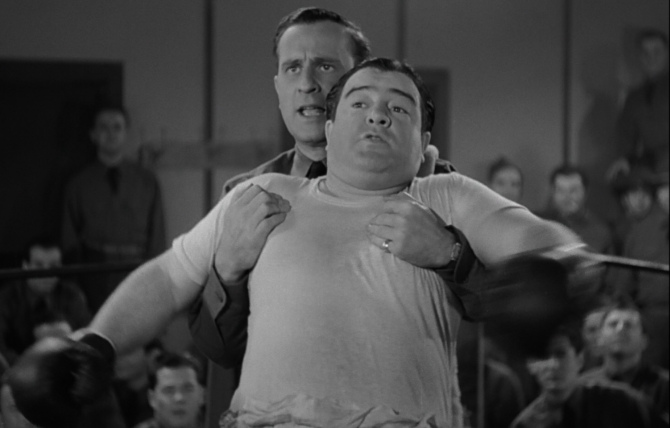
Though most definitely not the strongest story in an Abbott and Costello film, their first venture instead bounces around between some of their most iconic bits and jaunty musical numbers. With numerous memorable gags, if you know the work of the comedy team, you’ll see their craps routine, the ten/forty wordplay segment, money mixups, and perhaps best, a boxing switch up which finds poor Herbie (funnily enough, Costello was a successful amateur boxer earlier in his life) forced to face off against a guy about a head taller than him (this sequence clearly takes some influence from the famous Charlie Chaplin gimmick). . . followed closely by their often add-libbed five minute drill routine.
As for the music, there is a reason why this feature got two Academy Award nominations – the first for Best Original Song (arguably featuring The Andrews Sisters’ most famous tune, “Boogie Woogie Bugle Boy of Company B”), as well as for Best Scoring of a Musical Picture by Charles Previn. Though the more logical mind might be asking why harmonizing and choreography are so staunchly practiced in the military, there is no denying these swinging boogie-woogie moments aren’t catchy and entertaining.
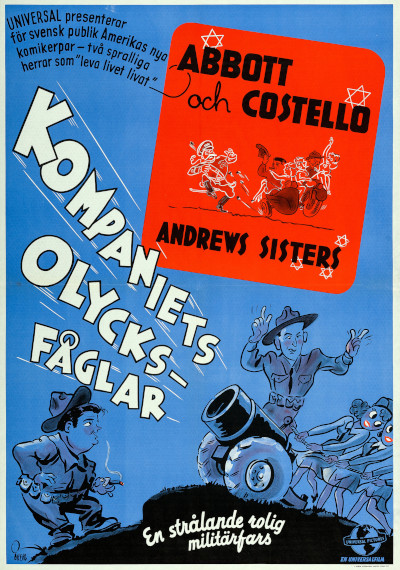
Their beautiful artwork done around the world to help advertise this movie is also a true spectacle – be it the different kitschy designs featured within North American theatres, or the similar creativity shown overseas post-war when these movies finally ran in places like Sweden and Denmark (see to your right for an example from Sweden).
Immensely popular at the box office, Buck Privates loveable form of wartime entertainment spawned three prompt follow-ups that very same year – including two more war comedies titled In the Navy and Keep `Em Flying, with Hold That Ghost, my personal favourite, being sandwiched in the middle. In fact, The Andrews Sisters would come along for those next two adventures. Featuring plenty of charm and amusement, it actually helps make up for its sketch focused narrative. It’s also worth watching for a small role from The Three Stooges legend Shemp Howard, who plays the temperamental cook (in fact, he’d be in the next two as well). Lastly, it should be noted that six years later, the duo returned to the characters for a rare direct sequel, Buck Privates Come Home (1947). So, buck the trend and see this comedy classic, it’s a barrel of fun.