
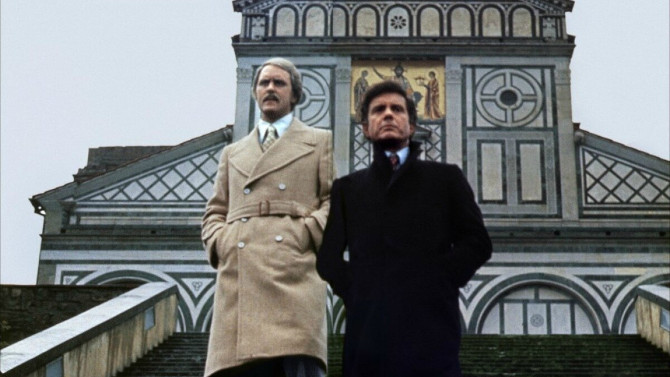


Sandra Portinari: “The plot thickens. Let us sit and tell sad tales about deserted daughters and lonely husbands.”
Now celebrating its 50th anniversary, back in 1976, Brian De Palma and Paul Schrader, before becoming household names (that would happen later the very same year with De Palma’s Carrie and Schrader’s script for Taxi Driver), attended a screening of an original print of Alfred Hitchcock’s Vertigo (1958), and were immediately inspired to co-write a story (with the latter polishing off the screenplay) for a movie that would eventually be titled Obsession – not at all related to this year’s box office craze with the same title, or the review posted here last week called Obsession: A Taste for Fear (1987).
Like much of De Palma’s work, this too finds its brainchild from Hitchcock’s oeuvre, as mentioned before, most notably Vertigo. Arguably the closest one of his pieces that leans into the Master of Suspense’s work, he was also able to hire the legendary (and sadly very sick at the time) Bernard Herrmann to compose the score – a key procurement, as he had already done seven pieces for Hitchcock movies – one of which being Vertigo.
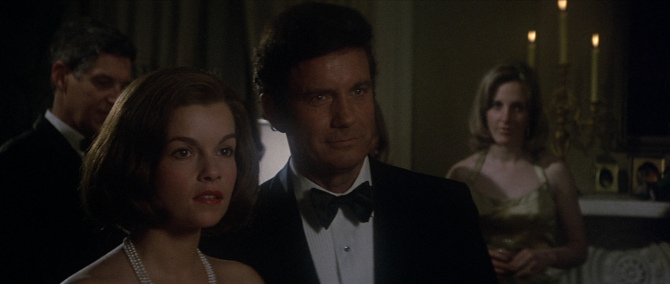
After a heartbreaking extended opening in 1959, which finds New Orleans real estate mogul Michael Courtland (Cliff Robertson) losing both his wife Elizabeth (Geneviève Bujold – Last Night) and daughter Amy (Wanda Blackman), we flash forward sixteen years into the mid 70s, the man still a heartbroken shell of his former self.
With only his longtime business partner Robert La Salle (John Lithgow – Blow Out) by his side, the land that was once planned to be the cornerstone of their real estate empire sits empty – save for a large mausoleum built for his long dead family (the transition shot from 1959 to 1975 is a mesmeric 360 degree visual that shows the land, car, and other such things change by way of two turns of the camera).
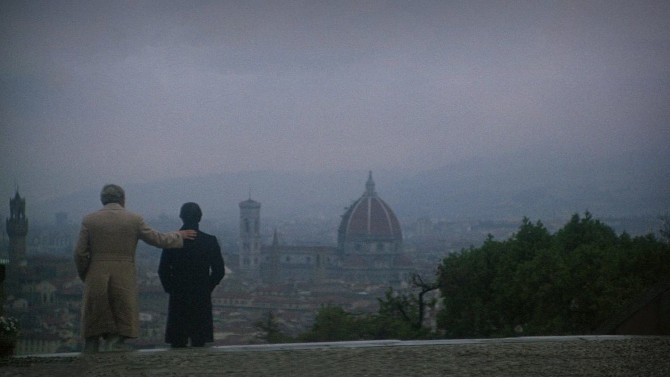
Having moved on to other projects, Robert takes the partners to Italy – specifically Florence (where Michael had met his wife so many years earlier). Returning to the church where he met her, upon his return he stumbles upon a young woman named Sandra Portinari (also Bujold) that is a spitting image of his deceased wife.
Becoming ‘obsessed’ with the woman, he follows her around day and night before finally having the nerve to ask her out for lunch. No longer interested in anything else, instead of returning home to New Orleans, he extends his trip to stay by the side of this mesmerizingly beguiling woman. Soon, he finds himself returning home with her by his side, excitedly announcing a fast tracked wedding. . . much to the chagrin of his business partner and the few other people that he is still close to.
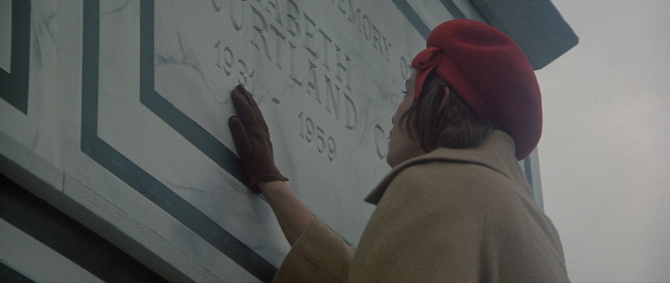
As things move closer to the wedding day, echoes from the past start rearing their ugly head. . . not only from that dreaded 1959 opening flashback, but also with Sandra starting her own obsession with the lookalike woman she is replacing in what was the same home sixteen years previously. With things not exactly what they seem, can the upcoming marriage work out? Could something more sinister be at play? And, may things end as tragically as they did in Vertigo all the way back in 1958?
A film with many layers, it only seems reasonable that Sandra’s job is restoring frescos that covered up even earlier artworks in the church Michael remembers so vividly after meeting his first wife and his soon to be second. Like De Palma and Schrader are talking themselves through their starting point of this very movie being Vertigo, the dialogue tries to answer if they should uncover the original artwork that was painted over, or create something fresh and beautiful atop it that was inspired by that first piece.
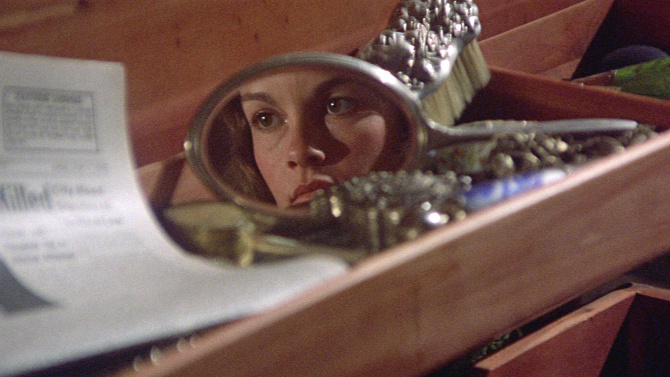
Though this is always the case with De Palma, his visual storytelling is second to none (notice the heavy visual diffusion used by cinematographer Vilmos Zsigmond to create a dreamlike hazy atmosphere). With the camera almost always dancing around, mesmerically depicting the landscape, the haunted characters, using split diopter shots to keep both the fore and background in focus, and so much more, it seems only fitting that Herrmann’s main melody is a waltz that goes hand in hand with the visuals. Somehow different but still echoing his original composition for Vertigo, its recurring dizzying spiral motif breathes unnatural romance, distorted love, and traumatic tension. There are even some sighing elements that will harken you back to his work in Psycho as well.
A twisted tale oozing psychological thrills, suspenseful mystery, and plenty of drama, though the pacing of Obsession is a tad off, it makes for a most unique companion piece to Hitchcock’s classic. Following many similar beats but also finding some new ground as well, like almost all of De Palma’s work, this is a beautifully warped love letter inspired by the Master of Suspense. It also features excellent performances and Herrmann himself thought it was the finest score he had ever written in his entire career. So, experience some ‘Déjà Vu’ (this film’s original title) by seeing Obsession, it’s worth forming a twisted relationship.