
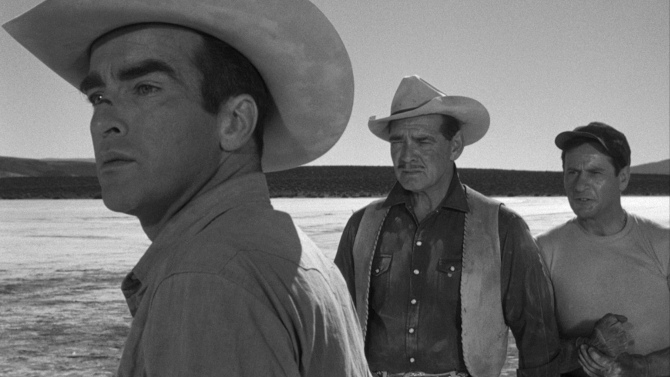


Gay Langland: “Honey, we all got to go sometime, reason or no reason. Dyin’s as natural as livin’. The man who’s too afraid to die is too afraid to live.”
With a most impeccable cast, you would think the modern set western drama The Misfits (1961), directed by John Huston (The Asphalt Jungle), would be best remembered for its acting. . . though sadly it’s remembered for the tragic deaths soon thereafter of its three main cast members – Marilyn Monroe, Clark Gable, and Montgomery Clift.
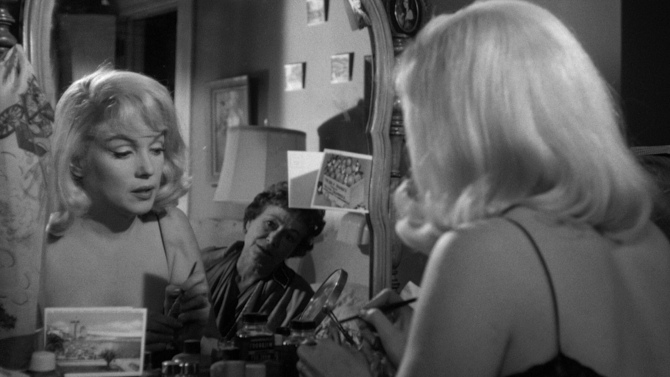
Written by Marilyn Monroe’s then husband (but soon to be ex) Arthur Miller (the famed playwright of “Death of a Salesman”), the Reno area set story follows the aptly named misfits, including recent divorcée Roslyn Taber (Monroe – River of No Return; The Seven Year Itch), a lonely aging man’s man of a cowboy in Gay Langland (Gable – Gone with the Wind; It Happened One Night), aged divorced landlady Isabelle Steers (Thelma Ritter – Miracle on 34th Street; A Letter to Three Wives), and widowed tow truck driver Guido Delinni (Eli Wallach – The Magnificent Seven; Seven Thieves) – and they all have one thing in common. . . abject loneliness.
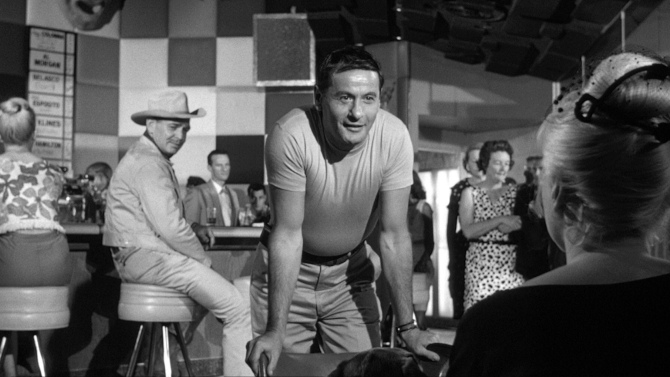
By chance all meeting up, the stupefied Roslyn takes her tow truck driver up on his offer of exploring the desert and seeing the house he had started to build there for his wife (who then tragically died – which stalled the project). Joined by her landlady and the charming cowboy for the rural ride, soon they are all drinking and finding some form of solace in the countryside camaraderie.
With both men quickly falling for the attractive yet vulnerable new divorcée while they still try to hold strong to their manly cowboy ways (as that form of life is quickly disappearing to modernity), nothing is easy. The men, in the past able to round up hundreds of wild mustangs to make their living (their numbers have now dwindled), coupled with the modern outlook of folks just like the woman they are both infatuated with who frown upon the trade, have influenced their dire future.
Though things flow somewhat pleasantly for a short time (with both Gay and Guido wanting their chance with the girl), soon another suitor in grifter rodeo junkie Pence Howland (Montgomery Clift – From Here to Eternity) joins the gang. . . adding another rather morose perspective to the group of outsiders.
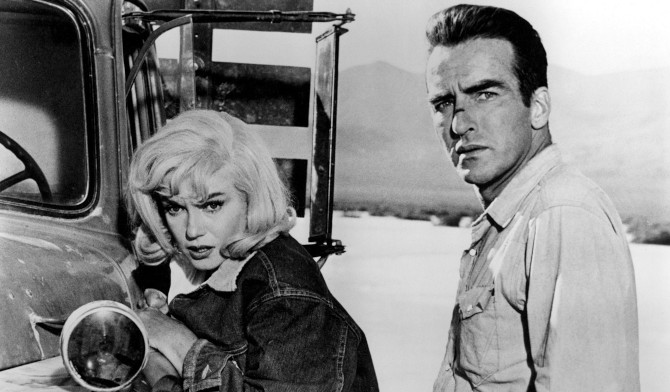
Filled with tragic tales, Gay never sees his kids, while Isabelle is simply hoping to see her former husband and best friend (who are now together) once in a blue moon, Pence is contemplating leaving his injury-filled and meager way of life, and Roslyn truly doesn’t know in what direction she should go. In many ways, those hunted horses that will be turned into food are the theme of this movie – symbolic of freedom and oppression, past and present, ever changing values, life and death, as well as so much more. One has to wonder, could there be a happy ending for any of these lost souls? Can Gay or Guido’s old school way of life survive in this ever more modern world with its ever-changing values? Or might Roslyn’s innocent and fragile beauty simply rip the hearts out of these three beleaguered men?
A character driven drama, despite many issues on set – including the failure of Monroe and Miller’s marriage, her excessive use of alcohol and prescription drugs, the near unbearable heat, and Miller constantly revising the script, the performances are still very memorable. Monroe gives an evolved performance, combining both a child-like innocence and a more mature sensitive perspective for the world and its creatures. Nuanced compared to some of her other roles, she is matched with a charismatic yet troubled character created by Clark Gable – an aging man who is becoming more vulnerable as he loses his way of life, and has already lost his family – often turning to both alcohol and anger to try and cope. Wallach and Clift also deserve credit for creating their own forms of realistic, grounded, and troubled personas.
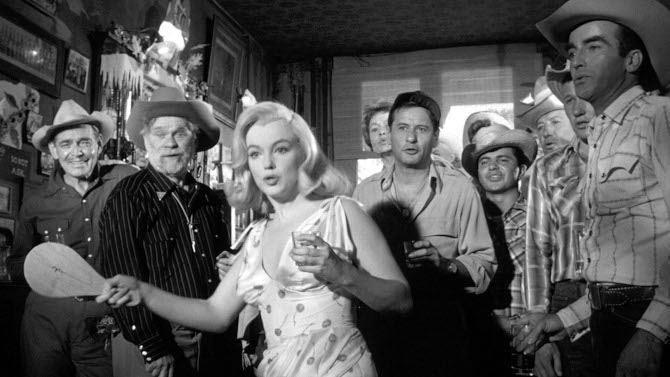
With a tragic ending to 59 year old Clark Gable by way of heart attack the year this was shot in 1960, Marilyn Monroe’s long debated overdose at 36 in 1962, and Montgomery Clift’s heart attack at age 45 in 1966, it left a most heartbreaking ending to The Misfits. Though this back and white feature does not carry with it as much pizzazz as many of their other features (it does have some intriguing off-kilter angles and camera work), despite not being their best films, it still demonstrates some of their many talents. It’s also worth highlighting the paddle-ball scene with Marilyn Monroe – a most memorable moment, as well as Clark Gable doing many of his own stunts – impressive when you consider how poor his health was. So, release your reigns and join this unique group of misfits, it will make you free.