
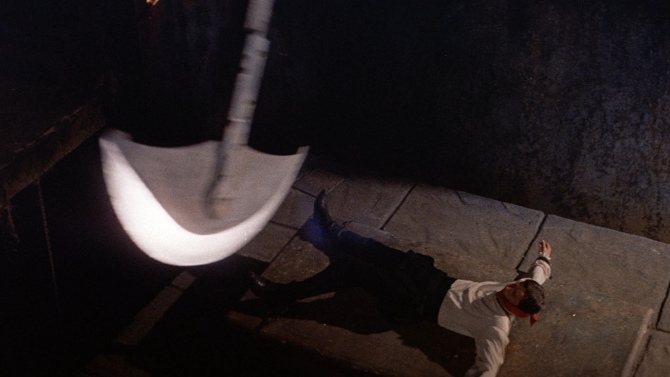


Don Nicholas Medina: “I will tell you where you are. You are about to enter hell, Bartholomew. Hell! The Netherworld. The infernal region. The abode of the damned. The place of torment. Pandemonium. ‘Abbadon’, ‘Tophet’, ‘Gehenna’, ‘Naraka’. . . the pit! And the pendulum!”
After Roger Corman’s major success with House of Usher (1960), he promptly turned to adapting another Edgar Allan Poe story to start a franchise of sorts, with The Pit and the Pendulum (1961) being an even bigger win. . . with it making over two million dollars on a modest budget of only three hundred thousand.
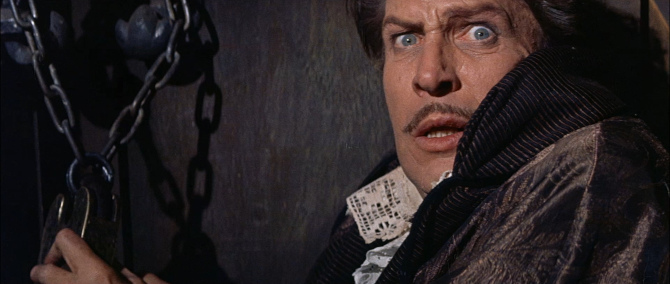
Getting Vincent Price (House of Wax; Laura) back after House of Usher’s critical and commercial winnings, this time he plays Nicholas Medina, a tortured soul living in a tomb of a castle with his servants after his gorgeous wife Elizabeth (Barbara Steele – Black Sunday; The Horrible Dr. Hichcock) has seemingly died of a massive heart attack brought on by fright. Feeling as if he is truly cursed, he resides in the same place that his sadistic Spanish Inquisition father once tortured his victims, where his mother and uncle died, and now where his wife has met her untimely end. It has become so bad that even Nicholas’ sister Catherine (Luana Anders) has returned home to try and ease his sorrows.
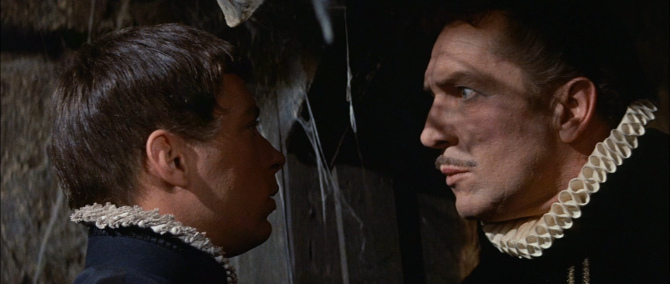
Unexpectedly visited by Elizabeth’s forceful brother Francis (John Kerr), he has no plans of leaving the abode until he finds out what truly happened to his beloved sister. Continuously questioning Nicholas, Doctor Leon (Antony Carbone) – who was Elizabeth’s physician, as well as the servants, he is not taking their unsatisfactory claims as truths.
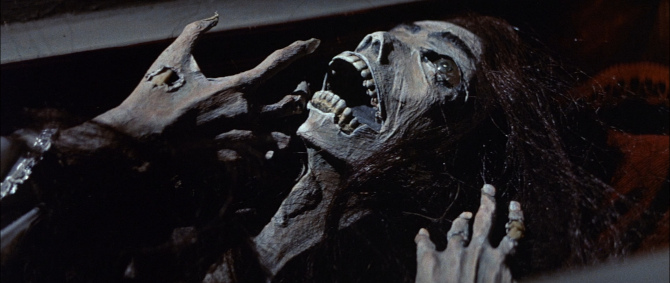
As things progressively get weirder, they soon disinter Elizabeth from their catacombs. . . but things only get even more bizarre from there. Are Nicholas and the frequently present Doctor Leon telling the truth? Might the castle, with its dark past, actually be haunted? Or is there some sort of ruse going on. . . and if so, could it be by the servants, a family member within the place, or maybe something even more sinister?
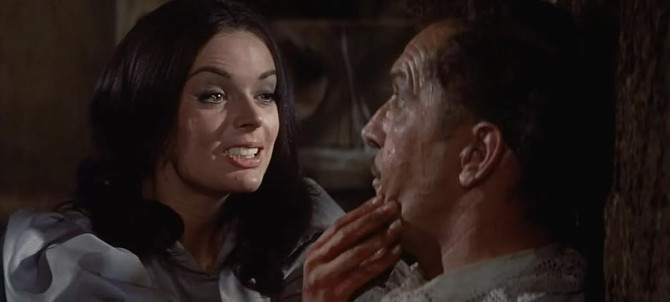
Filled with mysterious trapped doors, massive spider webs, creepy catacombs, the haunting voice of what is said to be Elizabeth (and her harpsichord playing), and a terrifying torture chamber that includes an iron maiden, the dreaded pit and the pendulum as well as so much more, this Gothic abode is not for the faint of heart. With a limited cast and no other person for miles, its grand interiors almost feel oddly claustrophobic, as if the residents and their sole guest are instead living in their own final resting places. . . and perhaps they are. Creating an utterly eerie atmosphere, one thing is for sure, something wicked this way comes.
With plenty of campy charm, The Pit and the Pendulum excels thanks to its creative narrative (Richard Matheson expertly building upon Poe’s short story), dynamic performances (Price at his antsy best), moody sets, and memorable twisty climax. It was also further helped by Reynold Brown’s creative poster designs used for the advertising campaign. Another noteworthy feature is that there is an extended prologue that comes with the Bu-Ray. . . filmed solely for its television sale that would pad its length to the desired runtime (not truly needed for the story, Luana Anders is the only main cast member to return for it – though horror icon Sid Haig can be spotted in it too). So, don’t let this horror classic get buried alive, you’ll like its rhythmic pendulum.