 Films That Matter
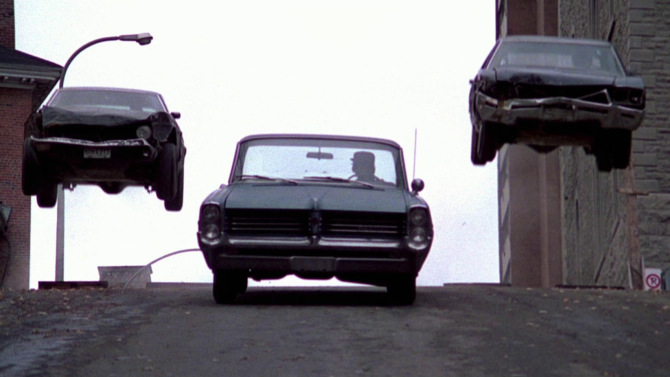
Montreal Magnum
When it comes to car chase scenes, the one that is always highlighted, and for good reason, is from Peter Yates’ 1968 action thriller Bullitt starring Steve McQueen... but some eight years later, the city of San Francisco was replaced by Montreal, Quebec in this little known Italian production with quite the epic speedy sequence of its own, Shadows in an Empty Room (1976), directed by Alberto De Martino. Fusing this touch of Bullitt with a Dirty Harry style storyline – hence why it is called Blazing Magnum in some markets (including the UK), while also including a hint of the ever popular at the time 70s giallo for some murder mystery elements, the narrative follows gritty, hard as nails Ottawa cop Capt. Tony Saitta (Stuart Whitman) as he dispatches some bank robbers in his own city... before getting the tragic call that his much younger sister, Louise (Carole Laure – Sweet Movie), who lives in Montreal, has died under very suspicious circumstances.
-
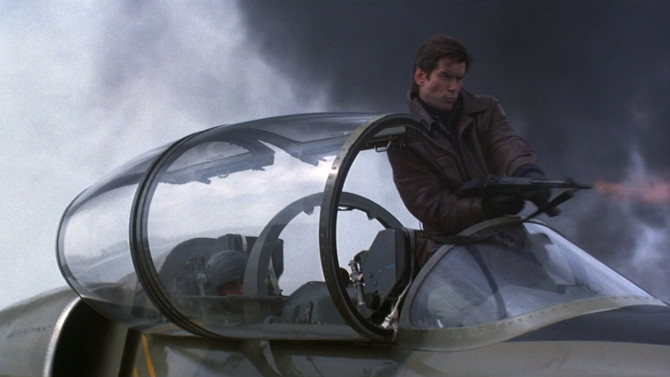
What Could Have Been: Tomorrow Never Dies
April 10, 2020Let me start by saying that every James Bond film, be it ‘good’ or ‘bad’ (for lack of a better term), is special. Since 1962's Dr. No, Ian Fleming’s famed spy has lit up the silver screen, not only awing and entertaining (for even the most frustrating of Bond films still have those wow moments of action, or those most entertaining one liners), but also holding a magnifying glass up to the then present day – analysing current issues (such as The Cold War, The Space Race, North Korea. . . the list goes on and on). . . understanding when to be more jokey or serious, it is a measuring stick of an historical document that speaks to what was on people’s minds in that specific year. Now, you might be wondering – why oh why review Roger Spottiswoode’s 1998 film Tomorrow Never Dies – for it is arguably one of the less magical efforts in the franchise. Being a fan of all things Bond, I recently read the film’s novelization, written by Raymond Benson (who wrote three novelizations during the Pierce Brosnan era, as well as six original novels, and three short stories). . . and was quite impressed by how entertaining it was (which didn’t exactly compute with my memories of the film).
-

Chan Fan 2
Police Story 2January 5, 2020A sequel that picks up almost immediately where its predecessor left off, Police Story 2 finds our likeable officer, Chan Ka Kui (Jackie Chan) in a rather precarious position. . . reprimanded for his blatant destruction of the mall (in order to catch the villains at the end of the previous feature), not only is he demoted, but he also learns that all of his hard work was for naught – for drug kingpin Mr. Chu (Yuen Chor), who was supposed to spend life behind bars, has been released by a trifecta of doctors who have claimed that he only has three months left to live. Yet, this is only the beginning. . . throw in a spiralling out of control blackmailing case (in which a company’s holdings are being bombed), and more issues between Ka Kui and his spunky girlfriend May (Maggie Cheung), and we can easily say that he has his plate full.
-
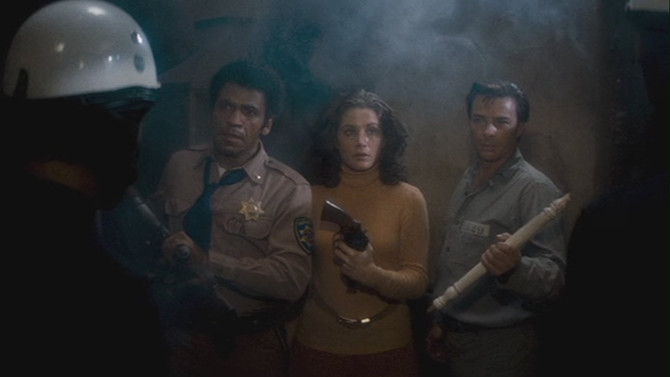
Unlucky Number 13
Assault on Precinct 13September 23, 2019A lieutenant officer working the first day on the job, a group of prisoners being transported to a high security facility, a father and daughter looking for their nanny’s home, and a mysterious interracial inner city gang. . . what do they all have in common? They all almost fatefully find their way to an emptied police precinct on the verge of closure in John Carpenter’s 1976 low budget cult classic Assault on Precinct 13. Only John Carpenter’s second feature film, the writer/director weaves these four stories together, a doomed pacing drawing them all to one location for a single fateful night. The officer is Ethan Bishop (Austin Stoker), an African American working his first day on the job. . . given a seemingly uneventful task, he is the man in charge of the derelict Precinct 13 – a semi-closed location that will have its power and telephone lines shut off the next morning. The only remaining skeleton staff are: Sergeant Chaney (Henry Brandon) and a pair of secretaries, Leigh (Laurie Zimmer) and Julie (Nancy Kyes).
-
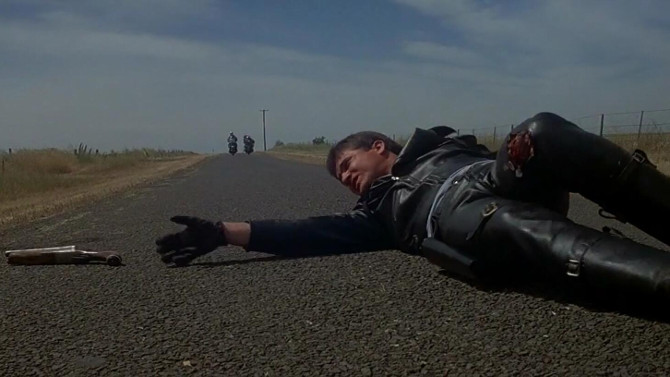
Crank It to the Mad Max
Mad MaxSeptember 18, 2019You’ve got to give credit to guerrilla film making. Usually encompassing a newish director and actors, a limited budget, rebellious on-location shoots, and a certain disregard for rules and regulations (mostly due to a lack of money), some of cinemas most unique and creative pictures have come from this cheap form of movie making. Think Rocky, The Evil Dead, El Mariachi, Clerks, and today’s motion picture, Mad Max (1979). Made for 400 thousand Australian dollars, it went on to make more than 100 million US worldwide – at that point holding the Guinness Book of World Records for most profitable film (only losing it in 1999 to The Blair Witch Project). Putting writer/director George Miller and star Mel Gibson (in his first leading role) on the map, it also thrust Australian New Wave cinema into global consciousness, while bringing forth a surge in dystopic movies that dealt with similar ideas and themes. In fact, it was such a success, it also spawned three sequels – Mad Max 2 aka The Road Warrior (1981), Mad Max Beyond Thunderdome (1985), and the Gibson-less Mad Max: Fury Road (2015). . . this most recent effort considered an instant classic (and one of the best reviewed films of the year).
-
Raid to Perdition
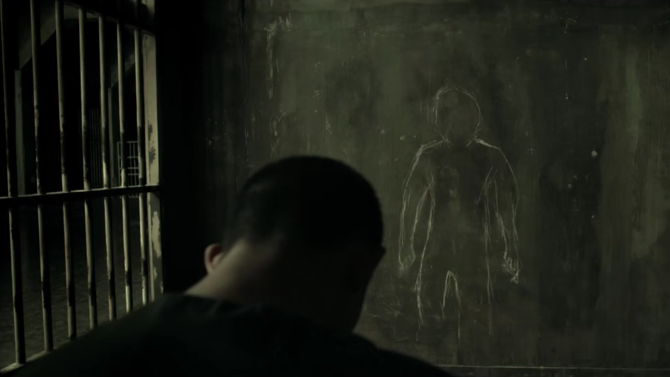
The Raid 2August 3, 2019If you’ve ever wondered what it would look like if fifty savage prisoners attempted to attack a single man in a prison stall, then 2014's The Raid 2 might just be for you. Before moving on, to let you in on how they shot the scene, a simply genius technique is used where the stall walls are on hinges – so that the handheld camera can get in and around the developing action. Written, edited, and directed by Gareth Evans, this Indonesian import is a sequel to 2011's The Raid: Redemption (also created by Evans), starting up a mere two hours after the previous film finished. Miraculously, you really do not need to see the original, as this story is easy to catch on to, despite its complexity when compared to the 2011 feature. If Redemption was shot in the style of a non-stop action video game, its sequel is as if John Carpenter (Escape From New York) and David Cronenberg (A History of Violence) came together with Martin Scorsese to create a twisty story along the lines of The Departed.
-
Chan Fan
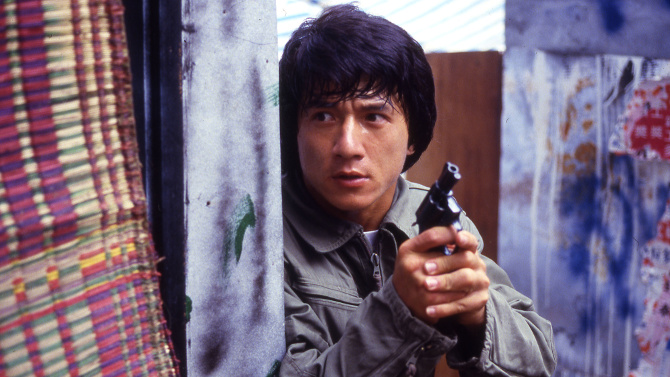
Police StoryJuly 16, 2019With some early success in China in the mid to late 1970s, Jackie Chan attempted to break into Hollywood – making appearances in The Big Brawl (1980), The Cannonball Run and its sequel (1981 and 1984), and starring in The Protector (1985). . . perhaps you would think that this was the beginning of his now illustrious career, but no. His supporting roles did not bring him fame in the west, while his first American starring role was a box office bomb. Instead of returning to China sunken and defeated, he began work on what would arguably become his greatest film, Police Story (1985), co-writing and co-directing with Edward Tang and Chi-Hwa Chen respectively. Taking on the starring role of Chan Ka Kui, Chan brings forth that appealing blend of comedic goof-ball and ninja mastermind – a more than likeable everyman who just happens to be a master of the martial arts (for most of his future roles, Chan would play slight variations on this iconic character – making him one of the most popular action stars of the past thirty years).