 Films That Matter
Bungle in the Jungle
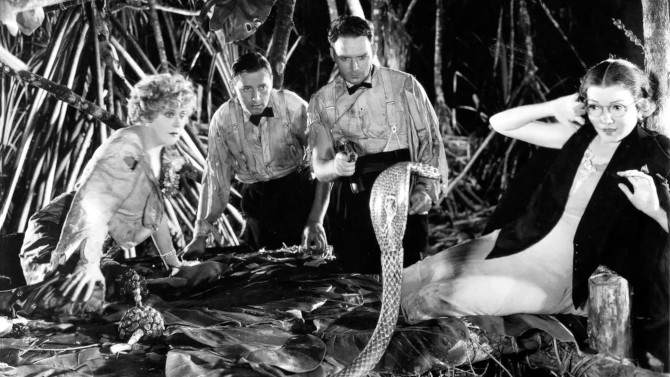
Nestled between two of Cecil B. DeMille’s massively successful historical epics (that he is so well known for), namely The Sign of the Cross (1932) and Cleopatra (1934), he directed two box office failures, This Day and Age (1933) and the movie reviewed here today, Four Frightened People (1934). Released just prior to the end of the Pre-Code era, DeMille’s early dramatic jungle adventure was reworked on the fly – which is partially why it is one of the iconic director’s middling efforts.
-

Law and Order
SecretaryAugust 7, 2016Much has been made of Fifty Shades of Grey. The phenomenon (be it the books or the film) has taken the world by storm, creating an ever-growing buzz around the subject of kinky sexual escapades. But, after watching the movie, I must say that it is a cold, clinical production that lacks nuance, emotion, heart, depth or eroticism. For a more engaging portrayal of the themes found in Fifty Shades, I would recommend turning to the 2002 motion picture Secretary. Following in the vein of other erotic flicks like 1972's Last Tango in Paris and 1986's 9½ Weeks (to name just two), director Steven Shainberg (who adapted Mary Gaitskill’s short story along with Erin Cressida Wilson) introduces us to our lead character: the shy, sensitive and socially uncomfortable Lee Holloway (Maggie Gyllenhaal). Dealing with many psychological issues, she is first seen leaving an institution after being caught causing herself harm.
-
Fit to be Tied
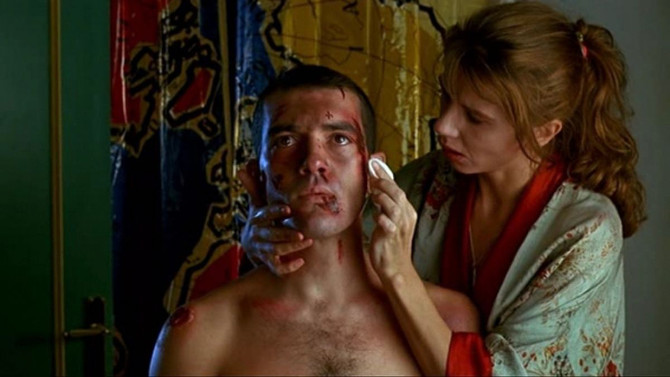
Tie Me Up! Tie Me Down!August 5, 2016Dealing with the unnerving and dangerously disturbing topic of the Stockholm Syndrome, Pedro Almodóvar uses deft humour, rich engaging (as well as flawed) characters and a solid story to concoct one of the more unusual romances in film history. The title of said motion picture is Tie Me Up! Tie Me Down!, released in 1989 to much fanfare and equally as much controversy. The winner of several festival awards (as well as being lauded as a superb film in Spain), it received an X rating in the United States (equal to that of a hardcore pornography film) – with the MPAA disliking two scenes as well as the crime aspect of the story (which they thought could influence young males to commit kidnapping much like the main character). To paraphrase Almodóvar, he humourously exclaimed that he does not make movies expecting that the entire audience will be psychopaths. In the end, it was this movie that led the MPAA to create the new rating of NC-17, which still exists today, and if given, usually kills a movie’s box office chances much like the X rating.
-
Star Pick with Louise Sorel
 Mama Knows BestI Remember MamaJuly 26, 2016
The saying ‘they don’t make films like that anymore' is often bandied about when it comes to classic movies. It is something that is difficult to quantify or describe as to why it is so, but when you see it, it seems self evident. One motion picture that has this unusual quality is the 1948 film I Remember Mama. I recently spoke to Louise Sorel at CAPE Cornwall. You may recognize the actress if you are a fan of soap operas;
-
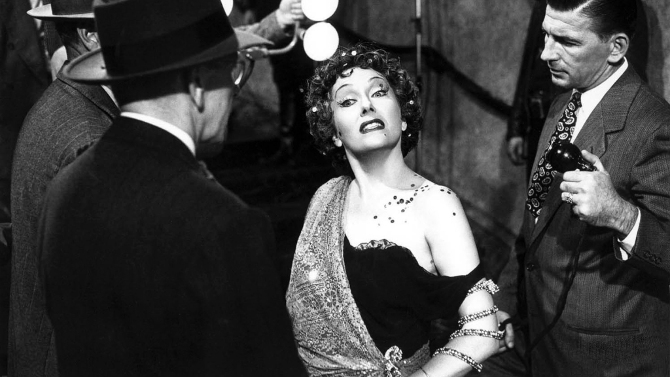
Boulevard of Broken Dreams
Sunset BoulevardJuly 17, 2016With the steamy heat of summer upon us, it is time to revisit one of my favourite genres – the dark, seductive, hard-boiled stories of film noir (from the 1940's and 50's). Billy Wilder, one of the great directors of the twentieth century, created three classics that fall within this genre: 1944's Double Indemnity (which I have already reviewed), 1951's Ace In the Hole and the 1950 iconic motion picture Sunset Blvd. – which will be reviewed here today.
-
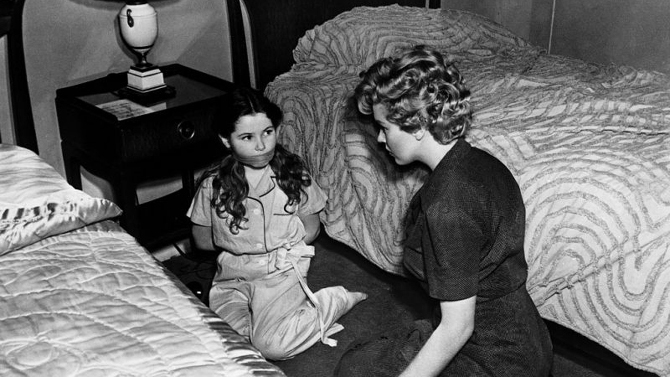
Don’t Knock It Till You Try It
Don't Bother to KnockJuly 15, 2016When one thinks about Marilyn Monroe’s acting career, they would likely imagine her performing in a light musical comedy in the vein of Gentlemen Prefer Blondes, How to Marry a Millionaire, The Seven Year Itch or Some Like It Hot. Yet, an early Monroe performance that may catch some off guard is when she plays Nell Forbes in the 1952 film-noirish drama Don’t Bother to Knock. Set entirely in a posh New York City hotel, bar singer Lyn Lesley (Anne Bancroft) has broken it off, by letter, with her beau Jed Towers (Richard Widmark), reasoning that he is too cold and does not have the heart for a long term relationship. The man arrives, booking a room in the hotel, hoping that he will win her back.
-
Star Pick with Dale Hawerchuk
 Taking a Drive with HawerchukThe Shawshank RedemptionJuly 12, 2016
On the 8th of July, 2016, I had the privilege of golfing with NHL Hall of Famer Dale Hawerchuk at Upper Canada Golf Course in Morrisburg, Ontario. For those of us who have played hockey, we understand how difficult it is to put up a point per game, whether we were playing house league, travelling team, or in the professionals. Hawerchuk impressively put up 1409 points in only 1188 games during his career, which spanned from 1981-1997. He spent most of his time with the Winnipeg Jets, but also played for the Buffalo Sabres for five years, the St. Louis Blues for a year, and wrapped up his career playing two years with the Philadelphia Flyers.