 Films That Matter
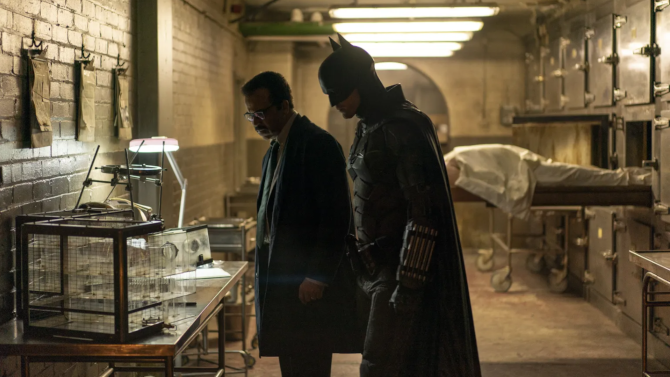
Batman – Vengeance Style
Hanging around in the much darker side of the cave, The Batman (2022), co-written and directed by Matt Reeves, follows in the same playing card suit as the 2019 psychological thriller Joker, further showing off the more dilapidated, delinquent strewn streets of Gotham and its equally as sinister and Machiavellian criminals/political landscape. Feeling a tad closer to an Indie produced marauding neo-noir than your prototypical comic book movie, this iteration of the Caped Crusader is not your more traditional Bruce Wayne/Batman (Robert Pattinson – Tenet; The Lighthouse), in fact
-

Level Up
Jumanji: The Next LevelJanuary 7, 2020An interesting follow-up that learns from some of its mistakes while making a few more, Jumanji: The Next Level, once again co-written and directed by Jake Kasdan, flies into theatres just two short years after 2017's Welcome to the Jungle – a surprising amount of quality coming from the opportunistic sequel (that has a bit of a lackluster title). Jumanji: The Next Level, or as I like to call it, fantastical Indiana Jones-lite, picks up, like the sequel, a few years after the concluding notes of Welcome to the Jungle. The rag-tag high school team that accidentally entered the gonzo 90's style video game are now off doing their thing. . . queen bee Bethany (Madison Iseman) is helping people in impoverished countries, Anthony ‘Fridge’ Johnson (Ser’Darius Blain) is furthering his focus on fitness, while originally shy Martha (Morgan Turner) is now flourishing at college. . . nerdy Spencer (Alex Wolff) is the only one struggling a bit in his new life. Seeing his on again/off again girlfriend Martha enjoying life through social media brings him down a notch, a touch depressed in his less than fulfilling big city college world.
-

That Old Black Magic Called Love
The Love WitchOctober 22, 2019Like bathing in the seductively sweet smells of incense and peppermint (and we mustn’t forget to add a tinge of hallucinogenic drugs), writer/director/producer Anna Biller’s 2016 fantastical multi-genre film The Love Witch is an amorous hand penned letter to the classic Hollywood era, as well as both the sexploitation and horror pictures of the 1960s and 70s. Shot in glorious 35mm film (a rare thing these days), the narrative follows Elaine (Samantha Robinson), a stunning young woman getting away from San Francisco to start a new life in Arcata. The first time we see her she is entirely in red. . . a classic vermilion tinged convertible, ruby dress, and even luggage to match – a stop light with mixed messages that is somehow prompting you to go. Yet it is her perfectly done eye makeup that must be watched. . . for it draws you into her piercing gaze, a look that will force you into those chestnut orbs – turning you into a reverse narcissist, only obsessed with a women you’ve never even met.
-
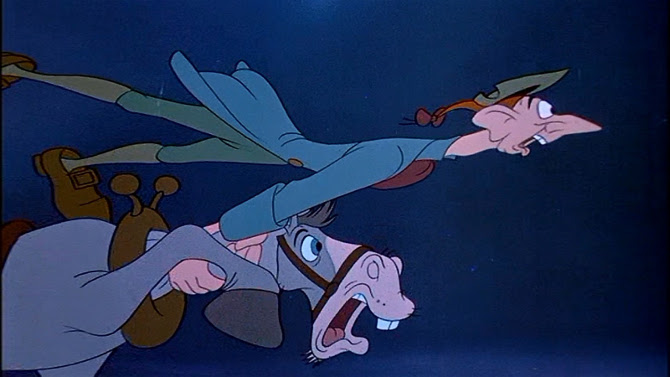
Short Cuts
The Adventures of Ichabod and Mr. ToadOctober 2, 2019Celebrating its 70th anniversary this 2019, Disney’s The Adventures of Ichabod and Mr. Toad (1949) is perhaps one of the most bizarre pairings of stories ever to hit movie theatres. . . Coupling Kenneth Grahame’s iconic children’s novel “The Wind In the Willows” with Washington Irving’s gothic horror story “The Legend of Sleepy Hollow”, you may be wondering what these two tales have in common. . . in short, absolutely nothing (it was actually due to reduced manpower during World War 2 that six movies – this being the last, were released in these combined and shortened formats). Woven together by a narrated battle of the greatest characters ever to grace British and American shores, English narrator Basil Rathbone (most famous for playing Sherlock Holmes) selects the former story, while Washingtonian Bing Crosby (singer/actor) highlights the latter. . . two more rich, melodious voices you will not find.
-

Jungle Love
Jumanji: Welcome to the JungleJuly 21, 2019A surprisingly original, unique and sharp take on video games (playing on numerous 90s video game tropes), Jumanji: Welcome to the Jungle updates the original Jumanji board game premise for the twenty-first century. An interesting layer of meta finds Jake Kasdan directing – son of Lawrence Kasdan (co-writer of The Empire Strikes Back, Raiders of the Lost Ark. . .), Welcome to the Jungle comes off as a quasi-combination of the two. . . the foursome who centre the feature are a ragtag team like in Star Wars, while the jungle adventure will immediately remind many of an Indiana Jones archaeology adventure – never a bad idea to create a hybrid of two of the most popular franchises in American history.
-
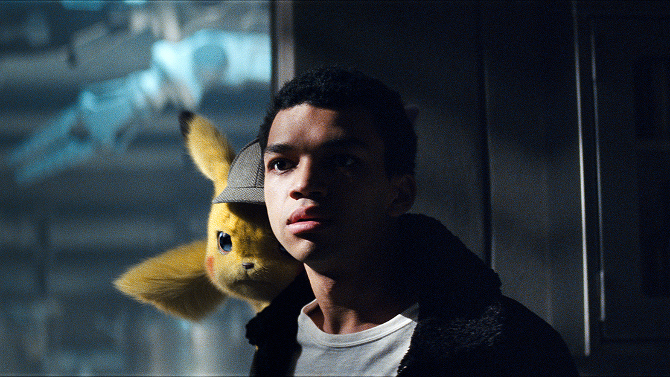
CSI: Pokémon Style
Pokémon Detective PikachuMay 13, 2019Every once in a while, you’ve got to relive your childhood. . . that came for me this past Saturday, when two of my friends contacted me and asked if I wanted to go see the new Pokémon movie. Always game for anything film related, my knowledge of the Pokémon franchise has not evolved (Pokémon pun intended) since the early 2000s – a time when every child, along with myself, was obsessed with the Gameboy games (colour coded Red, Blue, and later, Yellow) and the television series. Now, some twenty years later, Pokémon Detective Pikachu (2019) becomes the first live action film in this historic gaming/anime franchise. Directed by Rob Letterman, perhaps their wisest choice was casting Ryan Reynolds as the voice of one of the film’s leads, Pikachu – making this a PG-like version of Deadpool. Yet, I will warn you that this one is more for fans of the franchise than the average moviegoer (judging from its 170 million dollar opening weekend, there are clearly a lot of fans) – and, as attendees entered the theatre, they received a complimentary pack of Pokémon cards (a nice touch).
-
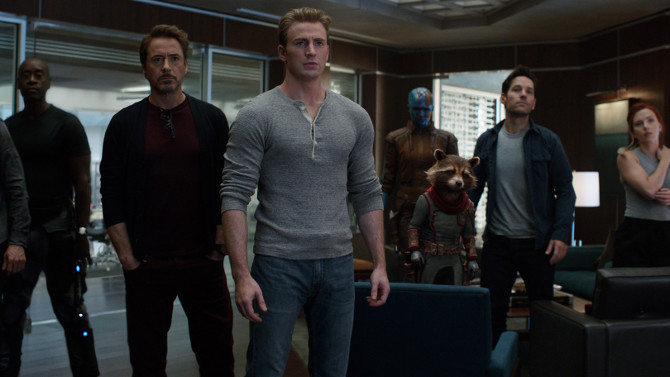
‘Marvel’ous
Avengers: EndgameMay 7, 2019Every once in a while, a film becomes part of the zeitgeist – capturing the spirit and mood of its time, uniting viewers in a shared experience that will never be forgotten. Think Gone With the Wind, Casablanca, The Godfather, Jaws, Star Wars, Titanic, the Lord of the Rings trilogy, Avatar. . . you get the idea. Capturing lightening in a bottle, this shared experience unites moviegoers worldwide, the most recent example, Avengers: Endgame (2019). Whether you love comic book films or hate them, it is hard to argue with what Marvel has done since 2008 (starting with Iron Man). A three phase initiative, with almost too many superheros to name, Endgame is the twenty-second feature in the last eleven years, and, in many ways, the end of this unique vision. Something never done before, standalone and ensemble films have been combined to great effect, grossing (to this point) over twenty billion dollars, and, for the most part, winning critics over along the way.