 Films That Matter
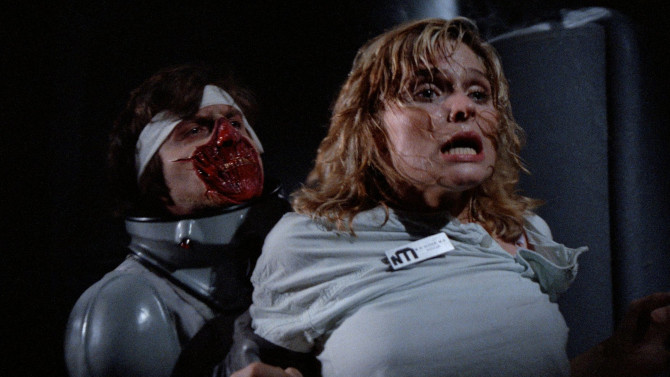
Missed the Bloody Cut: 2026 (Part 1)
The first Missed the Bloody Cut horror selection of this 2026, here are some more horror movies that did not meet my strict criteria (a rating of 7.0 or higher)... but are still entertaining films (horror fanatics may enjoy) that do not deserve to be shrugged off like a slow walking group of mindless creatures – and that are definitely worth a watch (just maybe not several re-watches).
-
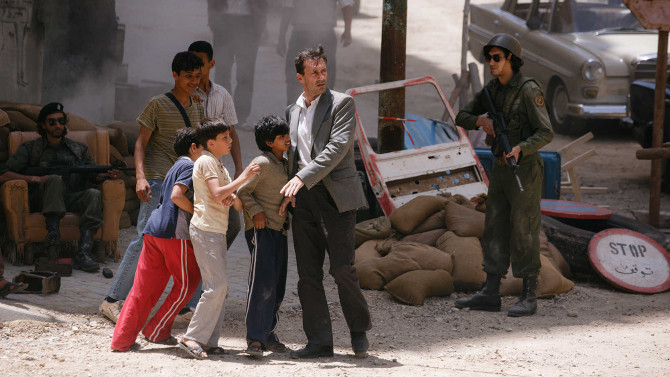
Middle East Muddle
BeirutAugust 13, 2018Ah, vacation time. Nothing like getting that call out of the blue – excited to be invited on a golf trip, to be asked to go down south (avoiding the winter blues), or to fly over to Europe. . . alas, this is not the case in today’s feature. Our protagonist, negotiator/arbitrator Mason Skiles (Jon Hamm), is strong-armed into taking a flight over to Beirut (a place he has vowed never to return to again – and also the title of the film) to give a so-called “academic lecture” – as we all know, this supposed job is simply cover for something decidedly more shady. Scribed by Bourne franchise writer Tony Gilroy (his previous effort to this, Rogue One: A Star Wars Story) and directed by Brad Anderson (Transsiberian), the pair actually open the film in Beirut (1972) ten years prior to when our story takes place, a glimpse into the man’s past in the city. Flash forward a decade and Skiles is a shell of the man he once was – a disjointed alcoholic living a fugue state instead of a life.
-

Is It Terminal?
TerminalAugust 7, 2018One of the most divisive films of the year – a love it or hate it type (in which most fall into the latter) is Vaughn Stein’s 2018 flick Terminal. . . a feature steeped in film noir, dystopic future and gothic horror, a glossy B movie that pays tribute to the 1940s, Ridley Scott’s Blade Runner, the films of Brian De Palma, Quentin Tarantino, Guy Ritchie and tales the likes of Edgar Allan Poe and Lewis Carroll. As if dropped down the proverbial rabbit hole, Stein transports us into a dichotomous world, wet and sleek, decrepit and glossy, dangerously alluring, a Terminal (that seems to lead to nowhere) in which we find Annie (Margot Robbie) spinning her nasty web. Porting numerous garbs (one a striking red coat) and hair resembling Veronica Lake, the forking story has her working in the looming locale’s all-night diner. . . a waitress with a sharp tongue and cantankerously flirtatious attitude. Chatting up a sickly English professor, Bill (Simon Pegg), as he waits for the arrival of the next train to nowhere, his illness piques the fatale in the femme.
-
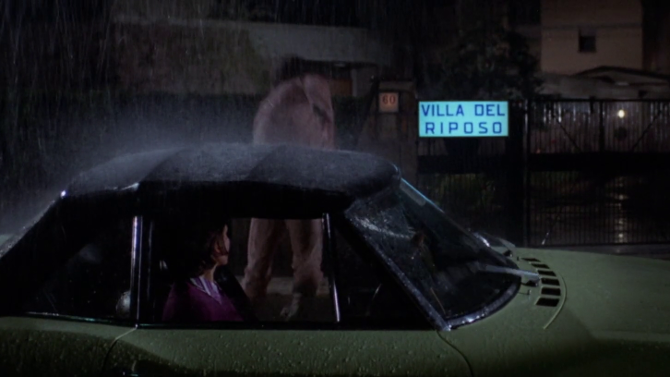
Morbid Orchids
Seven Blood-Stained OrchidsAugust 5, 2018With a title like Seven Blood-Stained Orchids, you’d probably expect a fascinating nature documentary divulging the secrets of a rare flower. . . but of course not, this is part of the continuing series of giallo films reviewed here on Filmizon.com. Written and directed by Umberto Lenzi (and loosely based upon Cornell Woolrich’s novel “Rendezvous in Black”), the filmmaker immerses the viewer into a sordid tale of bloody revenge. A murderer, dressed (and gloved) in black, is dispensing of women in and around the city of Rome.
-

Mission: Impossibly Possible
Mission: Impossible - FalloutJuly 31, 2018Oh, how time flies. . . twenty two years ago, Ethan Hunt (Tom Cruise) was outsmarting many a villain, one of which was Max (Vanessa Redgrave) – a woman who was a British arms dealer. . . now, in 2018's Mission: Impossible – Fallout, it is implied that the American spy is dealing with that original foe’s daughter, the White Widow (Vanessa Kirby). It is a signal of a franchise that, for the most part, has done things right. . . each movie (other than the woeful second effort), finding a quality mix of action, adventure, spycraft and intrigue (all while developing an entertaining story that combines outrageous, authentically shot stunts that somehow outdo the previous film’s seemingly unbeatable sequences), while also highlighting the longevity of a successful franchise and career (Tom Cruise now only a year younger than Jon Voight was in the original movie).
-

Going Rogue
Mission: Impossible - Rogue NationJuly 27, 2018I’ve said it once, and I’ll say it again. . . Tom Cruise is the reincarnation of several silent film stars. Think Buster Keaton – the man willing to jump, fall, slide and put his life on the line for his beloved fans (the front of a house almost crushing him – miraculously finding his way through the upstairs window thanks to a perfectly placed nail on the ground). . . or Harold Lloyd, dangling from a breaking clock eight stories high. . . also Douglas Fairbanks Sr., who we see falling down a ship’s sail with only his dagger jammed into the fabric to control the drop. . . as well as the countless gags performed by the magical Charlie Chaplin. With Mission: Impossible – Fallout being released today (the sixth film in the jaw dropping franchise, I thought it would be a prudent idea to revisit the 2015 fifth feature, Mission: Impossible – Rogue Nation). Opening with a death-defying stunt which has Ethan Hunt (Tom Cruise) dangling from the exterior of a plane taking off, it is a perfect example of what I am taking about above. Completely real, you are actually seeing the actor take off (it took eight tries to get everything perfect), and, each time they reached an incredible five thousand feet. He had to wear special contact lenses, as a speck of dust in the eye would have blinded him, whilst also helping him keep his eyes open.
-
Star Pick with Scott Wilson
 Battleship: Russian StyleBattleship PotemkinJuly 24, 2018
A while back, I sat down with the great Scott Wilson. Perhaps known more recently as Hershel on The Walking Dead, he has been busy carving out an interesting career over the past five plus decades. Starting off with roles in two classics, In the Heat of the Night and In Cold Blood, since, he has graced the silver screen in films such as 1974's The Great Gatsby, The Ninth Configuration, Johnny Handsome, Young Guns II, The Exorcist III, Dead Man Walking, Shiloh (and its two sequels), G.I. Jane, Pearl Harbor, The Last Samurai, The Host, and a small but integral turn in this past year’s Hostiles, while recently, he has appeared on television series including CSI: Crime Scene Investigation, Bosch, and The OA. . . this much shortened filmography gives you a small idea of the impact he has made in the industry.
