 Films That Matter
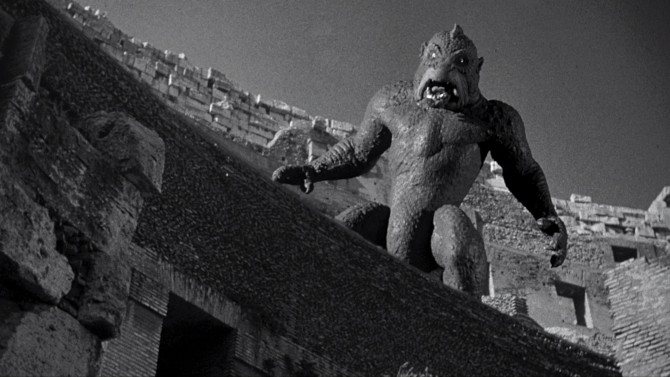
Ymir Fear in Roma
Despite not being written or directed by the famed special effects expert Ray Harryhausen, that latter honour going to Nathan Juran instead, there is no denying that the magic man’s hands are all over this horror infused sci-fi monster bash. Spawning the unique concept originally titled as The Giant Ymir, while also suggesting it be set in Rome, Italy instead of the United States (why you may ask... he simply always wanted to vacation there), whilst also being in charge of the stop-motion animation that makes this feature succeed, the final product eventually became known as 20 Million Miles to Earth (1957). A strong warning of the fears of moving too quickly into ‘futuristic’ ways, which is clearly a callback to ample anxiety revolving around the atomic bomb... which, with it, could bring possible nuclear annihilation, here we have the result of space exploration of the planet Venus.
-
Ymir Fear in Roma
20 Million Miles to EarthOctober 23, 2025Despite not being written or directed by the famed special effects expert Ray Harryhausen, that latter honour going to Nathan Juran instead, there is no denying that the magic man’s hands are all over this horror infused sci-fi monster bash. Spawning the unique concept originally titled as The Giant Ymir, while also suggesting it be set in Rome, Italy instead of the United States (why you may ask... he simply always wanted to vacation there), whilst also being in charge of the stop-motion animation that makes this feature succeed, the final product eventually became known as 20 Million Miles to Earth (1957). A strong warning of the fears of moving too quickly into ‘futuristic’ ways, which is clearly a callback to ample anxiety revolving around the atomic bomb... which, with it, could bring possible nuclear annihilation, here we have the result of space exploration of the planet Venus.
-
Plights, Camera, Action
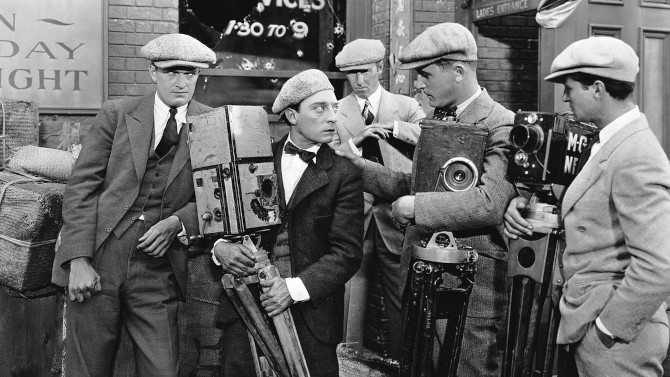
The CameramanFebruary 22, 2025Often deemed to be the last classic film made by the great Buster Keaton, The Cameraman (1928) was the final time the silent legend would have anything close to full creative control over one of his own features... as he folded his independent studio to sign with Metro-Goldwyn-Mayer (MGM) – who promptly made him their third highest paid star. Though his future would soon turn very bleak, this first film with the new studio was his own idea.
-
I Want To Ride My Bicycle…
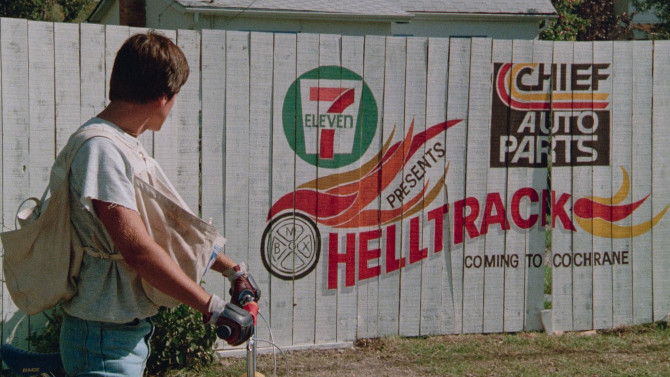
RadJuly 31, 2020I’m still not exactly sure what I’m doing here, but here we go. . . 1986's Rad is one of the films that has the greatest discrepancies between critic and fan ratings – despised by the former, loved by the latter. An unknown to even the most fanatical of film fans, yet also a cult classic adored by its underground supporters, this motion picture, directed by stuntman nonpareil Hal Needham, is like a scientifically concocted adrenaline shot of cheese, kitsch, B movie badness, with a fantastical twist on the 80s. . . and, for some bizarre reason, I kind of liked it. Welcome to the town of Cochrane, a fictional place where the newspaper delivery boys are aided and cheered on by its local citizens (including the garbage men), where the cops love nothing more than playing a motorcycle versus bike version of hide and go seek against the kids in the local wood mill, where everyone’s favourite pastime is called ‘ass sliding’ – no, it’s not as dirty or fun as it sounds, where the dancing looks like a part of a Siegfried & Roy show (and that’s not to mention the sexualized bicycle tango), and each and every person (be it the Shriners on their little clown cars, or its aged population) seems to be absolutely enthralled by BMX biking.
-
It Goes On and On My Friends…
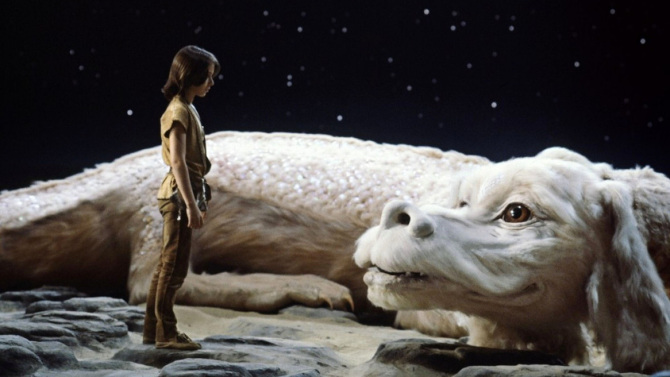
The NeverEnding StoryJuly 22, 2020Oh, the 80's. . . a child’s mother dead, vicious bullies, a horse dying by way of depression in a boggy swamp, a killer wolf, a fantastical world coming to an end, heavy doses of existentialism – and that’s a children’s movie?! Of course, some of you might have guessed it by now, I’m talking about one of the most bizarre family films in the history of the silver screen, 1984's The NeverEnding Story. Co-written and directed by Wolfgang Petersen (in his first English language film – Air Force One, Troy and several others would follow), this German produced feature, based upon the 1979 novel of the same name written by Michael Ende, though successful in its original release, definitely falls within the cult classic moniker. With a 21st century lens, those who have not yet seen it will be shocked by just how dark and depressing it is for a so-called family film. . . but, like those original Grimm fairytales, just below its overtly bleak outlook, there are many more upbeat themes and life lessons to learn.
-
Star Pick with Bob Morley
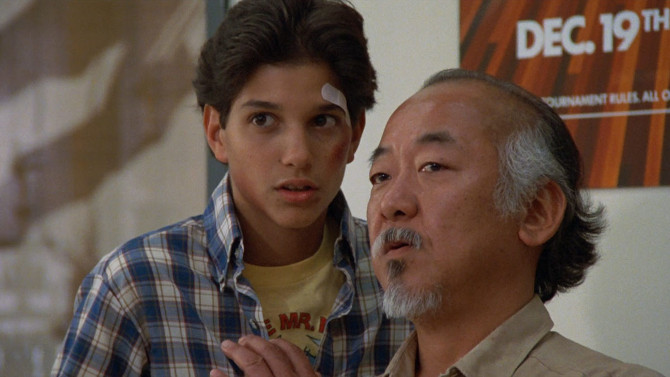
 The Karate Kid Is Hot TonightThe Karate KidJune 13, 2020
If you are a fan of the television series The 100 - a post apocalyptic tale in which one hundred delinquent teens are sent to an uninhabitable Earth to allow those on a space station to survive (only for them to discover that the planet, that was ravaged by a nuclear war ninety-seven years earlier, is, in fact, alive and well), then this will be exciting for you. Over the next couple of months, in order to celebrate the show's seventh and final season (which started airing on May 22nd, 2020), I am happy to announce that there will be three Star Picks coming up in the near future with a triumvirate of stars from the extremely popular series. First up, the series' male lead - Bob Morley. An Australian actor who got his start on soap operas in his native country (his first big break coming when he was added to the main cast of Home and Away in 2006), just eight short years later and he's found his way to Vancouver, Canada to shoot The 100, taking on the role of Bellamy Blake (who would quickly become a fan favourite) - a riveting character that we have watched grow over the past seven seasons.
-
Short Cuts
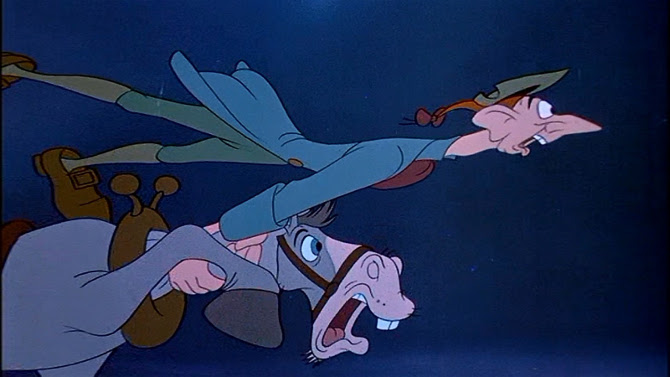
The Adventures of Ichabod and Mr. ToadOctober 2, 2019Celebrating its 70th anniversary this 2019, Disney’s The Adventures of Ichabod and Mr. Toad (1949) is perhaps one of the most bizarre pairings of stories ever to hit movie theatres. . . Coupling Kenneth Grahame’s iconic children’s novel “The Wind In the Willows” with Washington Irving’s gothic horror story “The Legend of Sleepy Hollow”, you may be wondering what these two tales have in common. . . in short, absolutely nothing (it was actually due to reduced manpower during World War 2 that six movies – this being the last, were released in these combined and shortened formats). Woven together by a narrated battle of the greatest characters ever to grace British and American shores, English narrator Basil Rathbone (most famous for playing Sherlock Holmes) selects the former story, while Washingtonian Bing Crosby (singer/actor) highlights the latter. . . two more rich, melodious voices you will not find.