 Films That Matter

Unwelcome Caller
Ah, Death, sometimes known as the Grim Reaper, has been depicted in so very many unique ways, with the most traditional being of the lineage of Victor Sjöström – who made the silent horror film The Phantom Carriage (1921)... which then inspired his protégée Ingmar Bergman (who watched the feature every year – usually on New Year’s Eve) with making his classic Black Death plague set film The Seventh Seal (1957). Having a laugh at that always winning Reaper, the 2011 horror comedy short The Coldest Caller, written and directed by Joe Tucker, is a four minute humour-filled foray into one such harrowing scenario. Exhuming some fun in a Monty Python-like sketch (specifically Monty Python’s Meaning of Life), when the ominous list-carrying Grim Reaper (Noel Byrne) – your typically towering, hidden gaunt figure dressed in all black, arrives on the cozey doorstep of one Mrs. Evans (Sheila Reid), the punctual old lady almost seems like she has already been waiting for him all day.
-
Need for Speedy
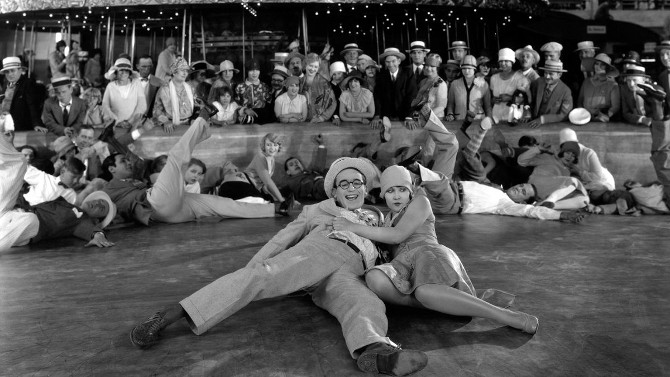
SpeedyMarch 12, 2017An unbelievable look back at 1920's New York City, Harold Lloyd’s final silent feature, 1928's Speedy, depicts The Big Apple in all of its hopeful Jazz Age glory. Featuring mind-boggling action and footage shot around the city, including old Yankee Stadium, down Broadway at beautiful Bowling Green, Coney Island in all of its former glory (Luna Park is on full display – it was ravaged by fire in 1944 and closed for good in 1946), Union Square in Manhattan, a ridiculous stunt in Washington Square Park as well as under the Brooklyn Bridge, and so many other places, it is a sweeping look at a city that has changed so very much over the ninety years since it was filmed there. The portion set near Sheridan Square in Greenwich Village (which is actually mostly an intricate set that Lloyd built in Hollywood), features a slower paced part of the city. With it having the last remaining horse-drawn streetcar route remaining, it highlights the final place in the metropolitan that has not been replaced by the hustle and bustle of the modern age. The streetcar owner is Pop Dillon (Bert Woodruff), whose granddaughter is Jane (Ann Christy), a young woman who is dating the job hunting Harold ‘Speedy’ Swift (Lloyd) – an ardent Yankees fan.
-
Murder at Midnight Can be Funny
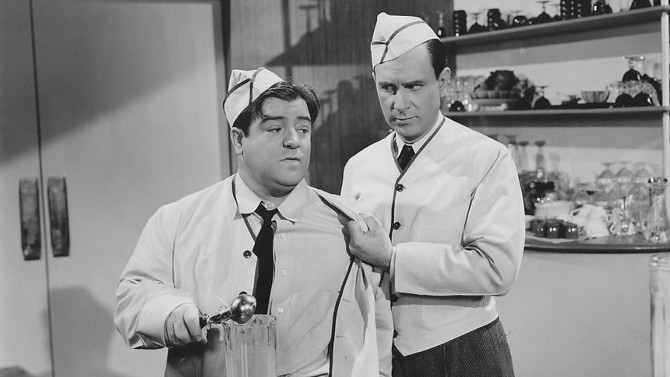
Who Done It?October 30, 2016Combining a touch of horror and film noir within a murder mystery, Abbott and Costello once again add their unique brand of humour to dark subject matter in the 1942 classic comedic caper Who Done It?. Directed by Erle C. Kenton (Island of Lost Souls), this flick finds straight man Bud Abbott playing Chick Larkin while funny man Lou Costello portrays Mervin Q. Milgrim; together, they are a pair of simple-minded soda jerks on the bottom floor of a popular radio station. Yet, their true dream is to become head writers for a mystery themed radio show – which is why they took the low paying jobs in the highfalutin building. Finding writer Jimmy Turner (Patric Knowles) and secretary to the boss, Juliet Collins (Mary Wickes), in their midst while working at the soda and ice cream bar, they see this as a prime opportunity to pitch their idea. Turner takes a liking to the funny friends and invites them to a live taping of his program, Murder at Midnight.
-
Star Pick with Mike MacDonald
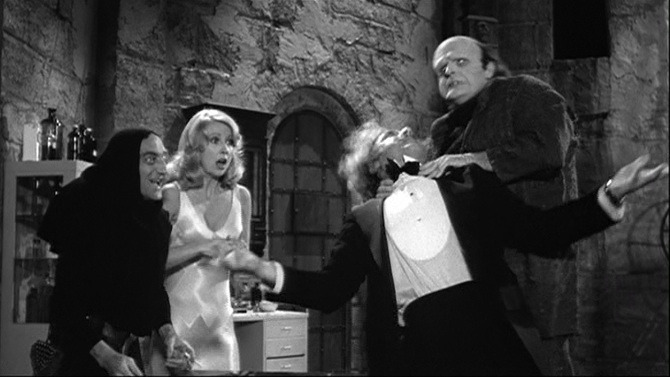
 Young Frankenstein Never Grows OldYoung FrankensteinOctober 4, 2016
I recently sat down with famed comedian Mike MacDonald, who has had much success touring North America over the past several decades. The popular comic has done it all, including performances of his stand up on Late Night with David Letterman, The Arsenio Hall Show, having comedy specials on Showtime and the CBC, as well as being a staple at the ‘Just For Laughs’ comedy festival in Montreal. He has even starred in a few movies. After his sidesplitting performance at The Port Theatre in Cornwall, Ontario (on August 19th, 2016), the funnyman was kind enough to sit down with me, telling me about some of his favourite films. He immediately referenced the parody as being his preferred type of motion picture. He eloquently and succinctly highlighted a key aspect in creating a successful parody: "when you want to piss on something, it is good for a two or three minute sketch. But to parody something for ninety minutes, you have to love the subject".
-
Star Pick with Matt Sobb
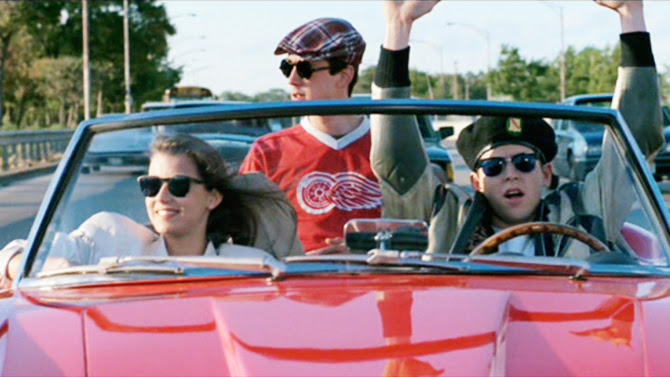
 Don’t Skip This Hughes’ ClassicFerris Bueller's Day OffSeptember 27, 2016
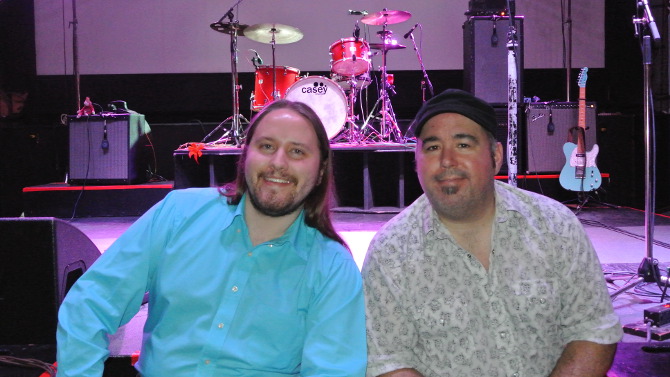
It is hard to fathom that Ferris Bueller’s Day Off is thirty years old. Written and directed by John Hughes, it is one of the seminal comedies of the 1980s – having influenced so many future films that look at the lives of bored yet rambunctious teenagers. Not too long ago, I chatted with MonkeyJunk drummer Matt Sobb. An integral part of the three piece Juno Award winning swamp rock/blues band, the percussionist narrowed his favourite films down to two – strangely enough, both were released in 1986: Stand by Me and Ferris Bueller’s Day Off (which will be discussed here today). Providing me with two very well rounded and in depth answers, check out his response down below by clicking on the video interview. The band has been busy of late, having spent much time on tour throughout Europe and the United States – they are now making their way through Canada just prior to the release of their new album, Time to Roll. Make sure to check them out if you get a chance.
-
Mum’s the Word
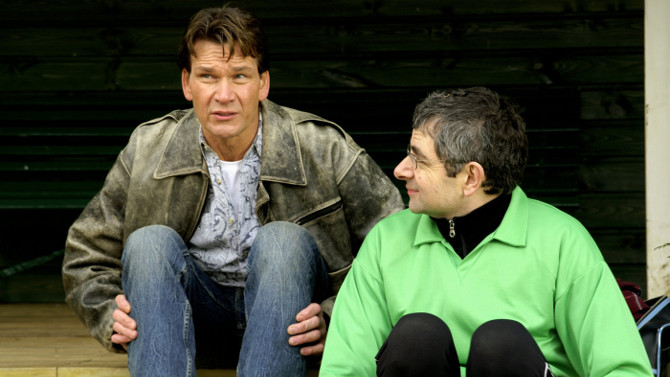
Keeping MumSeptember 9, 2016In September we will mark the seventh anniversary of the death of Patrick Swayze. Becoming a powerhouse star of the 1980's and 1990's with classics such as Dirty Dancing, Ghost, Road House, Point Break, among others, the man left an indelible impact on the film industry. So, as a tribute here today, I am going to write about one of his last movie roles that can be found in the small, rarely seen 2005 British comedy Keeping Mum. Directed by Niall Johnson, the story follows a married reverend, Walter Goodfellow, played masterfully by Rowan Atkinson (Mr. Bean), his wife Gloria, Kristin Scott Thomas (The English Patient), and their two children, as their lives become more and more impacted by their new housekeeper Grace, the endearing Dame Maggie Smith (Professor McGonagall from the Harry Potter franchise).
-
A Rabbit and a Gent Walk Into a Bar…
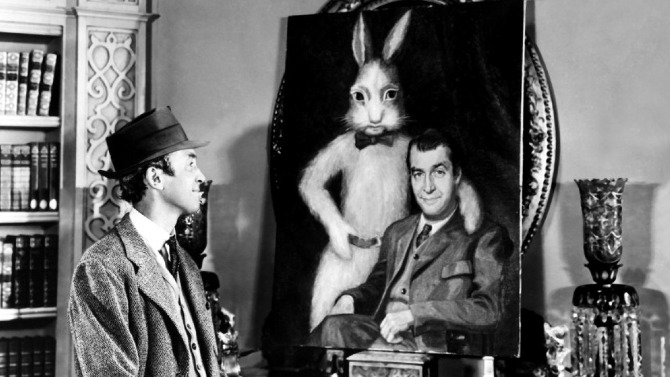
HarveySeptember 4, 2016If a stage play is to be successful, it needs to rely on the strength of two very important aspects – its actors and sharp dialogue. The one thing that I have come to notice when watching an adaptation of a play is that the dialogue that transitions over to the big screen is almost always beautifully written, unbelievably witty and surprisingly eloquent. There is perhaps no better example of this than the 1950 classic Harvey. Mary Chase adapts her own Pulitzer Prize winning play (with some help from Oscar Brodley), bringing with her Jimmy Stewart and Josephine Hull, two actors who had already tackled the material on the stage. Stewart plays Elwood P. Dowd, a kindly and charming gentleman who comes from a well-to-do family. He has a lovely demeanor, but is thought to drink too much (he does spend most of his days frequenting bars) . . . and also just happens to be friends with an invisible, six foot three and a half inch tall rabbit named Harvey.