 Films That Matter

Unwelcome Caller
Ah, Death, sometimes known as the Grim Reaper, has been depicted in so very many unique ways, with the most traditional being of the lineage of Victor Sjöström – who made the silent horror film The Phantom Carriage (1921)... which then inspired his protégée Ingmar Bergman (who watched the feature every year – usually on New Year’s Eve) with making his classic Black Death plague set film The Seventh Seal (1957). Having a laugh at that always winning Reaper, the 2011 horror comedy short The Coldest Caller, written and directed by Joe Tucker, is a four minute humour-filled foray into one such harrowing scenario. Exhuming some fun in a Monty Python-like sketch (specifically Monty Python’s Meaning of Life), when the ominous list-carrying Grim Reaper (Noel Byrne) – your typically towering, hidden gaunt figure dressed in all black, arrives on the cozey doorstep of one Mrs. Evans (Sheila Reid), the punctual old lady almost seems like she has already been waiting for him all day.
-
Watch Out for Big Red
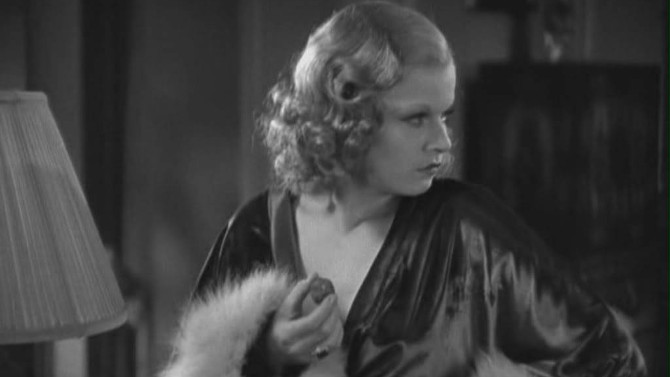
Red-Headed WomanSeptember 21, 2018“So gentlemen prefer blondes, do they?” What a way to open a film. . . famed platinum blonde Jean Harlow, face wrapped in a hot towel at a beauty salon, utters this self-referential line (in many ways breaking the fourth wall and speaking directly to the audience – her hair now dyed red), only for things to delve into more intriguing terrain. . . the next snippet finds the dame trying on a dress – asking if you can see through the material, the shop worker answers in the affirmative, to which she perkily states, “I’ll wear it”. Vignettes with a purpose, each moment gives us a viewpoint into the world of one Lil Andrews (Harlow), a Red-Headed Woman with a plan.
-
Hope For the Best
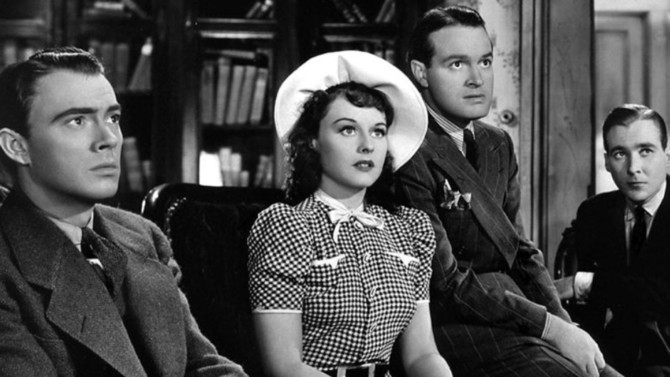
The Cat and the CanarySeptember 16, 2018A horror premise as old as it is entertaining, Elliott Nugent’s 1939 film The Cat and the Canary finds an extended family coming together for the reading of their uncle’s will – ten years to the day of his death. A remake of the 1927 silent classic (the idea came from a 1922 stage play of the same name by John Willard), screenwriters Walter DeLeon and Lynn Starling fuse the narrative with a deft comedic touch, resembling the Abbott and Costello horror features that were soon to come – movies that were magically able to play the horror parts for horror and the comedy parts for comedy. Set in a gothic-style plantation home in the middle of the Bayou, the vines envelop the property, the alligator filled water and lush landscape swallowing the dilapidated mansion that likely once stood out, a grand example of man conquering nature. Somewhat resembling Poe’s House of Usher, the property is managed by a mysterious and menacing housekeeper, Miss Lu (Gale Sondergaard) – it is implied that she was the owner’s mistress, a woman who welcomes (and I use that word loosely), the estate’s lawyer, Mr. Crosby (George Zucco), as well as Cyrus Norman’s only remaining heirs: famed actor Wally Campbell (Bob Hope) – who keeps guessing what will happen before it does thanks to his profession, fetching Joyce Norman (Paulette Goddard), mother and daughter Aunt Susan (Elizabeth Patterson) and Cicily (Nydia Westman), as well as nephews Fred Blythe (John Beal) and Charles Wilder (Douglass Montgomery).
-
The Truth, the Whole Truth, and Nothing But the Truth
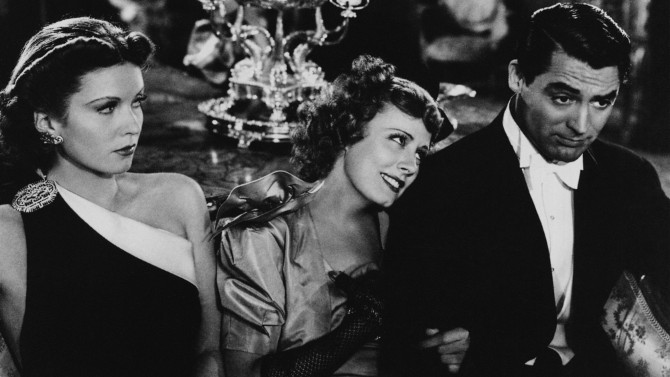
The Awful TruthAugust 26, 2018In one of the most frank speeches in Oscar history, Leo McCarey, upon winning the Academy Award for Best Director, took the statuette, and boldly stated, “I want to thank the Academy for this wonderful award. . . but you gave it to me for the wrong picture”. For those who have seen Make Way For Tomorrow, you will immediately know why he said it (a picture with a message and one of the great endings in film history, Orson Welles once claimed, “it would even make a stone cry”), but, that is not to say that the movie that he won for, 1937's The Awful Truth, is not deserving of some praise. A motion picture that helped put the screwball comedy on the map (The Awful Truth was based on a 1922 play by Arthur Richman and filmed twice before this version), it earned six Oscar nods (claiming the trophy for McCarey) – a darling to critics and one of the top commercial successes of the decade, while its irreverent mix of slapstick (it immediately evident that McCarey directed silent comedies; for example, the works of Charlie Chase and Harold Lloyd, while also pairing Laurel and Hardy together, and into the sound era, The Marx Brothers), witty repartee, and folly filled characters make it an absolute charmer.
-
Fantasy Island
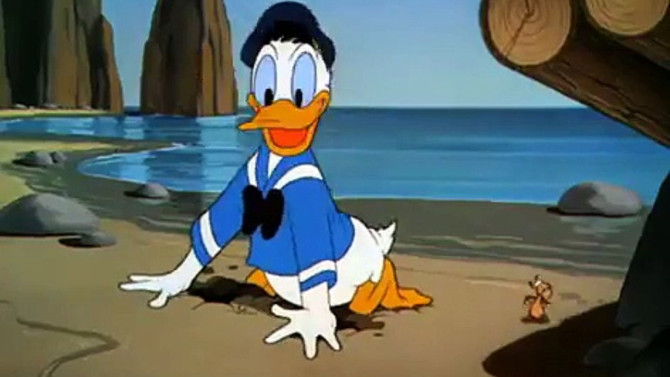 Sea SaltsSwiss Family RobinsonJuly 1, 2018
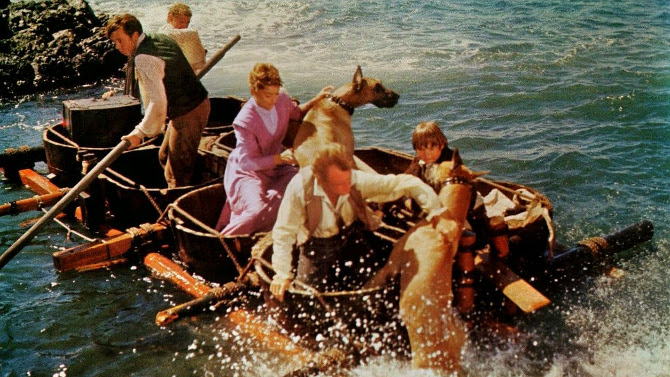
Ah, the way things were. Revel in the past for a moment, won’t you. Imagine walking into a movie theatre in 1960, preferably one built in the golden age of film watching – mohair seats, architectural detailing (crown moulding, wooden panelling), a proper sized atrium. . . and, as you make your way to your place, enjoying some popcorn as the lights dim, you are not bombarded by numerous commercials that take you out of that magic place (and sadly reminding you of the business-centric reality of show business), but rather, are greeted by an animated short, 1949's Sea Salts, the perfect lead-in to your Disney feature, Swiss Family Robinson. These two films did show back to back upon Swiss Family Robinson’s initial run, so they will both be reviewed here. Sea Salts, directed by Jack Hannah, finds ‘Mac’ Bootle Beetle (Dink Trout) recalling his long, rather unusual friendship with sea captain Donald Duck (Clarence Nash) – the pair were forced to abandon ship long ago, finding themselves stranded on a tiny, uncharted isle.
-
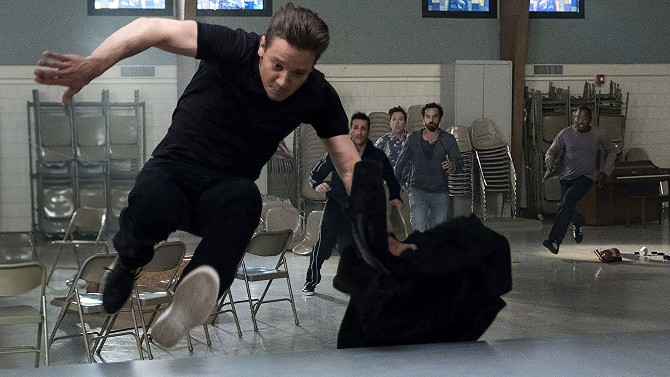
Not Just a Game
TagJune 23, 2018Finding its cinematic milieu somewhere between The Big Chill and The Hangover, 2018's Tag is at times infantile, crude, and must be described as all-around silly, yet, despite this, director Jeff Tomsic pieces it all together in a surprisingly entertaining way – hitting the right chord by way of its stylized action set pieces, clever dialogue and its unique plot (childhood comradery maintained over thirty long years by way of a simple kid’s game). Written for the screen by Mark Steilen and Rob McKittrick (and based upon a Wall Street Journal article entitled, “It Takes Planning, Caution to Avoid Being It” by Russell Adams – meaning that this is another based on true events tale), it tells the story of a group of friends who have been playing the same game of tag for thirty years (each May being the month where the all-out warfare happens). Now living in different cities, the group is comprised of an overly cocky businessman named Bob Callahan (Jon Hamm), a divorced, unemployed druggie, Randy ‘Chilli’ Cillano (Jake Johnson), a mentally fragile, outside the box thinker, Kevin Sable (Hannibal Buress), and the heart behind keeping the guys united, Hogan ‘Hoagie’ Malloy (Ed Helms). . . then there is their long hunted target, the hot-shot of the gang, Jerry Pierce (Jeremy Renner) – a man who has never been tagged in the three decades they have been playing (through a clever combination of speed, smarts, and feral brawn).
-

Playing Games
Game NightJune 15, 2018Well, if for some reason you’ve ever had the random thought that it would be cool seeing a group of board game loving friends wrapped up in a Taken-like kidnapping mystery – unbeknownst to them (for a good portion of it), then 2018's Game Night is for you. To have some fun, I have tried to work as many titles of games into this review as possible. Written by Mark Perez and directed by John Francis Daley (Bones’ Lance Sweets) and Jonathan Goldstein (the pair were part of the writing staff behind Spider-Man: Homecoming), the plot follows a group of weekly game nighters. . . ultra-competitive married couple Max (Jason Bateman) and Annie (Rachel McAdams), long time sweethearts Kevin (Lamorne Morris) and Michelle (Kylie Bunbury), and the oft ridiculed for having a new piece of dim-witted arm candy each week, Ryan (Billy Magnussen – delivering a great comedic performance in which he too is rather dense) – he has finally surprised the gang by bringing a sharp Irish lass named Sarah (Sharon Horgan); each week is a constant battle to discover who will be numero UNO.