 Films That Matter

Unwelcome Caller
Ah, Death, sometimes known as the Grim Reaper, has been depicted in so very many unique ways, with the most traditional being of the lineage of Victor Sjöström – who made the silent horror film The Phantom Carriage (1921)... which then inspired his protégée Ingmar Bergman (who watched the feature every year – usually on New Year’s Eve) with making his classic Black Death plague set film The Seventh Seal (1957). Having a laugh at that always winning Reaper, the 2011 horror comedy short The Coldest Caller, written and directed by Joe Tucker, is a four minute humour-filled foray into one such harrowing scenario. Exhuming some fun in a Monty Python-like sketch (specifically Monty Python’s Meaning of Life), when the ominous list-carrying Grim Reaper (Noel Byrne) – your typically towering, hidden gaunt figure dressed in all black, arrives on the cozey doorstep of one Mrs. Evans (Sheila Reid), the punctual old lady almost seems like she has already been waiting for him all day.
-
Hot Summer Night
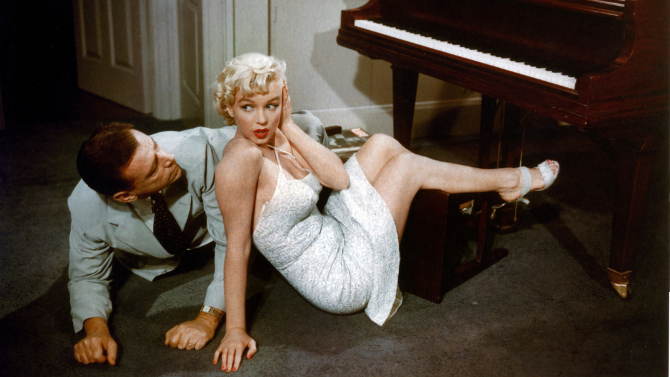
The Seven Year ItchMarch 22, 2020Every once in a while, a scene, or to break it down even further, a moment, forever captures the zeitgeist of the cinema world. . . more long lasting and memorable than the movie ever could be. By now, you may have already guessed that I am talking about the breezy subway grate blowing up Marilyn Monroe’s flowy white dress (cooling her down on a hot summer’s night) in The Seven Year Itch (1955). Funnily enough, the press generated from the scene’s filming in New York City (the excitement of over five thousand fans watching them shoot and then spreading the word. . .along with the risqué-for-the-time photographs that circulated around the world) brought people into theatres to experience a moment that could never truly match up with what was broadcast. . . for the Hays code would never allow the revealing extent shown before the release to be seen on screen – though that is not to say that it is still not a fabulous clip. . . and I’m here to also say, so is the film.
-
What Could Have Been: High Anxiety
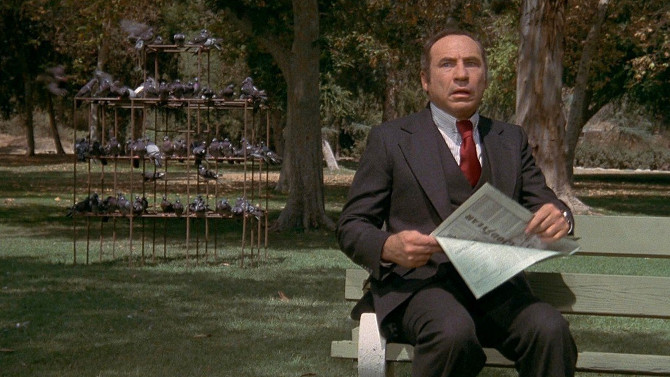
March 17, 2020I will be the first to say that I absolutely love the great Mel Brooks. Secondly, I will also say that I absolutely love Alfred Hitchcock. So, to have a movie in which Mel Brooks satirizes the motion pictures of Alfred Hitchcock just seems like it would be pure twenty-four karat gold. Saying that, I probably went into 1977's High Anxiety with expectations that were just a bit too high. . . which caused me a touch of anxiety. Bringing together many of his usual comedy friends from his other 70s pictures, the plot follows the famed Dr. Richard Thorndyke (Mel Brooks) as he flies out to California for his new job – running the Psycho-Neurotic Institute for the Very, Very Nervous (a fenced complex that holds a sign that reads “Keep In”).
-
Down the Rabbit Hole
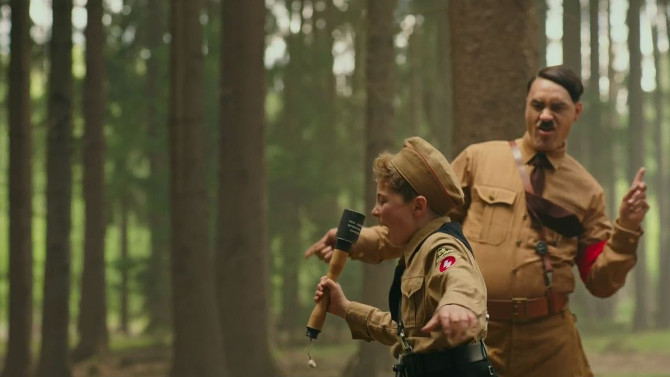
Jojo RabbitNovember 27, 2019If you’ve ever wanted to see a film where a young boy’s imaginary friend just happens to be Adolf Hitler, then 2019's Jojo Rabbit is for you. Based upon Christine Leunens’ novel “Caging Skies”, Taika Waititi (What We Do in the Shadows; Thor: Ragnarok) adapts and directs this unique satire on World War 2 era Germany. Amplifying an already ludicrous Nazi doctrine, Waititi transports us into the world of young Jojo (first time actor Roman Griffin Davis – a terrific find), a slightly mousy boy heading off to Hitler Youth camp. Completely immersed in a society of indoctrination, it is perhaps no surprise that his poor-advice giving imaginary friend is the Führer himself, Adolf Hitler (Taika Waititi) – in many ways, a skewed stand-in for his missing father (who is off somewhere during the war).
-
Word Up
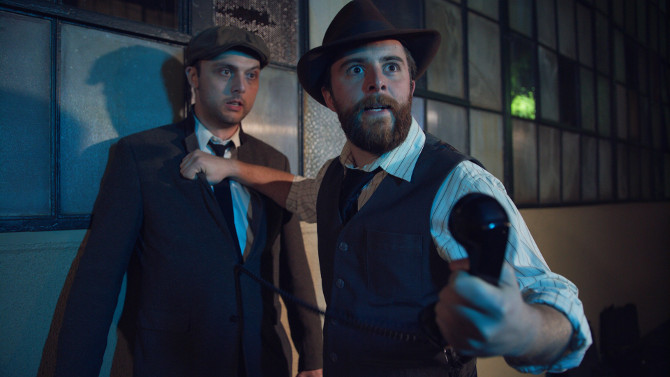
Word on the StreetNovember 19, 2019Like some sort of quirky hybrid of a Dr. Seuss story and an Abbott and Costello comedy sketch transported to the dark alleyway of a film noir, 2019's Word on the Street is a five minute foray into the wacky world of English wordplay. Written and directed by Austin Hillebrecht and Sean Parker, the former plays flat cap wearing Bugsy, a low-level ruffian who has heard that the word on the street is “implication”. Meeting up with fellow criminal Rat (Conor Eifler), the fedora wearing fella claims that it is “insinuation”.
-
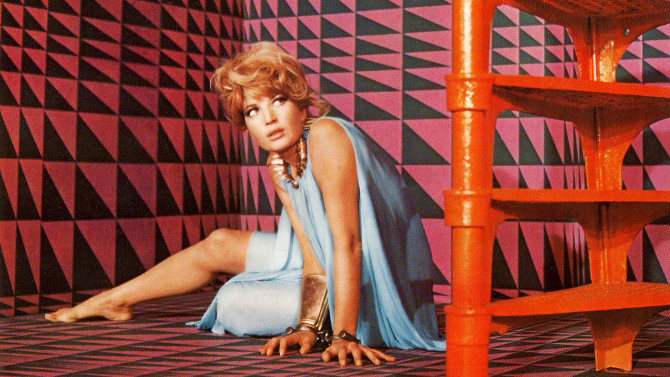
What Could Have Been: Modesty Blaise
August 25, 2019In 1962, one film changed everything. No, not a big budget spectacle, or an Academy Award winner (for those of you interested, the Best Picture was West Side Story), but rather a low budget action B movie, which somehow helped spawn one of the most successful (and longest running) film franchises of all-time. . . you guessed it, Dr. No. Soon, From Russia with Love (1963) and Goldfinger (1964) were released – proving that Dr. No was no anomaly. . . rather, this was an all out craze. And, with millions of cinemagoers flocking to see them, other studios soon sought to capitalize on this unique combination of an action spy picture with cheeky comedy by developing their own Bond knock-offs.
-
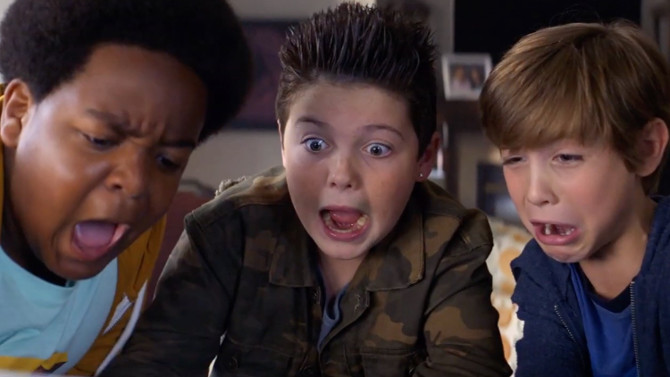
Supergood
Good BoysAugust 18, 2019If, for whatever reason, you are looking for some advice on kissing, then Good Boys, directed by Gene Stupnitsky, is probably not where you should be starting your search. Written by Stupnitsky and Lee Eisenberg, and produced by Seth Rogen, it is like Superbad for tweens. . . instead of a triumvirate of friends looking for alcohol to impress as they head to a party (hoping to finally get laid), this story finds three buddies on a quest to learn how to kiss before going to their first kissing party – they must also try to track down a new drone after destroying one. This is Good Boys narrative in a nutshell.