 Films That Matter

Unwelcome Caller
Ah, Death, sometimes known as the Grim Reaper, has been depicted in so very many unique ways, with the most traditional being of the lineage of Victor Sjöström – who made the silent horror film The Phantom Carriage (1921)... which then inspired his protégée Ingmar Bergman (who watched the feature every year – usually on New Year’s Eve) with making his classic Black Death plague set film The Seventh Seal (1957). Having a laugh at that always winning Reaper, the 2011 horror comedy short The Coldest Caller, written and directed by Joe Tucker, is a four minute humour-filled foray into one such harrowing scenario. Exhuming some fun in a Monty Python-like sketch (specifically Monty Python’s Meaning of Life), when the ominous list-carrying Grim Reaper (Noel Byrne) – your typically towering, hidden gaunt figure dressed in all black, arrives on the cozey doorstep of one Mrs. Evans (Sheila Reid), the punctual old lady almost seems like she has already been waiting for him all day.
-
Babysitting is Dangerous
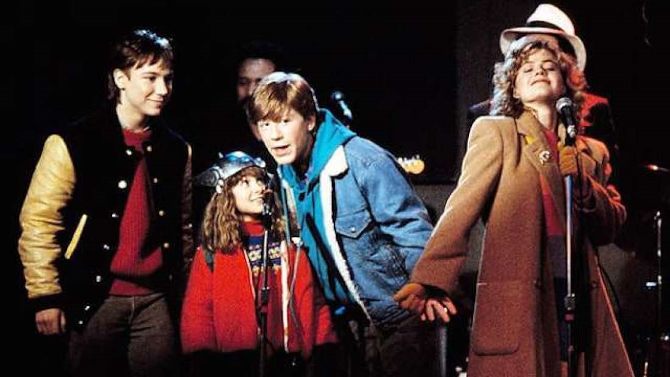
Adventures in BabysittingJanuary 16, 2018Going all the way back to Chris Columbus’s first directorial effort, 1987's Adventures in Babysitting is the way PG family films should be made, entertaining for both adults and kids, with just the right amount of edginess. Though incredulous, the entertaining narrative follows teenager Chris (Elisabeth Shue), who, after boyfriend Mike (Bradley Whitford) cancels on their anniversary dinner, grudgingly takes a job babysitting an adventurous eight year old, Sara (Maia Brewton), instead. Her older brother, 15 year old mild-mannered Brad (Keith Coogan), is supposed to be staying at his quirky buddy Daryl’s (Anthony Rapp), but after hearing that Chris is babysitting, sticks around.
-
Running Down a Dream
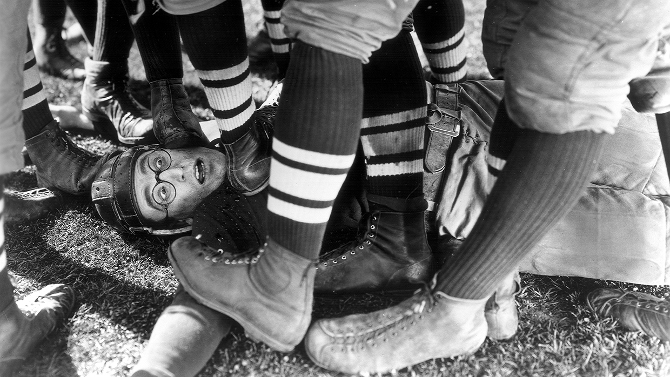
The FreshmanJanuary 7, 2018Setting out to film (firstly) the climactic football scene at the Rose Bowl (stadium) in Pasadena, California for his 1925 feature The Freshman, Harold Lloyd soon felt like he was lost – unable to sense the character and his feelings, not able to hit the right tone for his collegiate protagonist. Scrapping the work, he decided to return to Hollywood and shoot sequentially – a rarity for any motion picture. It was typical for Lloyd and his team to come up with the major set pieces first (a perfect example being the football sequence) – shooting it at the very beginning, but in this case, Lloyd felt like this format was better suited, as it would add depth and continuity as the actors grew into this very character driven story. Becoming a major spectacle (and Harold Lloyd’s highest grossing film), it spawned an immense number of college sports movie knock-offs that would dominate the theatre scene for the next several years (a prime example, Lloyd’s character is utterly inspired by a fictional college student found in a fake movie made up for this one titled “The College Hero” – two years later, The College Hero was released by Columbia Pictures). Following Lloyd’s Harold ‘Speedy’ Lamb (notice his nickname is the title of his 1928 New York set picture), the teen is heading off to Tate University – a school that is football crazy. While en route, he meets a shy, sweet hearted ingenue named Peggy (Jobyna Ralston) – timid love at first sight.
-
Boy Meets Girl
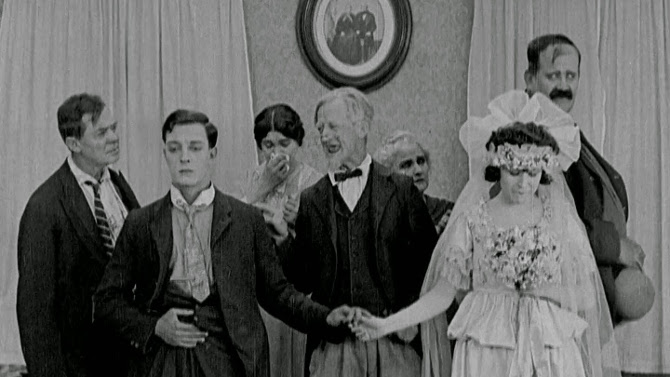
NeighborsDecember 6, 2017Long before Zac Efron and his fraternity bros started terrorizing new parents Seth Rogen and Rose Byrne in the 2014 comedy Neighbors, there was another movie with the same name, a superlative 1920 short from the great Buster Keaton (one of his first four shorts on his own). A tale of star crossed lovers, The Boy (Buster Keaton) and The Girl (Virginia Fox – originally one of Mack Sennett’s Bathing Beauties, she would marry major Hollywood mogul Darryl F. Zanuck, retiring from the business just a few years later) are madly in love, though the fence that separates their tenement apartments might as well be topped with barbed wire and armed with snipers, as their families despise each other – a feud rivalling the Montague’s and Capulet’s. Both fathers are especially involved in keeping the pair apart, though The Girl’s giant sized Father (Joe Roberts) is a much bigger threat than The Boy’s equally diminutive dad (played by Buster’s own father, Joe). Early each morning, they slip notes through a hole in the fence to communicate.
-
An Ace Venture
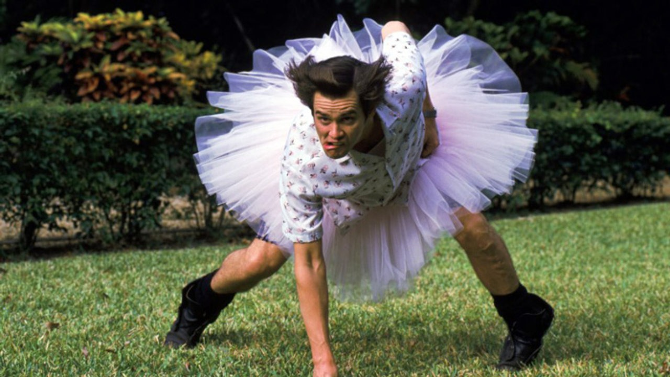
Ace Ventura: Pet DetectiveSeptember 12, 2017One of those films that was not treated overly well by critics but is beloved by fans the world over, Ace Ventura: Pet Detective, shot lead Jim Carrey, then known to people mostly for being on In Living Color, into another stratosphere. The year 1994 was a good one for the comic and actor, as this film was followed soon after by The Mask and Dumb & Dumber, further adding to his meteoric rise. The next three years would further cement him as a true comic talent, as roles in Batman Forever, Ace Ventura: When Nature Calls, The Cable Guy and Liar Liar continuously hit viewers’ funny bones. Though, it was the character of Ace Ventura, which was co-written by Carrey, along with Jack Bernstein and Tom Shadyac (who also directed, and would work again with the actor in Liar Liar and Bruce Almighty), that first demonstrated his skills at physical comedy, mimicry, comedic timing and coining memorable catch phrases to be enjoyed by silver screen audiences.
-
Riverboat Fantasy
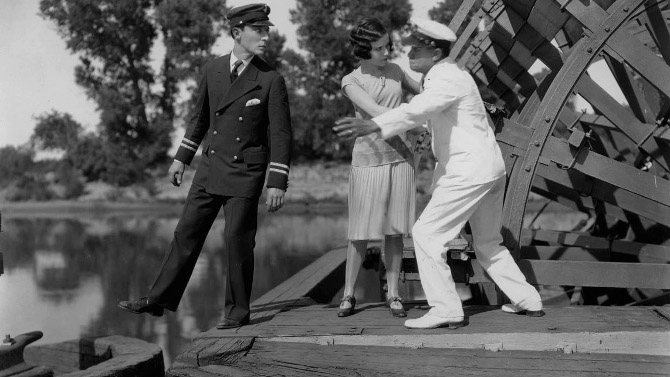
Steamboat Bill, Jr.August 7, 2017An inside joke for fans of Buster Keaton, they surely know that he often wears a pork pie hat in his films. Well, while watching 1928's Steamboat Bill, Jr., there is a scene where his uncle takes him to buy a new hat – to replace the effeminate French beret that currently adorns his little head. A revolving number are tried on by the young man, with the closest to his original being wholeheartedly rejected. Though he does eventually purchase a much larger version of a pork pie hat, it flies off of his head and into the flowing river, not to be recovered. This, in many ways, is symbolic of the changing era the talented silent comedian found himself in. After the box office debacle that was The General (now considered one of his greatest features), Keaton was no longer blessed with carte blanche when making his movies – the studio keeping a keen eye on spending and limiting his overall control.
-
Harold Lloyd Hones his “Glasses” Character
 Bumping Into BroadwayAn Eastern WesternerJuly 14, 2017
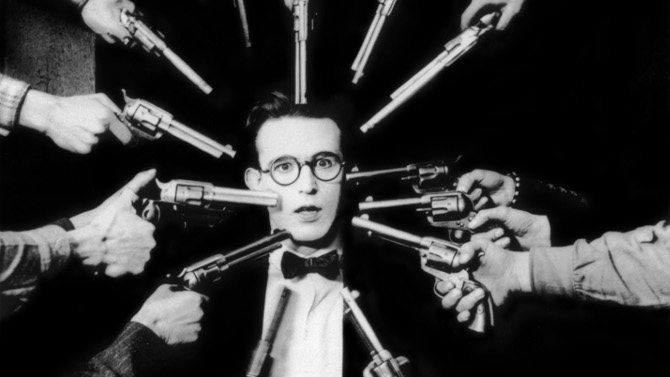
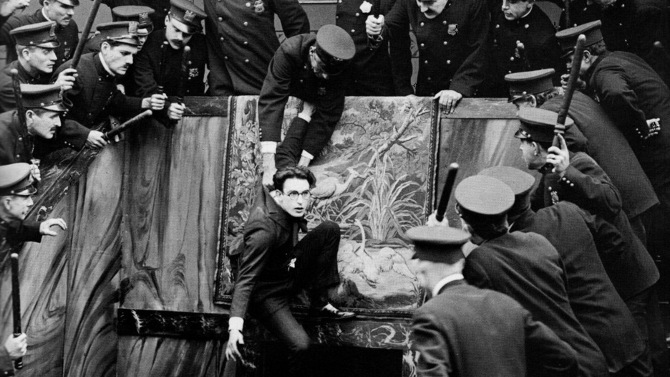
An observation I am sure many of you have made over the years is the general stupidity (and lack of skill) the villains, police or any other nefarious enemy has had in the movies. With the James Bond films being a prime example, it shows the low standards the maniacal mastermind must have had when hiring his henchmen – they cannot shoot, drive or seemingly do anything else, stumbling over each other in the process. Also think of John Wick or any other motion picture made over the past multiple decades. Well, it was this thought that struck me as I sat watching two early silent shorts from the comedic great Harold Lloyd (placed alongside Charlie Chaplin and Buster Keaton as the top comics of the silent era). Starting with 1919's Bumping into Broadway, it was the first time the actor donned his now-famous “glasses” character, usually just referred to as The Boy. A two-reeler that lasts twenty-five minutes, it has The Boy getting into all kinds of hijinks.