 Films That Matter

Unwelcome Caller
Ah, Death, sometimes known as the Grim Reaper, has been depicted in so very many unique ways, with the most traditional being of the lineage of Victor Sjöström – who made the silent horror film The Phantom Carriage (1921)... which then inspired his protégée Ingmar Bergman (who watched the feature every year – usually on New Year’s Eve) with making his classic Black Death plague set film The Seventh Seal (1957). Having a laugh at that always winning Reaper, the 2011 horror comedy short The Coldest Caller, written and directed by Joe Tucker, is a four minute humour-filled foray into one such harrowing scenario. Exhuming some fun in a Monty Python-like sketch (specifically Monty Python’s Meaning of Life), when the ominous list-carrying Grim Reaper (Noel Byrne) – your typically towering, hidden gaunt figure dressed in all black, arrives on the cozey doorstep of one Mrs. Evans (Sheila Reid), the punctual old lady almost seems like she has already been waiting for him all day.
-
Escape Goat
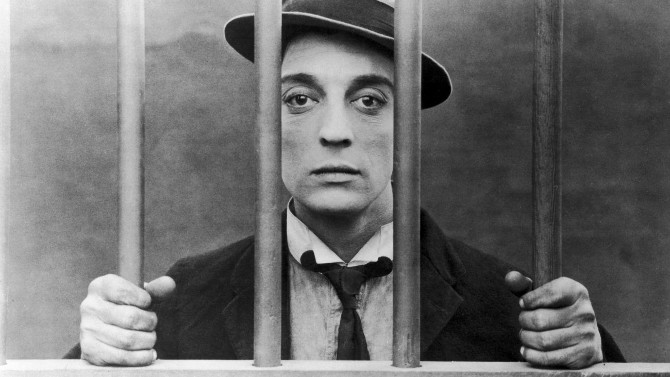
The GoatMay 30, 2018Will Buster Keaton ever catch a break?. . . well, let’s be honest, by the end of the film, things usually work out alright. But, as The Great Stoneface hops, skips and jumps his way through a bevy of ever complicated (and might I add, intricately plotted) obstacles – no matter what movie, luck never seems to come his way. Case in point, 1921's two reel short, The Goat – which has nothing to do with an animal. Opening with a clever gag in which Keaton, (playing a famished, unlucky man monikered The Goat), is seen heading to the back of a bread line. . . misfortune reveals that the last three men in the procession are not actually men at all – they are mannequins showing off clothing for a store, hence, the never moving lineup.
-
Muzzle Tov
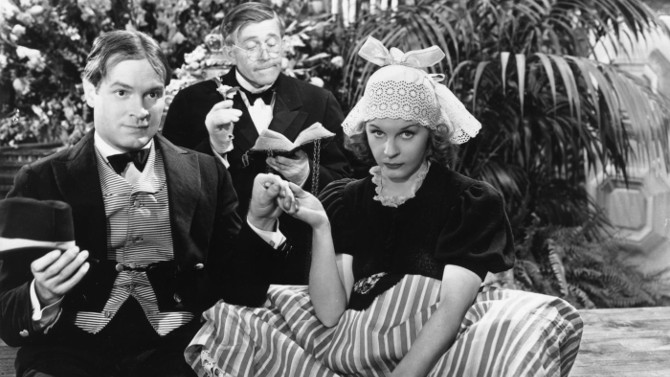
Never Say DieMay 4, 2018A rich, hypochondriac of a man, John Kidley (Bob Hope), haunted by a Black Widow (a murderous, marry-a-wealthy-husband-a-year type woman, not a spider), Juno Marko (Gale Sondergaard), flees her side, making his way to a beautiful health-resort-centred town called Bad Gaswasser, Switzerland, hoping that the hidden locale, nestled amongst the picturesque Alps, will help him with his supposed condition, and, more importantly, in avoiding the persistent dame – hence the 1939 film’s title, Never Say Die. Now, of course, the quote offered at the opening is spoken by Kidley, and it references his perceived awful luck. And, to be honest, Ms. Marko is quite the woman. . . having ditched her most recent beau (she witnessed him slipping and falling off the Matterhorn from mere inches behind him – wink wink, nudge nudge), Kidley is her next mark, and it does not take her long to track the wealthy gent down once again. Here is a piece of witty dialogue from the film, emphasizing their rather amusing predicament:
-
Star Pick with Jayson Warner Smith
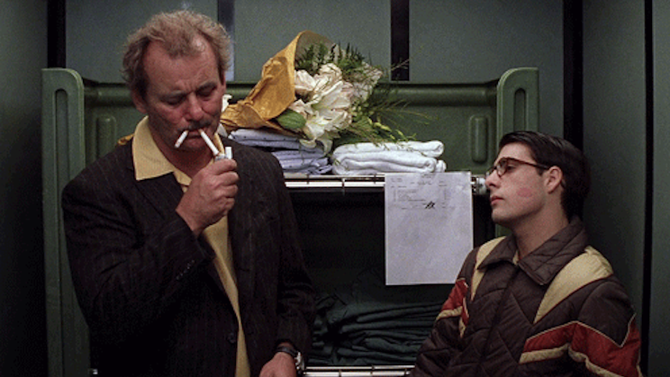
 High School ConfidentialRushmoreMay 1, 2018
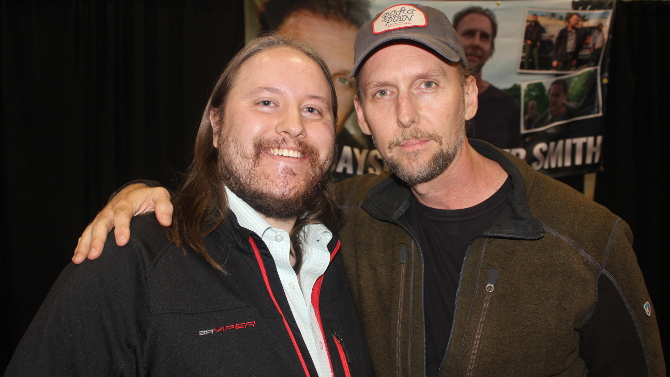
I was fortunate enough to sit down with actor Jayson Warner Smith at CAPE (Cornwall and Area Pop Expo) recently. Perhaps best known as Gavin, Negan's trusted and rather level-headed manager of the Kingdom in The Walking Dead, he has quickly carved out several quality roles on both television and the silver screen in a short time. Also with a key role on the highly acclaimed series Rectify (which ran for four seasons and ended in 2016), his character of Wendall Jelks is a master antagonizer and death row inmate, while he takes a wholly different turn as a loyal yet wild right-hand man airplane pilot to Tom Cruise's character in 2017's American Made (directed by Doug Liman). He has also appeared on the big screen in films such as Footloose (the remake), Mississippi Grind, Christine, and Birth of a Nation.
-
Sarong Side of the Tracks
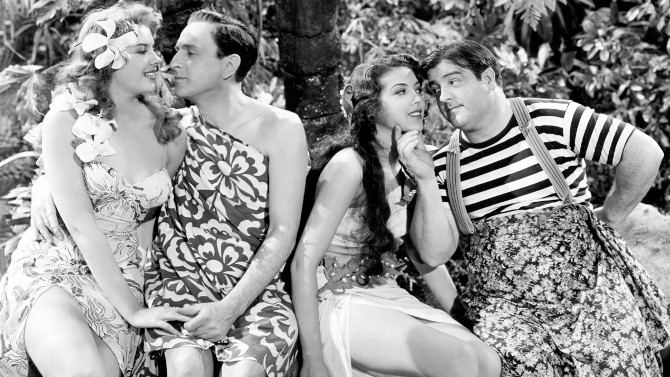
Pardon My SarongApril 15, 2018Less of a critique than an observation, movies have clearly become freer in many respects – violence, nudity and profanity can now be littered throughout the narrative. . . yet, the twenty-first century has brought with it a more politically correct outlook, and stories are impeded in this very different respect (unlike films during the Motion Picture Production Code and after – which, for many reasons, were able to be more politically incorrect, for lack of a better term). Case and point, Abbott and Costello’s Pardon My Sarong, directed by Erle C. Kenton (Island of Lost Souls; Who Done It?). The piece of dialogue in question finds the comedic duo discussing marriage –
-
Polish to Perfection
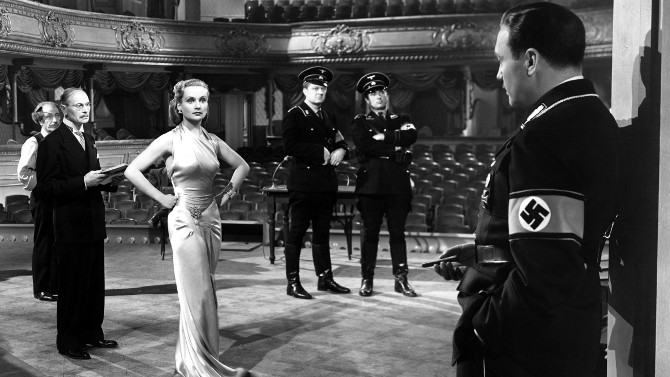
To Be or Not to BeApril 13, 2018To Be or Not to Be walks a complicated tightrope – released in 1942, the World War II set comedy, even by today’s standards, could be called politically incorrect. Satirizing the horrible situation over in Europe (specifically Poland), co-adapter and director Ernst Lubitsch knew, like Charlie Chaplin before him (The Great Dictator), that it was vital to be able to laugh in the face of Hitler and the Nazis, both alleviating the tension of audiences back home with humour while also bringing the Axis power down a notch, highlighting their absurdly ridiculous doctrine and beliefs. A play, or should I say plays within a play, the story follows an acting troupe in Poland managed by producer/director Dobosh (Charles Halton). Starring the husband and wife team of Joseph (Jack Benny) and Maria Tura (Carole Lombard), they are currently bringing Shakespeare’s “Hamlet” to life. Preparing for their next play during the day, “Gestapo” is a satire revolving around Hitler and his cronies, comedy coming from the extensive use of “Heil Hitler”, an inquisition of a young child who the Nazis are worried will not talk, and a joke about how “They named a brandy after Napoleon, they made a herring out of Bismarck, and the Fuhrer is going to end up as a piece of cheese!”. Of course, Maria wants to wear a fashionable dress in a concentration camp scene much to the chagrin of Dobosh, though Greenberg (Felix Bressart), the lowly Jewish actor who desperately hopes of playing Shylock one day, suggests, “It’ll get a terrific laugh” – his go-to catch phrase. Other problems arise, with Dobosh equally unimpressed by Bronski’s (Tom Dugan) Hitler, saying, “I don’t know. . . it’s not convincing. To me, he’s just a man with a little mustache”, to which the makeup man replies, “But so is Hitler” – a line that really hits home.
-
Hand it Over
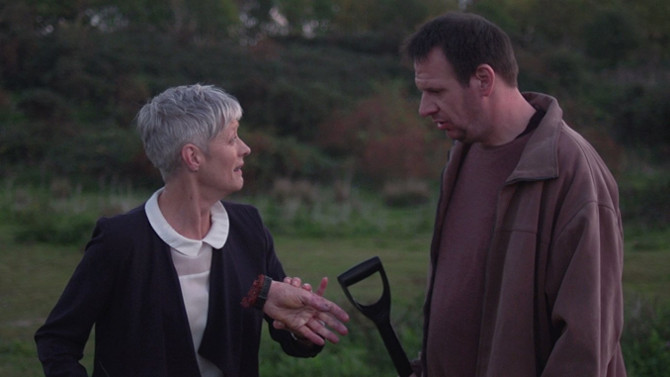
The Missing HandMarch 20, 2018Don’t you hate when this happens. . . while working outside, you by chance stumble upon a severed hand. It is this absurdist situation that comes to vivid life in writer/director Daniel Harding’s 2016 dark comedy short film The Missing Hand. Right out of the Alfred Hitchcock playbook, think The Trouble With Harry (and, if you do not recall the premise, I’ll let you in on a little secret – Harry’s dead) or Rope, the narrative finds two very different people, Ms. Whitman (Meryl Griffiths) and Trevor (Neil James) walking a plot of land they are thinking of developing. The former – a shrewd, business-driven financier, the latter – an energetic, simple-minded builder; the pair are destined to make a killing on the vacant lot.