 Films That Matter
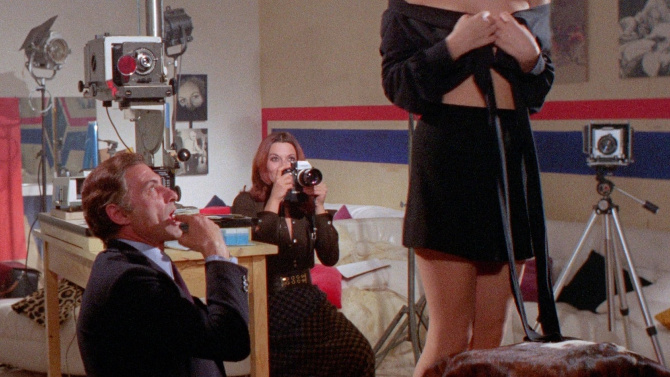
A Deadly Good Time
A slightly more obscure giallo released during the heyday of the craze, co-writer/director Silvio Amadio’s Smile Before Death (1972) is a psychological mystery thriller that certainly pushes the boundaries of the already boundary-pushing Italian genre. Amadio starts with a wild opener, as wealthy Dorothy Emerson (Zora Gheorgieva) is found brutally murdered by an unknown assailant... with it promptly being classified as a suicide by the incompetent police, this then turns into a slow burner of sorts.
-
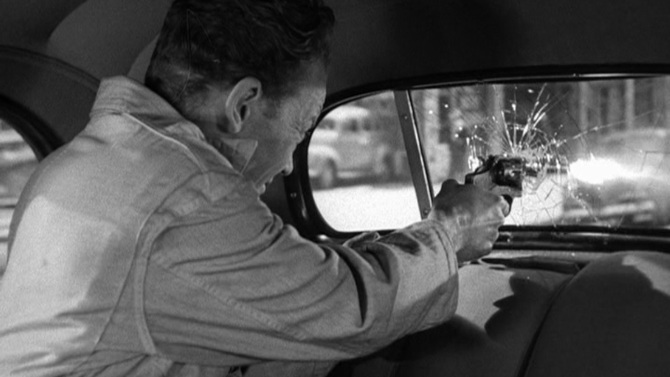
Blunt Force Trauma
Armored Car RobberyNovember 22, 2020As blunt as its title, Armored Car Robbery (1950) is fast-paced, intense, and to the point, a ninety-seven minute film noir (and one of the first heist movies) that brings us into an intricately planned robbery taking place in the City of Angels. Directed by Richard Fleischer (Soylent Green), the central crime takes place outside of Wrigley Field, so you might think the film maker has transported us to “Chicago, Chicago that toddling town, Chicago, Chicago I will show you around”, yet, don’t let the name confuse you. . . there was a second Wrigley that housed minor league teams until 1967 in Los Angeles. Entering the world of criminal mastermind Dave Purvis (William Talman), a man who has already pulled one impressive armored car robbery, every single moment of this venture is his plan.
-
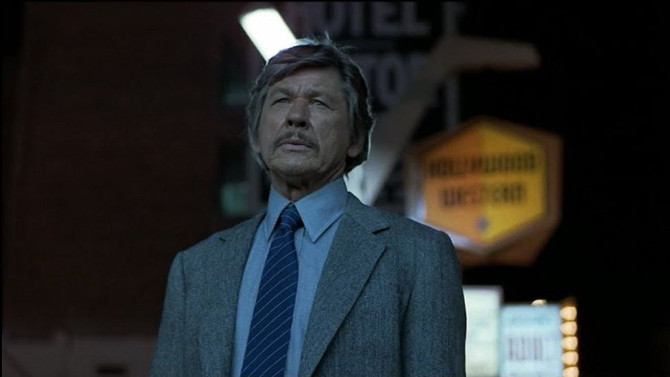
When You Wish Upon a Death Star
Death Wish IIApril 4, 2020Sequels are a fickle matter. Nearly impossible to match the original’s magic in a bottle, they tend to become a greatest hits of the previous effort. . . less story and more about outdoing the first film’s visual antics – attempted appeasement for fans and more fodder for its detractors. This is no different for 1982's Death Wish II (coming to theatres a lengthy eight years later), director Michael Winner and star Charles Bronson coming together for another vile look at the seedy side of big city America. Set two years after the original, Paul Kersey (Bronson) has uprooted from New York to Los Angeles. . . the architect finding love once more, this time in the arms of reporter Geri Nichols (Jill Ireland – Bronson’s wife and frequent collaborator – a whopping 16 times). His daughter Carol (Robin Sherwood), after the heinous acts seen in the first film, is slowly making progress with her doctors – at least uttering a few quiet sentences each week.
-

Love at First Fight
First LoveMarch 15, 2020Coming off a bit like an Asian version of a Quentin Tarantino/Guy Richie feature, First Love (2019) finds iconic Japanese director Takashi Miike (now with over one hundred films under his belt) in his favourite playground, fusing violence, comedy, crime, and romance together in a most entertaining way. An intricate ballet of characters shot at the pace of a hockey game, Leo (Masataka Kubota) is a lonesome boxer. . . an abandoned young man whose only skill is being a pugilist. Taking a limp-wristed punch during a bout, he unexpectedly crumples to the ground like a baby who has just realized that he can walk for the very first time. Medical investigation shows a tumour on the back of his brain – a death warrant. Seeing a street fortune teller (Bengal) soon after, he is frustrated at the man’s two views: one – that he is a healthy young man; and two – that he needs to have a cause and help people.
-
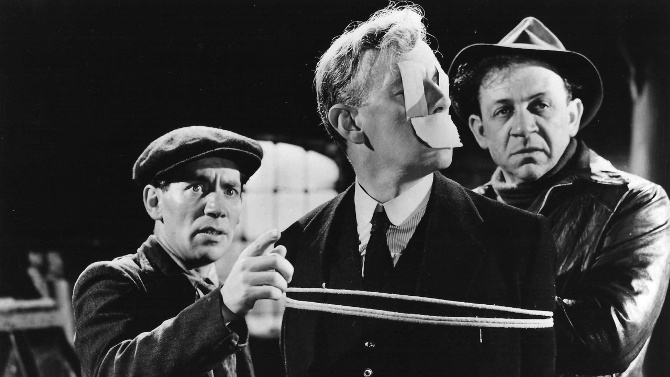
Not Your Typical Mob Movie
The Lavender Hill MobJanuary 21, 2020Ranked as the 17th greatest British film of all-time by the British Film Institute (and perhaps a bit more surprisingly, finding itself on the Vatican’s top 45 “great films” – in the “art” category), 1951's The Lavender Hill Mob, written by T.E.B. Clarke (winning him the Oscar for Best Writing, Story and Screenplay) and directed by Charles Crichton (A Fish Called Wanda), is a clever send up of the crime caper. Setting out to write an authentic crime story, Clarke actually went to the Bank of England, looking for advice. The Bank formed a special committee, the screenwriter asking numerous questions as they basically laid out the only way such a heist could work (by today’s standards, this seems absolutely ludicrous), meaning that, what we see in this 1951 feature is an accurate portrayal of what it would have taken to rob this iconic institution.
-
Star Pick with Robert Sheehan
 Rough RoughDogmanJanuary 17, 2020
When I first started watching the excellent British series Misfits (somewhat scarily, about a decade ago), I was completely impressed with their lineup of talented young stars (all playing delinquents forced to do community service – who also happen to have superpowers). I expected many of them to go somewhere, and I have not been disappointed – Joseph Gilgun is arguably the most entertaining part of the American show Preacher (as Cassidy); Iwan Rheon scared millions of viewers as the vile Ramsay Bolton on Game of Thrones; Antonia Thomas is a main player on the hit series The Good Doctor (as Dr. Claire Browne); while my favourite character on the series was brought to vivid life by Robert Sheehan (who played the hilarious Nathan). A man of many dimensions, I then followed him to the Irish series Love/Hate, a role that showed his range as a very serious young man working in the Dublin underground crime scene. Also, over the years, he has had some promising roles in films such as The Mortal Instruments: City of Bones, The Messenger, Geostorm, Mute, Mortal Engines, and, currently has found his groove in North America on the acclaimed Netflix series The Umbrella Academy.
-

An Irishman in an Italian Landscape
The IrishmanDecember 8, 2019Oh, how times flies – first they were Goodfellas. . . now they’re old fellas. Martin Scorsese re-teams with Robert De Niro, Joe Pesci, and adds Al Pacino (shockingly, the two had never previously worked together) to the mix in the 2019 film The Irishman. All kidding aside, it is fascinating how time changes things. Twenty-nine years ago the triumvirate mentioned above worked together on Goodfellas, three forty-something’s on the top of their game. . . arguably still on their respective games, they are all now north of seventy-five.
