 Films That Matter
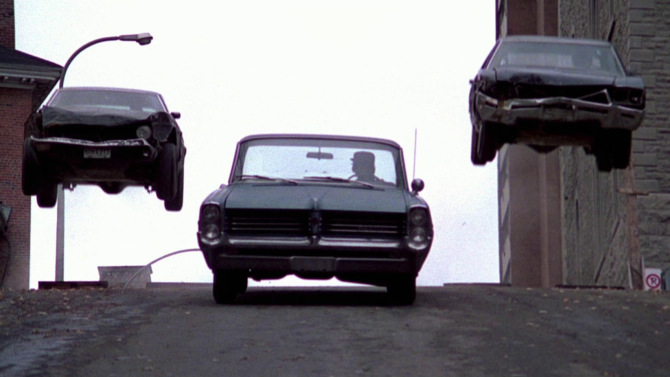
Montreal Magnum
When it comes to car chase scenes, the one that is always highlighted, and for good reason, is from Peter Yates’ 1968 action thriller Bullitt starring Steve McQueen... but some eight years later, the city of San Francisco was replaced by Montreal, Quebec in this little known Italian production with quite the epic speedy sequence of its own, Shadows in an Empty Room (1976), directed by Alberto De Martino. Fusing this touch of Bullitt with a Dirty Harry style storyline – hence why it is called Blazing Magnum in some markets (including the UK), while also including a hint of the ever popular at the time 70s giallo for some murder mystery elements, the narrative follows gritty, hard as nails Ottawa cop Capt. Tony Saitta (Stuart Whitman) as he dispatches some bank robbers in his own city... before getting the tragic call that his much younger sister, Louise (Carole Laure – Sweet Movie), who lives in Montreal, has died under very suspicious circumstances.
-
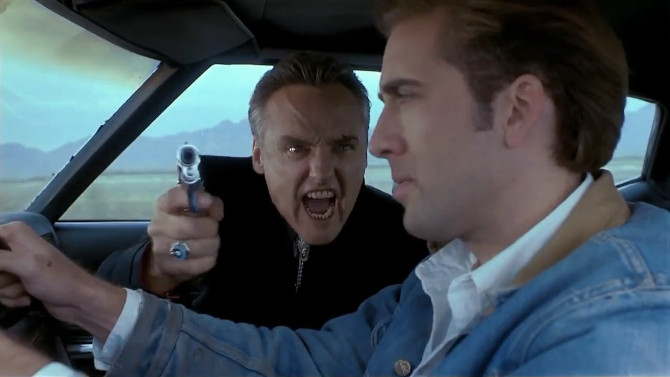
Rocky Terrain
Red Rock WestJuly 20, 2025You always know you’re in for something rather interesting when a mysterious drifter walks into some small town in a movie... which is just the case in Red Rock West (1993), a neo-noir infused modern western crime thriller co-written and directed by John Dahl (his brother Rick, the other writer and associate producer). The drifter is Michael (Nicolas Cage – in a more reserved performance), an injured former Marine and rather quiet Texan who is simply looking for some oil field work in Wyoming... but is having no luck. Down to his final five bucks, he drives to the next closest town, Red Rock, and pops into a bar for a drink.
-
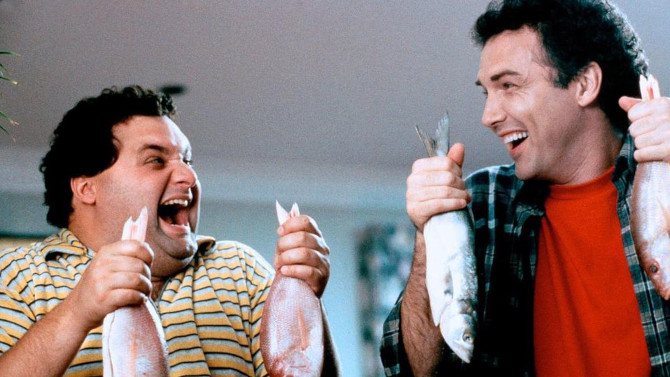
Weekend Comedy Update
Dirty WorkJune 27, 2025Sometimes you wonder how you missed a film back in the day. The 1990s were a wild age for silly comedy gold...the crop of Saturday Night Live at the time spawning an era of laughs on the big screen – Mike Myers bringing forth Wayne’s World and Austin Powers, Chris Farley and David Spade doing the buddy comedy thing in Tommy Boy and Black Sheep, Adam Sandler bringing Billy Madison, Happy Gilmore, The Wedding Singer, and The Waterboy to the world, Will Ferrell and Chris Kattan offering their famous tv skit to the big screen with Night at the Roxbury, and Molly Shannon showing that she truly was a Superstar. Yet somehow, after all of these years, I only just discovered Dirty Work (1998), a cult classic co-written and starring Norm MacDonald (the only film on his writing credits). Directed by, of all people, Bob Saget (yes, Mr. nice guy father Danny Tanner from Full House finally bringing his dirty stand up side out), it oozes 90s oddball comedy. Feeling like gazing into Norm MacDonald’s quirky meta-mind while he dreamily acts his way through an hour and twenty-two minutes of a never before seen comedy routine – if you love the guy’s eccentric shtick, then you’ll probably dig this, but if you’ve never been a fan, then this is probably not for you.
-

Déjà vu Dalliance
AlliedFebruary 26, 2025Channeling the mesmeric movies churned out by the studio system back in the 1930s and 40s, Allied (2016), directed by Robert Zemeckis, channels the likes of Morocco, Casablanca, Across the Pacific, Gilda, To Have and Have Not, and numerous others – attempting to find a spark from the classic themes of melodrama, romance, suspense and the epic nature of the annals of the cinematic past, with quite successful results. Set the year Casablanca and Across the Pacific were released – 1942, the story in fact starts in Morocco, with recently parachuted in Canadian spy Max Vatan (Brad Pitt) meeting up with another undercover agent, Marianne Beauséjour (Marion Cotillard), who will be pretending to be his wife.
-

Me and My Shadow
The Man Who Haunted HimselfFebruary 5, 2025The movie Roger Moore made directly before taking over the iconic role of James Bond for over a decade starting in 1973, The Man Who Haunted Himself (1970), co-adapted and directed by Basil Dearden from the novel “The Strange Case of Mr Pelham by Anthony Armstrong, is perhaps as un-Bond-like as possible (despite Moore uttering the quote above), which may be why the star also frequently suggested that this was his best film. Harold Pelham (Moore) is in a high stress position at a marine technology company – in which a merger is being pressured from an outside company, which, when combined with his rather awkward version of a stiff upper lip attitude, has left his marriage with Eve (Hildegarde Neil) rather cool and aloof.
-

Judge, Juror #2, and Executioner
Juror #2January 6, 2025This very well may be the shortest review I’ve ever written. Juror #2 (2024), Clint Eastwood’s most recent directorial effort (he also co-produces), very much leans on several legal dramas and thrillers from the past, most notably the classic 12 Angry Men, to great effect. Twisting the above mentioned film in clever fashion, in some ways, recovering alcoholic Justin Kemp (Nicholas Hoult) is a stand-in for Henry Fonda’s Juror #8, as he too stands up for the man being charged with murder... the only difference is, he soon realizes that he knows a bit more about the case than the rest of the jurors (and even he originally thought). Though this is not a twist filled feature (à la Usual Suspects), much of its entertainment comes from watching it unfurl as it goes along – hence why very little of the plot will be disclosed here. It is also worth noting that, unlike 12 Angry Men, screenwriter Jonathan A. Abrams opens the story wide, allowing us to hear testimony, explore the crime scene, and discover actual truths we never got to see in the 1957 motion picture.
-
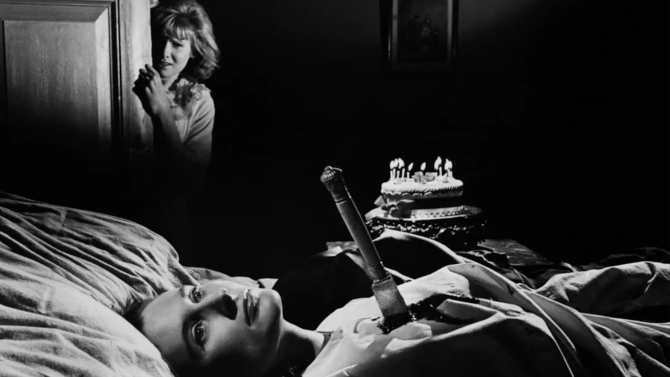
Night Terrors
NightmareOctober 17, 2024Unlike most other memorable Hammer horror movies, the 1964 mystery thriller Nightmare, directed by Freddie Francis (perhaps better known as the cinematographer of films like David Lynch’s The Elephant Man and Martin Scorsese’s Cape Fear) eliminates all of the monsters for an old fashioned quasi ghost story... the piece deserving to be remembered up there with those Hammer horror films centered on vampires, resurrected corpses, and lycanthropes. Shot in shadowy black and white, the story follows struggling seventeen year old Janet (Jennie Linden), who is currently away from home living at a finishing school for girls.