 Films That Matter
The Fall and Rise of Babylon
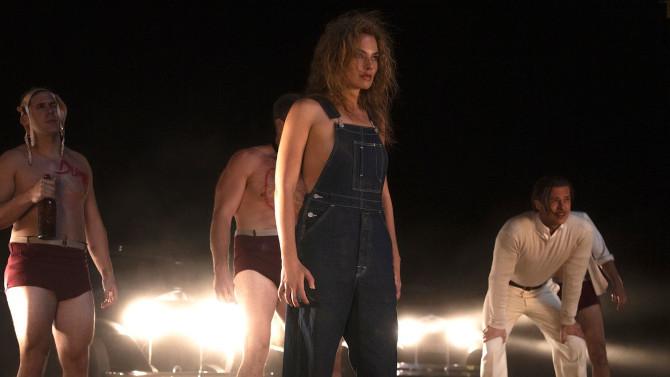
Sometimes, certain films just seem destined to underperform at the box office, only to fall into more of a cult status down the road... and this could likely be the case for writer/director Damien Chazelle’s epic depiction of late 1920s, early 1930s Hollywood in Babylon (2022). Clocking in at three hours, nine minutes, if Chazelle’s 2016 musical La La Land was a love letter to current Hollywood, then this could easily be considered something similar to the growth and birth of the place. In some ways reminiscent of Quentin Tarantino’s 2019 feature Once Upon a Time... in Hollywood (which also gives the viewer a bird’s-eye view into the movie making business), the aptly named Babylon is perhaps not for the faint of heart, but will be rewarding for anyone intrigued by the silent and the 30s Pre-Code era (or for people who are simply looking to learn more about this cinematic time).
-
Get Your Sea Legs Ready
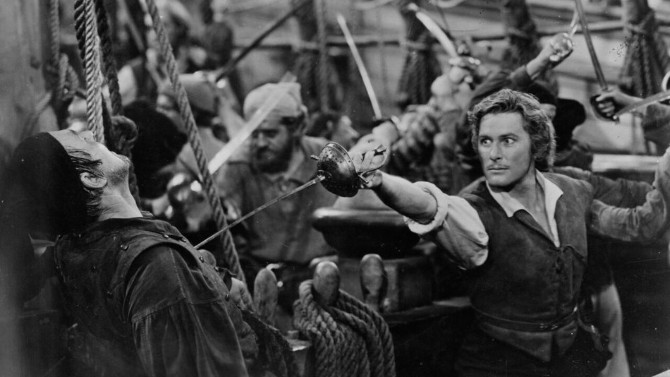
The Sea HawkMarch 9, 2020A night (or matinee) at the movies isn’t what it used to be. Now, we’re lucky if we see two trailers, the rest of the lengthy pre-show being packed with commercials that frustrate – bringing the atmosphere down several notches. Drawing your attention to what you would have seen circa 1940, you would have experienced a newsreel, followed by a live action short, then an engaging cartoon. . . all of this leading into the main event (the trailers running after the film’s closing. . . if you’ve ever wondered why they are called trailers, now you know). Flashing back to August 1940, air conditioned audiences would have witnessed the visual horrors of the war – specifically, the bombing of Britain (which started in July), these realities then leading into Alice in Movieland – a short depicting the dream machine that is Hollywood leading a girl to fame and glory (a fascinating watch due to its young lead – soon to be star Joan Leslie; How to Marry a Millionaire director Jean Negulesco’s direction [this a much earlier work]; and perhaps more than anything else, a screenplay written by young journalist Ed Sullivan – long before his rise to fame).
-

Get Your Motor Running
Ford v FerrariFebruary 8, 2020Pairing up two of the most iconic actors of this generation. . . no, I am not talking about Leonardo DiCaprio and Brad Pitt. . . Matt Damon and Christian Bale work together for the first time in the 2019 Best Picture nominee Ford v Ferrari, directed by James Mangold (Logan; Walk the Line). An historical event that I’ve somehow never heard of before, this ‘based on a true story’ tale is set in 1966, and the times, they are a changing. A little over twenty years after the end of World War 2, a whole new generation was born when the soldiers returned home in 1945. . . these now teenagers/early 20 somethings (with more money than any other grouping that came before), are yearning for a new type of car (not their father’s automobile).
-
First Names Only, Please
 JudyHarrietJanuary 31, 2020
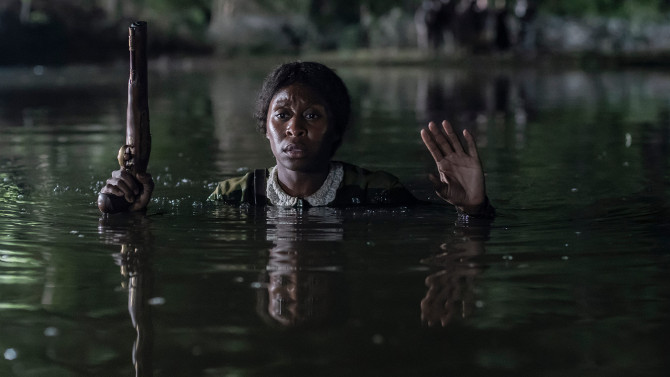
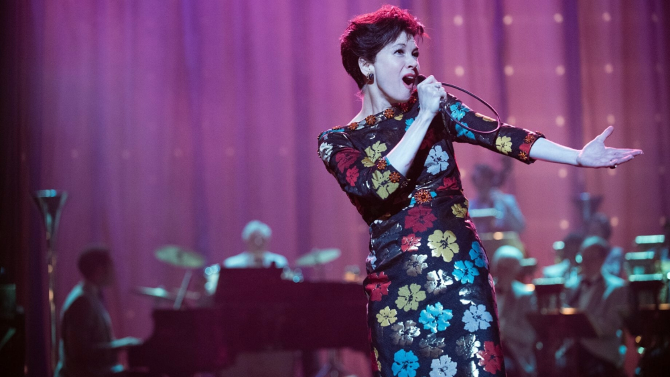
The Academy Award season is creeping upon us again. . . and as I am running out of time, I’ve decided to combine and condense two reviews that feature stellar Lead Actress performances of 2019 (that also happen to be about real women), Rupert Goold’s Judy and Kasi Lemmons’ Harriet. Judy tells the tragic story of Judy Garland, flashing back and forth between the way she was mistreated during the filming of The Wizard of Oz, and how that, along with poor life choices, brings her to a point where she is forced to take an extended stay in London in 1968 (away from her children – who she dearly loves) in order to earn enough money to be able to purchase a home (so that she might win custody against her ex-husband).
-
Queen’s Reich
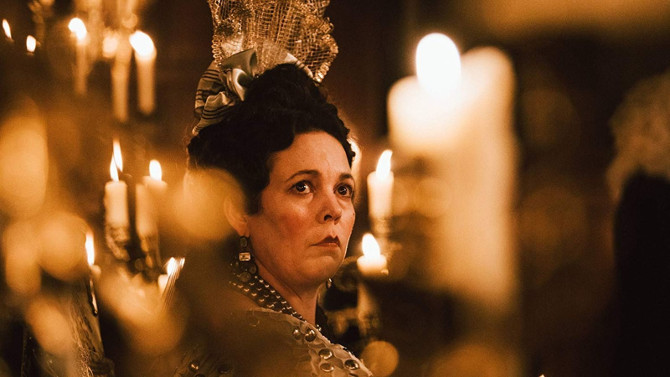
The FavouriteFebruary 12, 2019An out-there European director, Yorgos Lanthimos has made waves with controversial pictures like Dogtooth, The Lobster, and The Killing of a Sacred Deer – intriguing, confounding, frustrating, and mesmerizing audiences worldwide. Now, he has made his first foray into a more mainstream style of film making with the 2018 period piece The Favourite (the first picture he and longtime co-scribe Efthymis Filippou did not write – in this case, an excellent story by Deborah Davis and Tony McNamara) – though, one thing is for sure, you cannot take the eccentric out of the Greek filmmaker. Nominated for ten Academy Awards (including Best Picture, Best Achievement in Directing, and a slew of others), the first thing immediately noticeable is the feature’s striking visual style. Intricately measured and visually opulent (most of it is shot in Hatfield House, Hertfordshire, England), it is often symmetrically framed, a very formal seriousness to the playful story. Like the structured beauty of a perfectly danced waltz, everything is in its place, the camera moving with its characters always in their position, Lanthimos often utilizing a quick 180 degree pan pirouette to provide the viewer with a quick shot of the opposing perspective. Speed is also tinkered with, slow motion and a quicker frame rate adding to the film’s mesmerizing quality. Also worth noting, every once in a while there is a fascinating use of a sort of fish-eye lens-style shot – providing a distorted, arced look to this lavish, gilded world. Hand in hand with this is the exquisite cinematography, director of photography Robbie Ryan shooting almost the whole picture with available natural light (the sun, candles, fireplaces and torches providing an eerie, romantic, and realistic vibe, adding to Lanthimos’ trance-inducing visual style).
-
Klandestine
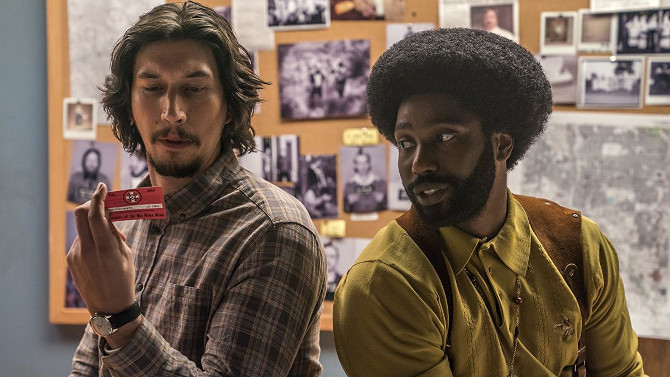
BlacKkKlansmanFebruary 5, 2019It is hard to fathom that Spike Lee is now forty years into his film making career – and it has taken exactly that long for one of his motion pictures to earn a nomination for an Oscar for Best Picture, or Best Director for that matter (though he has been given an Honorary Award from the Academy). His first nomination came for his ‘Brooklyn cultural clash of love and hate’ screenplay for 1989's Do the Right Thing, and it is no surprise that 2018's BlacKkKlansman (which has earned six noms, including three for Lee – Picture, Director and Adapted Screenplay) holds a similar microscopic lens to the tensions smoldering just below the surface in the United States. At times excessive and over the top in its style, it is no surprise when you look at the time frame that the screenplay covers. Set in the early 1970s, it is a time of black and white thinking, radical movements such as the Black Panthers, the Ku Klux Klan, and even the police taking sides. . . the grey milieu forced to either side as cultures clash, as anger simmers to a boil, as times they are a changing.
-

I Have a Dream
Green BookJanuary 27, 2019There is something special while watching an excellent drama and realizing, perhaps before, or maybe only after the credits role, that a director known almost exclusively for comedy has deftly made the genre switch. Think Jerry Zucker (from Airplane! and writing/producing The Naked Gun franchise to Ghost), Jay Roach (the Austin Powers and Meet the Parents franchises to Trumbo), or Adam McKay (Anchorman and Talladega Nights: The Ballad of Ricky Bobby to The Big Short and this year’s Vice). . . and the newest member to enter this club: Peter Farrelly – making the jump from Dumb and Dumber and There’s Something About Mary to 2018's Academy Award Best Picture nominee, Green Book. A tale near and dear to its writer, Nick Vallelonga (it is also co-written by Brian Hayes Currie and Peter Farrelly), Nick is the son of the film’s main character, Tony ‘Lip’ Vallelonga (Viggo Mortensen). Set in the early 1960s, Tony is an Italian American New Yorker, working as a ‘public relations’ expert for The Copacabana (i.e. a rough and tumble bouncer) – a pudgy bull-shitter who acts first and asks questions later.