 Films That Matter

The Thick of Things
Based upon the 1992 novel of the same name by Alasdair Gray, as well as clearly taking some inspiration from Mary Shelley’s “Frankenstein”, Yorgos Lanthimos’ Poor Things (2023) is not the horror path one might expect from the monster book/movie referenced above, instead, it feeling like a coming of age sci-fi fantastical fairy tale that also dabbles in the realm of psychology, romance, drama, and even comedy. Set in an eccentric world trapped somewhere between Victorian England and some sort of steampunk futuristic alternative, Bella Baxter (Emma Stone – Bugonia; La La Land) is the latest dynamic if out there scientific experiment by the deformed Dr. Godwin Baxter (Willem Dafoe – Nosferatu; The Lighthouse). A grown woman in body, but with the mind of something closer to a baby, it does seem like she is developing at a quicker pace compared to a normal human child.
-

Sand Lot
DuneJanuary 27, 2022There is a real sense that the four classical elements – fire, water, earth, and air – play a subtle but pivotal role in Denis Villeneuve’s 2021 remake of Frank Herbert’s iconic science fiction novel Dune. Entrenched within the universal visuals, waves gently lap upon the tranquil shore, scorched earth suggests the utter inhospitality of a new planetary home, wind brings the seemingly endless sand dunes to moving life, fire violently lights up the pitch black night’s sky, and, despite the endless clash of good versus evil, a certain mystical harmony arises through Villeneuve and his team’s stunning use of cinematography, camera placement/movement, editing, and the like.
-
Beyond the See
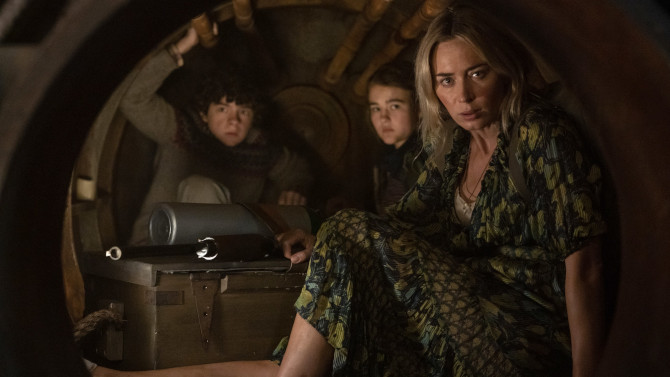
A Quiet Place Part IIOctober 19, 2021It’s not easy for kids to grow up – especially in an alien apocalypse. . . after all, what are they to do without Instagram and TikTok. All kidding aside, 2020's A Quiet Place Part II turns the focus on the children, to great effect. Once again written (this time on his own) and directed by John Krasinski, he makes the smart decision to open with a flashback that shows day one of the alien invasion. . . an adrenaline pumping action sequence featuring a lengthy one take car scene, both chaos and quiet hiding, as well as introducing us to a new character from the Abbott’s community, Emmett (Cillian Murphy).
-
Conjuring Up a Threequel
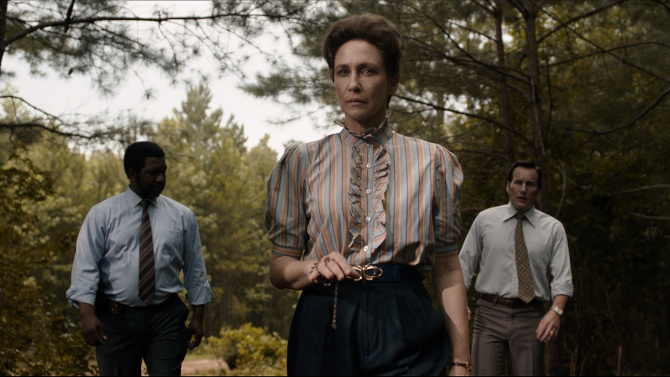
The Conjuring: The Devil Made Me Do ItOctober 17, 2021Bookending the film with what amounts to two climactic sequences, The Conjuring: The Devil Made Me Do It (also known as The Conjuring 3), released this 2021, opens with what very well could have been the ending of a previous film. . . this moment becoming the genesis to push the story forward. For the first time not directed by James Wan (though he co-writes and produces), Michael Chaves takes up the mantle – doing a pretty seamless job. Expect the same intriguing over the head angles, spectral pov shots, long location tracking shots, and spooky camera pans. . . though it is definitely not as flashy as Wan, it does the trick.
-

Prognosis Positive
MalignantSeptember 20, 2021For those of you who have seen (or will be seeing) James Wan’s new horror movie Malignant (2021), I think you’ll understand when I say I am of two mindsets when it comes to the entire piece. It has been five years since Wan has directed a film within the horror genre he has helped resurrect ‘from the dead’ – which might be a bit excessive, and Malignant might be his most divisive. Less scary and more ‘slashy’ than his more recent franchises of The Conjuring and Insidious, it carries with it a bizarre tone. . . part semi-traditional bloody horror film, part CSI melodrama (or is it spoof) – we are never quite sure if it is supposed to be tongue in cheek or taken seriously.
-
The Awkward Squad
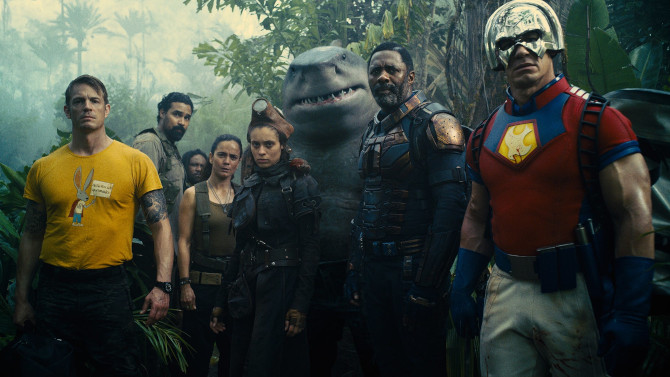
The Suicide SquadSeptember 6, 2021What do you get when you hand The Suicide Squad reins over (with carte blanche, I might add) to James Gunn.? .? .? an R rated, Guardians of the Galaxy-like extravaganza that dusts curse-laden comedy over the somber DC verse, throwing pails of blood (and even a few blink and you’ll miss it pieces of male and female anatomy) at the screen to wash away its predecessor’s flat formula. Going ‘out-there’, and that’s saying something for this type of feature, Gunn’s gonzo, go-for-broke style finds intelligence spook Amanda Waller (Viola Davis) sending two teams, or should I say squads, of suiciders onto the island of Corto Maltese – a country that has just seen a coup take out their leader, replaced by a non-American ally. Wave one finds Colonel Rick Flag (Joel Kinnaman); daddy’s lil monster Harley Quinn (Margot Robbie); Captain Boomerang (Jai Courtney); long haired Savant (Michael Rooker); piecemeal T.D.K. (Nathan Fillion); Blackguard (Pete Davidson); a javelin carrying guy who is aptly named Javelin (Flula Borg); and, without further ado, a human-flesh loving walking Weasel (Sean Gunn – he also makes a cameo as prisoner Calendar Man).
-
Flying Blind
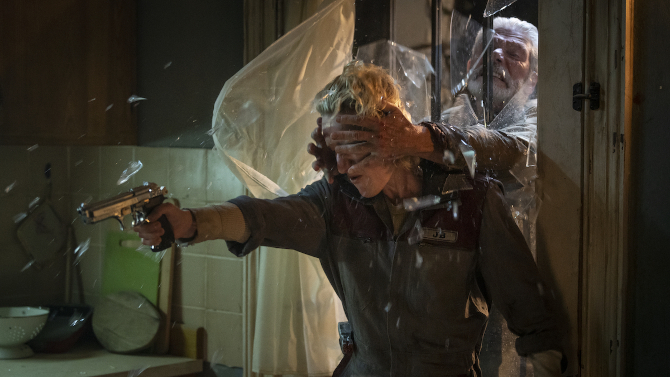
Don't Breathe 2August 18, 2021Picking up several years after the original feature, Don’t Breathe 2 (2021) flips the script, with co-writers Fede Alvarez and Rodo Sayagues (though this time the latter takes over directing duties), placing the audience in the shoes of The Blind Man (rather than those who attempted to rob him in the genesis film). . . following him into a most intense scenario. In a wild, bold, and arguably controversial maneuver, Alvarez and Sayagues attempt to transform the sinister former veteran from the previous movie into something akin to an anti-hero – within the narrative, themes of rebirth and redemption can be found. Now a ‘father’ to his ‘daughter’, Phoenix – no subtlety there (Madelyn Grace), The Blind Man is now humanized with a real name, Norman Nordstrom (Stephen Lang). No spoilers on her backstory.