 Films That Matter
What’s the Name of the Game
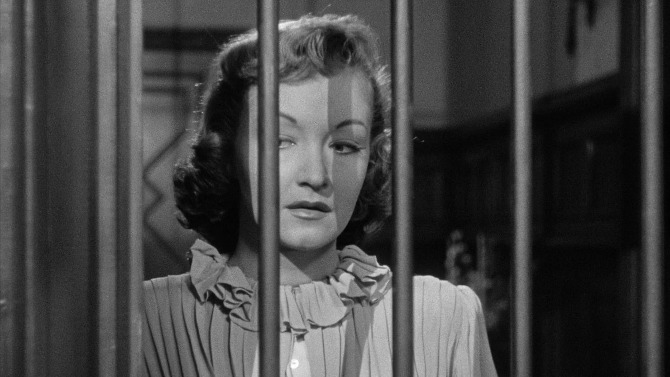
There are so many things that go into making us who we are as individuals – from our parents and our past experiences, to our job and where we live, with even something as simple as our name becoming a big part of forming our identity as a human being... but, if those things are taken away from us, how might someone prove who they are when there is no evidence of what is being claimed. Infusing post-war themes within a kidnapping/murder mystery melodrama with film noir motifs, My Name is Julia Ross (1945), directed by Joseph H. Lewis (Gun Crazy) and based upon the novel “The Woman in Red” by Anthony Gilbert (the pen name of Lucy Beatrice), entraps us in the strange predicament of the titular character... though no one is calling her by that name. Following Julia Ross (Nina Foch) in post World War II London, England, she is in a rather difficult predicament – as she falls behind on her rent, she can find no work no matter how hard she looks.
-
What’s the Name of the Game
My Name Is Julia RossNovember 28, 2025There are so many things that go into making us who we are as individuals – from our parents and our past experiences, to our job and where we live, with even something as simple as our name becoming a big part of forming our identity as a human being... but, if those things are taken away from us, how might someone prove who they are when there is no evidence of what is being claimed. Infusing post-war themes within a kidnapping/murder mystery melodrama with film noir motifs, My Name is Julia Ross (1945), directed by Joseph H. Lewis (Gun Crazy) and based upon the novel “The Woman in Red” by Anthony Gilbert (the pen name of Lucy Beatrice), entraps us in the strange predicament of the titular character... though no one is calling her by that name. Following Julia Ross (Nina Foch) in post World War II London, England, she is in a rather difficult predicament – as she falls behind on her rent, she can find no work no matter how hard she looks.
-
There’s Something About Laura
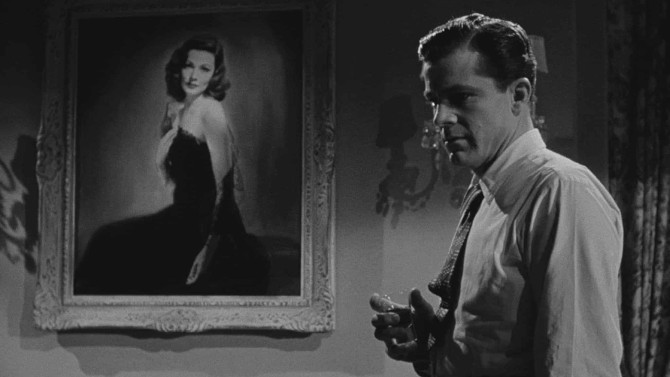
LauraNovember 14, 2025Some people just have a natural aura... a mesmeric vibe that draws people to them. Whether it’s looks, personality, a combination of both, or perhaps something else that’s completely inexplicable, other human beings are just instinctively attracted to them. Of course, that happened in the comedy There’s Something About Mary (1998), but long before that, a similar scenario involving the titular character in the legendary film noir Laura (1944) occurred, all orchestrated by producer and eventual director Otto Preminger – River of No Return)... but more on that complicated tale later. Opening with the news that Laura Hunt (Gene Tierney – The Ghost and Mrs. Muir; Night and the City) is dead by way of murder, it is all told by way of our voice-over narrator (and famed writer/radio voice) Waldo Lydecker (Clifton Webb) – there is no denying that he is one of the gents truly infatuated with the lady.
-
Venice Flytrap
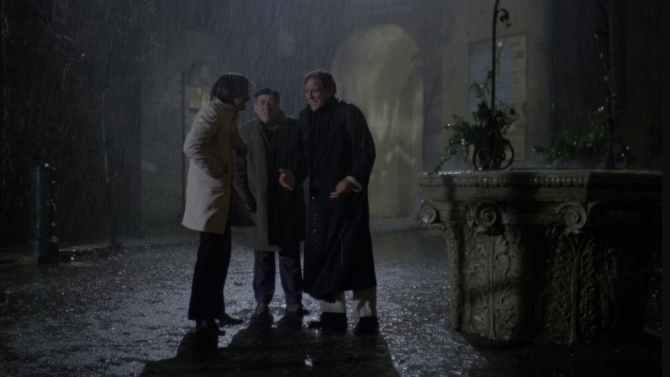
The Bloodstained ShadowOctober 12, 2025A giallo murder mystery released well after the craze of the early 1970s, The Bloodstained Shadow (1978), co-written and directed by Antonio Bido (Watch Me When I Kill), has more suspects than you may even be able to keep track of. Utilizing its sizeable cast to keep its twisty turns in the shadows, we flash forward some twenty years after a brutal unsolved strangling on the small island of Murano – which rests on the edge of Venice, as professor Stefano D’Archangelo (Lino Capolicchio) returns home for a calming visit after years away in the big city... it just so happens that a fetching artist, Sandra Sellani (Stefania Casini – Suspiria), is also returning home on the same train after being away for some time.
-
Con Catenate
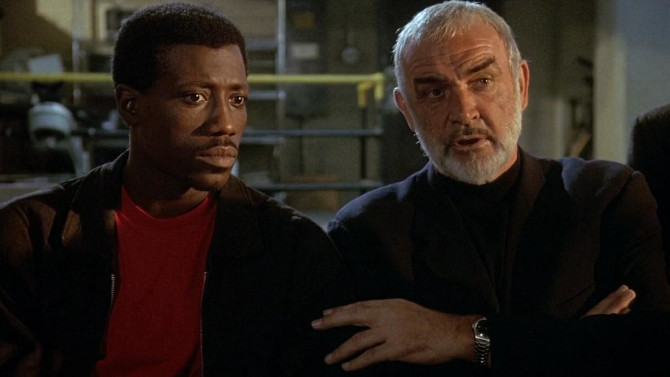
Rising SunAugust 1, 2025A late era entry in the last decade of Sean Connery’s impressive catalogue, Rising Sun (1993), co-written and directed by Philip Kaufman, was brought to the page by Michael Crichton – yes, the mind behind Westworld and Jurassic Park, who helped adapt it from his own novel of the same name, building a woven web of corrupt mysteries and thrills in this edgy crime movie. For James Bond fans, it may bring to mind a direct connection to You Only Live Twice (1967), as in that 007 adventure, Connery plays a character deeply immersed within the Japanese culture
-

Murder ‘Mystery’
MystèreMay 19, 2025Sometimes a movie just doesn’t fit perfectly within its own genre... going against a few of the tropes that define what something is, all while hitting enough of them to still be what it is – confusing! That’s the case with this latter-day Italian giallo, Mystère... sometimes better known by its English title Dagger Eyes (1983). Co-written and directed by Carlo Vanzina, the film opens with a rather impressive, though more crime inspired assassination in Rome... resembling the real life John F. Kennedy car killing. It will start a chain reaction of murders that will rock the Eternal City.
-
A Different Type of Photobomb
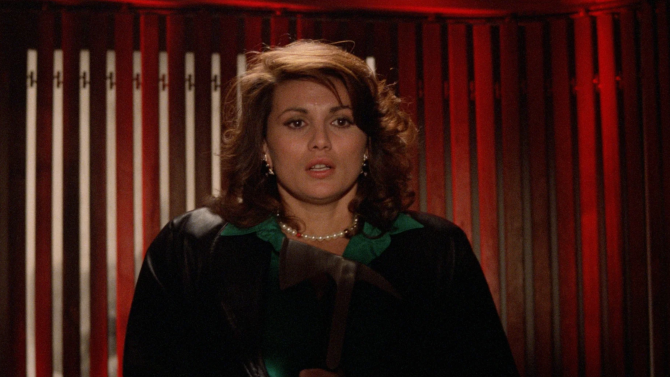
DeliriumApril 8, 2025Some might know that icon Mario Bava is often considered to be the first filmmaker to make a giallo with 1963's The Girl Who Knew Too Much... though unless you’re a big fan of the genre, many will probably not know that his son, Lamberto Bava, continued on with the gialli tradition well past its heyday in the early 1970s – releasing a number of horror tinged mystery thrillers, including today’s Delirium (1987)... sometimes also known as The Photo of Gioia. Welcome to what very well could be the Italian rival of Hugh Hefner’s Playboy, fluffily called Pussycat – a high end nudie magazine that brings some class (and a bit of kitsch) to artistic nude photography. Run by former supermodel Gloria (Serena Grandi), she inherited the business when her husband tragically died.