 Films That Matter
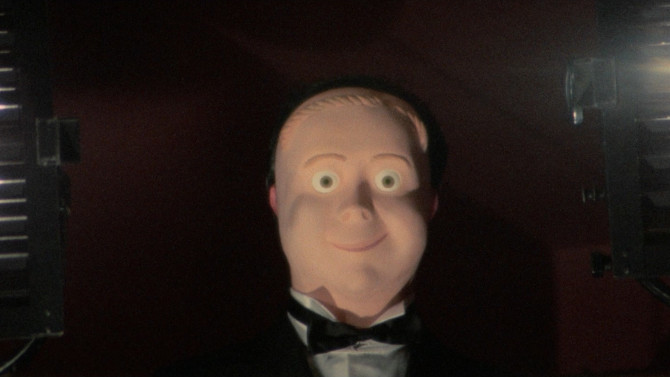
Four Flies in the Ointment
The third and final film in Dario Argento’s gialli ‘Animal Trilogy’ – following The Bird with the Crystal Plumage and The Cat o’ Nine Tails – 1971's Four Flies on Grey Velvet, like the others, aren’t truly connected by anything other than their quirky titles and mystery thriller themes. A vexing conundrum for our protagonist, rock drummer Roberto Tobias (Michael Brandon), he constantly seems to be tracked by a shady looking individual (Calisto Calisti). Finally having enough, he does his own stalking, following the individual into an empty hall.
-
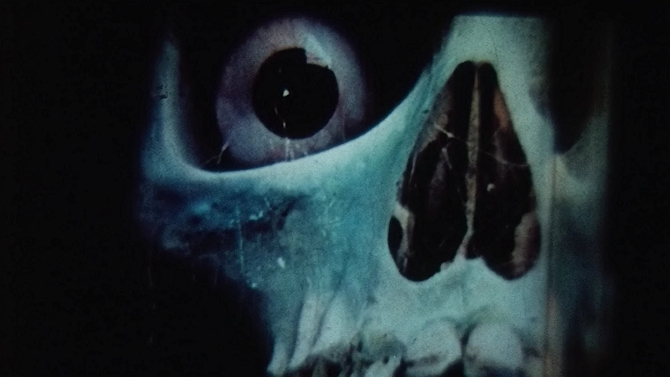
Room With a Bloody View
The Girl in Room 2AJanuary 17, 2021A rare giallo that is co-produced and directed by Americans, 1974's The Girl in Room 2A fuses the prototypical Italian suspense/thriller with the claustrophobia and psychedelic visions found in Rosemary’s Baby, the gothic horror of Edgar Allan Poe (specifically, the macabre 1964 Roger Corman rendition of The Masque of the Red Death starring Vincent Price), American exploitation. . . as well as a few other touches (you might see some Psycho and early slasher film samplings pop in here). Co-produced by eccentric exploitation maestro Dick Randall (if you think of the infamous Weng Weng Filipino James Bond spoof For Y’Ur Height Only, this should give you an idea of the types of movies this guy made) and directed by William Rose (a man with only seven directorial credits to his name – though gems like 50,000 BC (Before Clothing) might sound Oscar worthy to some), this American pair take a unique path for their story.
-
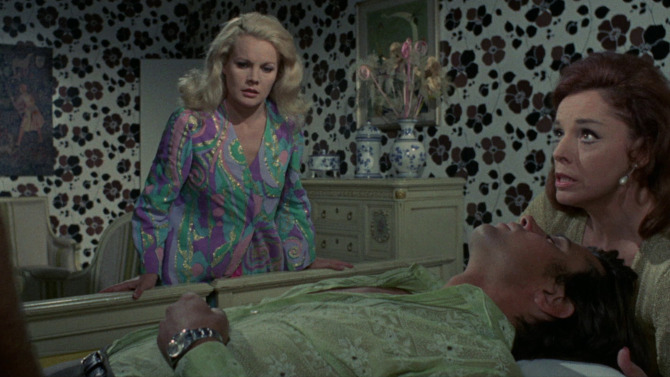
Villa Killa
A Quiet Place to KillDecember 8, 2020Giallo fun fact of the day: did you know that by shooting pigeons, you will help quash your primordial animalistic desire to kill? Well, this bizarre fact will most definitely be put to the test in the very film it is found within. . . 1970's A Quiet Place to Kill, directed by Umberto Lenzi and starring Carroll Baker – their third of four collaborations together. Try to follow me here, this film can often be mistaken for another, as A Quiet Place to Kill was titled Paranoia in its native Italy (a co-production between the boot, Spain, and France) – which just so happens to be the same title (at least in the United States) as Lenzi and Baker’s 1969 effort, Orgazmo (you can probably guess why American distributors chose to rename it. . . also, don’t confuse this with the 90s American sex comedy). And, just to be different, in Spain, they decided to call it A Drug Named Helen. . . talk about playing the name game. And, just to further complicate the primary title, Lenzi directed a picture the next year – called An Ideal Place to Kill. . . it seems like Lenzi was making so many gialli that he was running out of titles for them.
-
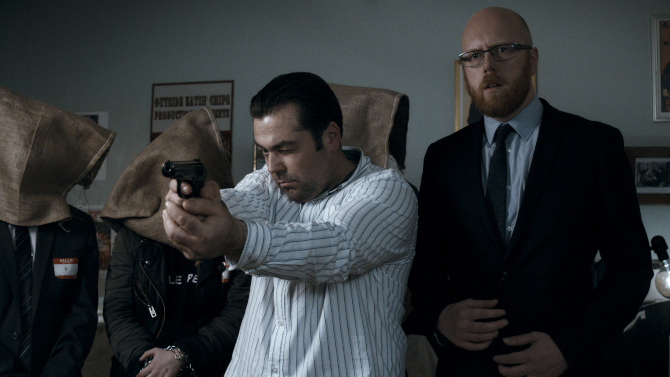
Criminal Minefield
Criminal AuditionNovember 8, 2020Another intriguing indie coming out of the U.K., 2019's Criminal Audition, co-written and directed by Samuel Gridley, is a highly original, uniquely twisted mystery drama with a subtle undercurrent of dark humour running just below the surface – something the British are so bloody good at. A little like an intricately written stage play, Gridley drops us into a most claustrophobic setting. . . first introducing us to a dilapidated, soon to be flattened old theatre during the hyper-stylized opening credits, this soundproof tomb is the location chosen by twitchy, highly stressed criminal mastermind, William (Rich Keeble). Though he’s the boss pulling the strings, our eyes are those of Ryan (Luke Kaile – the other co-writer of the script), a much younger grunt worker who knows William and his operation all too well.
-
Parisi Place
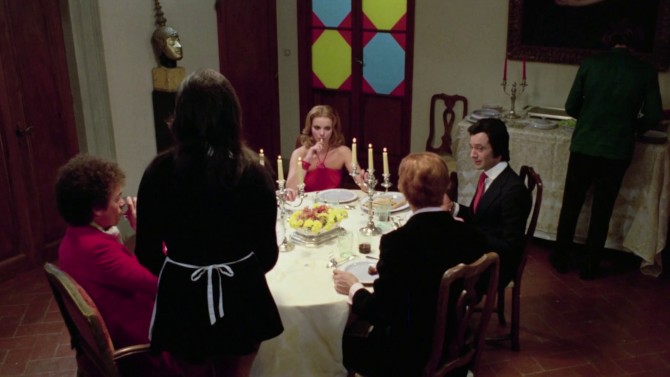
The Police Are Blundering in the DarkOctober 8, 2020And suddenly, a new contender arises. . . and by that I mean for all-time great giallo titles. Evoking the very essence of the Italian genre, 1975's The Police Are Blundering in the Dark, directed by one-and-done film maker Helia Colombo, may not have the sheer audacity of a title along the lines of Your Vice is a Locked Room and Only I Have the Key, or the more macabre imagination of Death Walks on High Heels, but it is murder mystery cool personified. With the police only arriving for the final few minutes of the film (making it all a bit misleading). . . the title is actually in reference to a newspaper headline highlighting the incompetence of the fuzz in rural Italy. With four nude models having recently been murdered (by way of scissors or some other sharp instrument) – oh, the humanity!!! – all roads somehow lead to the Parisi estate.
-
Game Point
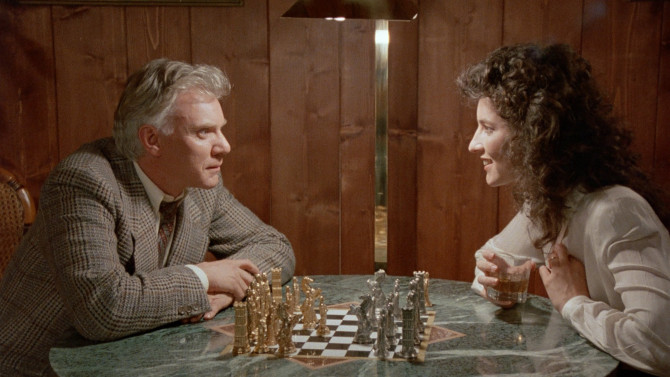
The CallerSeptember 30, 2020With a title like The Caller (1987), one would perhaps have a preconceived notion that the Michael Sloan written (the co-creator of the television series The Equalizer), Arthur Allan Seidelman directed film would be something along the lines of the much more popular When a Stranger Calls (1979, or, if you prefer, the 2006 remake), yet, like its misleading title, nothing is what it seems. A cerebral horror tinged mystery thriller (that may just have an unexpected dose of sci-fi), Seidelman, who would seem to be aptly named, immerses the viewer with a quarter of an hour of what amounts to a chilling silent game of stalker cat versus female mouse. Taking us from an eerily quiet town to the even more isolated rural woods, our protagonist, simply known as The Girl – reminiscent of the basic names characters were given in the silent film era (Madolyn Smith Osborne), lives in a home that, in lesser hands, would likely resemble the cabin found in the Evil Dead franchise.
-
Silent Knife, Deadly Knife
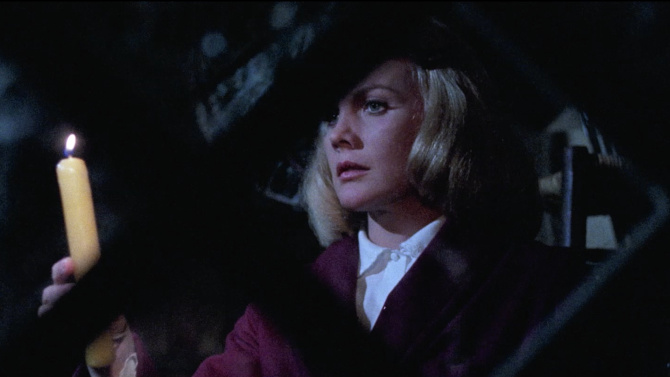
Knife of IceSeptember 10, 2020A giallo that mostly forgoes the prototypical violent splatters and liberal amounts of nudity for a good old fashioned Agatha Christie style murder mystery, 1972's Knife of Ice, also sometimes known as Dagger of Ice and The Ice Pick (memo: ice does not play any part in this motion picture), is the fourth and final time Italian film maker Umberto Lenzi (Seven Blood-Stained Orchids) and American actress Carroll Baker (Baby Doll; The Game) would work together. Baker stars as Martha Caldwell, a woman who has been mute since she was thirteen (it all stems from the fact she was rescued by her parents during a horrid train crash, only to then witness them burn to death – in many ways, the occurrence has stunted her at that very age). Opening with a fantastic sequence in which she attempts to conquer her fears by waiting at the train station for her incoming cousin, Jenny Ascot (Evelyn Stewart – The Psychic), it very much sets the mood – a tense, classical style intro (somewhat reminiscent of the many works of Hitchcock) that makes us feel for our struggling main character.