 Films That Matter
Star Pick with Justin Paul Kelly

Just this past weekend, I was lucky enough to interview Justin Paul Kelly at the eleventh edition of CAPE – or the Cornwall and Area Pop Event. For those of you who have young kids at home, you’ll immediately know his cadence, for Justin was the voice of Paw Patrol’s Chase from 2018-2023 – encompassing an impressive 129 episodes, as well as voicing the role in several tv movies (including Paw Patrol: Jet to the Rescue and Paw Patrol: Super Rescue). As for something more related to adult viewing, Justin had a ten episode arc as Harlan on season two of the Netflix superhero series The Umbrella Academy (2019-2024).
-
Star Pick with Hayley Atwell
 Garden State of MindBeing ThereFebruary 14, 2017
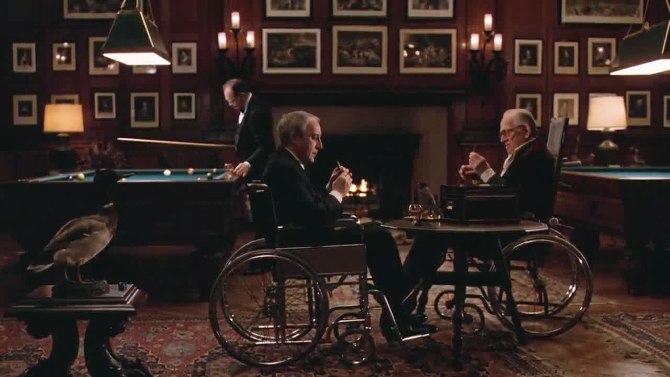
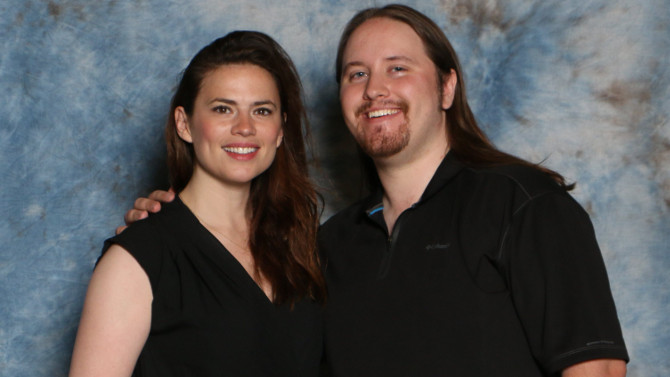
Perhaps more relevant today than it was when it was released, Hal Ashby’s 1979 feature film Being There, based on Jerzy Kosinski’s 1970 novel of the same name (he also wrote the screenplay), speaks to the fickleness of fame – how, by random happenstance, one can be projected into a position of power and ‘celebrity’. Some time back, I spoke to actress Hayley Atwell. A major player in the Marvel universe, she has starred as Peggy Carter in four films, including Captain America: The First Avenger and its 2014 sequel. This spawned the critically acclaimed series Agent Carter, which sadly got cancelled after two seasons. Currently starring on the ABC show Conviction, the British star has also appeared in excellent smaller movies like 2012's The Sweeney and 2008's The Duchess, as well as the entertaining mini-series The Pillars of the Earth. When I posed my favourite question to her (i.e. her favourite film), she had two prompt responses. Speaking of her love of Bette Davis, it is fitting that one of her top films was All About Eve, mostly due to the superb performance from the iconic actress. Secondly, she spoke of the above mentioned Being There. Stating that she loved the book, she originally knew nothing about there being a movie. When she finally saw it, like the novel, it stuck with her, including Peter Sellers’ amazing portrayal as the lead character, making it one of her all-time favourites.
-
Star Pick with Sally Kellerman
 Rebel With a CauseViva Zapata!January 31, 2017
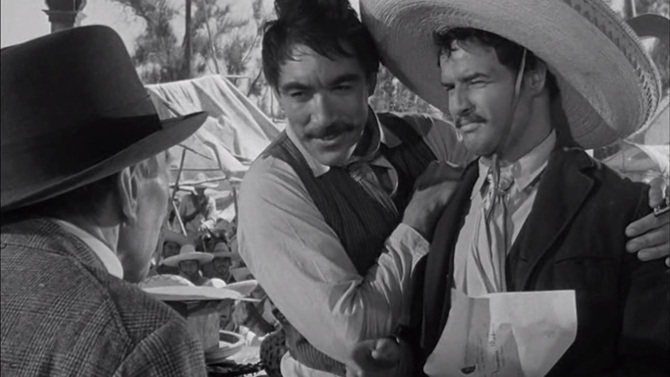
There is a scene about a quarter of the way into Elia Kazan’s Viva Zapata! where our protagonist, Emiliano Zapata (Marlon Brando), has been arrested for attempting to save the life of a peasant who has been unlawfully arrested. Failing, a number of the impoverished, who witnessed the attempt, plead for Zapata to hide in one of their homes. Moving on, he is soon arrested, and the villagers clap with whatever they have in their reach; working tools, rocks or any other implements, as a way to show their support for the hero as he is ushered away. As the officers transport the man through the wilderness, people pour out of the mountainous forest – soon, droves are leading, following and walking beside the police procession. Eventually overwhelmed by the masses, they free the man, aware that they will never be able to manage the united crowd. It is this scene that perhaps best exemplifies the film. A heartfelt sequence, it shows that solidarity in the face of oppression, that boldly standing up for what is right, is a righteous, albeit difficult stance.
-
Star Pick with Michael Dickson
 Butch and Sundance Ride OnButch Cassidy and the Sundance KidJanuary 24, 2017
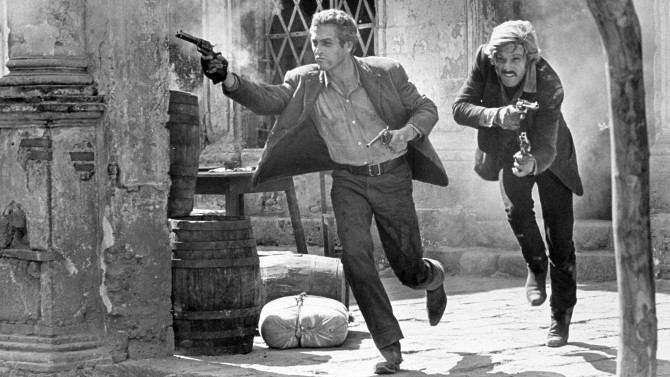
One of the most prolific westerns (and sometimes argued to be the last great western) to come out of Hollywood, George Roy Hill adapts William Goldman’s script that brings to life the real, mythical-type figures of Butch Cassidy and the Sundance Kid. The background of the script is quite something, with Goldman sending it out to all of the studios – only one was interested (and that was if he made a major change to it). Instead, a few minor adjustments were made, after which Goldman discovered that every studio in town now desperately wanted it. In the end, it was 20th Century Fox President Richard D. Zanuck (son of co-founder Darryl F. Zanuck) who purchased the screenplay for a whopping 400,000 dollars (the biggest sum ever spent on a script up to that point) – and 200,000 higher than he was allowed to spend. Putting his job on the line, it was a wise choice, as it became the highest grossing motion picture of 1969. Goldman ended up winning the Academy Award for Best Original Screenplay. Originally titled ‘The Sundance Kid and Butch Cassidy’, Zanuck didn’t find that the title sounded right when it was reversed to its final iteration – funnily enough, it now feels utterly awkward in its original form.
-
Star Pick with Sean Kenney
 It’s a Wonderful Life is Heaven-SentIt's a Wonderful LifeDecember 23, 2016
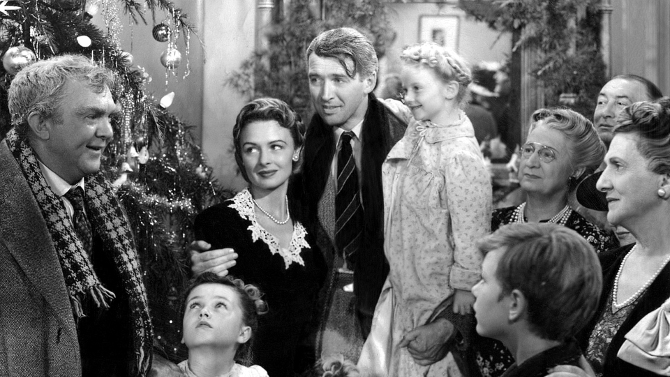
It is hard to fathom that Frank Capra’s classic feature It’s a Wonderful Life turns 70 this year (on December 20th to be exact). A movie of vital importance to millions of people the world over, it has not only become a Christmas staple, but also a yuletide tradition for many a family, though this was not always the case. Getting off to a more than sluggish start (losing major money at the box office), it was not originally a hit (or believed by most critics that it would ever leave an impactful mark on the spools of film history). In a miracle befitting of the fantasy drama, the tides for the downtrodden film turned around in the 1970s (thanks to a fortunate copyright lapse), finding a more than accepting audience on the television screen. Taking off, it has gained the traction director Capra once had hoped for, for his story – though he never truly expected it to get a second chance. He actually said (to The Wall Street Journal in 1984): "It’s the damnedest thing I’ve ever seen. . .The film has a life of its own now and I can look at it like I had nothing to do with it. I’m like a parent whose kid grows up to be President. I’m proud. . . but it’s the kid who did the work. I didn’t even think of it as a Christmas story when I first ran across it. I just liked the idea."
-
Star Pick with Kim Campbell
 Here’s to Christmas SpiritsA Christmas CarolDecember 13, 2016
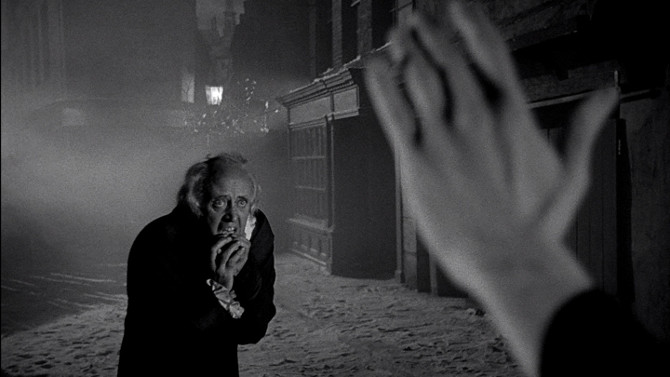
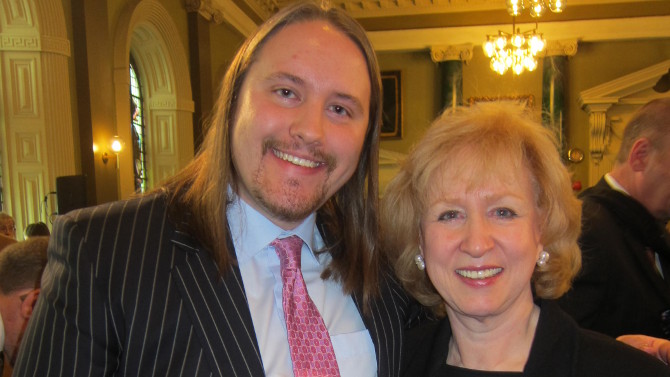
A little while ago, I was fortunate enough to be able to interview The Right Honourable Kim Campbell, the 19th Prime Minister of Canada (and to date, the only female to land the top job), about her favourite film. Transporting me to ‘the most wonderful time of the year’, she illuminated me as to her Christmas program watching traditions. She explained that, each time December comes around, she makes time to gather round the television with her entire family and watch, back to back, The Muppet Christmas Carol starring Michael Caine, followed by the classic 1951 version of A Christmas Carol, with Alastair Sim taking on the legendary role of Ebenezer Scrooge. She lit up talking about her family custom, clearly cherishing the memories made by gathering the family to watch these two festive films. As I am only able to review one film as part of the Star Picks section, I will be looking at the 1951 incarnation of the Charles Dickens’ tale. Make sure to track down the Muppet version as well to get the full Prime Ministerial experience. Arguably the most iconic version of the miser, Alastair Sim has been etched in the collective psyche as the perfect Scrooge. With his receding hairline, bulbous eyes and curmudgeonly attitude, it is easy to buy him as a true hater of all things Christmas.
-
Star Pick with Christian de la Cortina
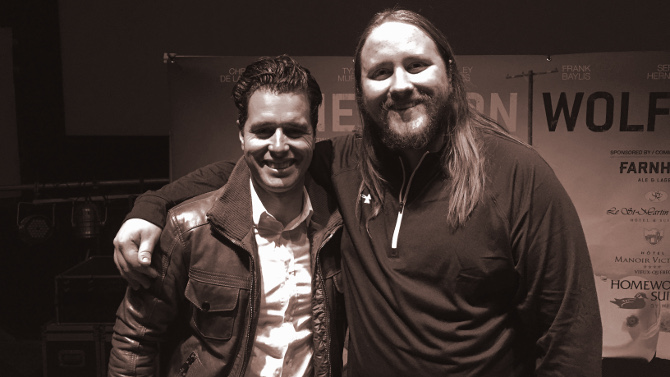 Show Me the WayCarlito's WayDecember 6, 2016
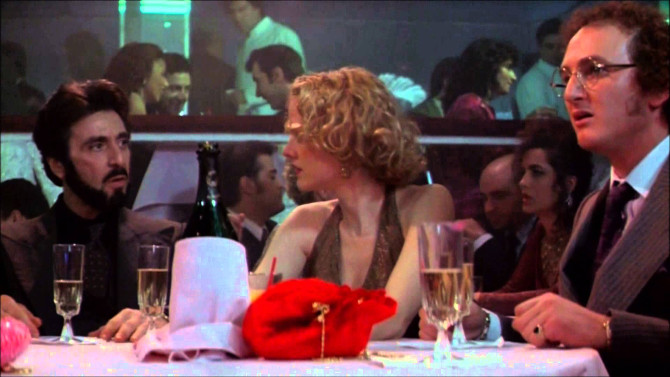
Following the special screening of the Canadian independent film Generation Wolf at the historic Port Theatre in Cornwall, Ontario, I sat down with filmmaker Christian de la Cortina – who co-wrote, produced, directed and starred in the entertaining crime flick. Cortina, who works out of Quebec, has had a fruitful start to his career, dabbling in many French language television series and miniseries, including La Marraine, 19-2, Mon Ex à Moi and O’, as well as procuring roles in American productions being filmed in La Belle Province, including last year’s highly touted Academy Award nominee Brooklyn. 2008 was a watershed year for the man, as he released his first feature film – Transit, which he also produced, directed, wrote and starred in. Seeing it as an opportunity to concoct intriguing roles for himself and others (as he did not want to be placed in a position where he may only receive similar roles throughout his career – in other words, typecast), Generation Wolf can be seen as a successful extension of that plan – as it depicts an engaging story that is chock full of richly drawn characters.