 Films That Matter
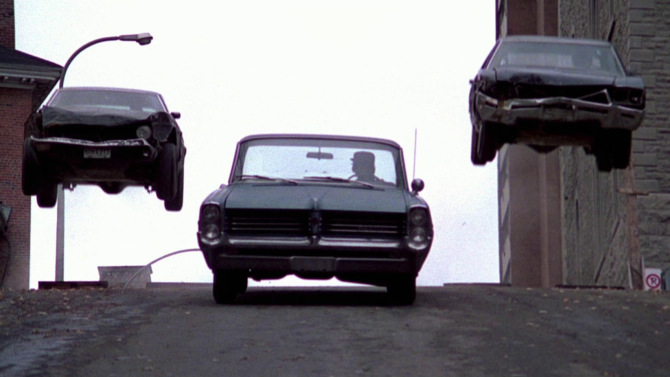
Montreal Magnum
When it comes to car chase scenes, the one that is always highlighted, and for good reason, is from Peter Yates’ 1968 action thriller Bullitt starring Steve McQueen... but some eight years later, the city of San Francisco was replaced by Montreal, Quebec in this little known Italian production with quite the epic speedy sequence of its own, Shadows in an Empty Room (1976), directed by Alberto De Martino. Fusing this touch of Bullitt with a Dirty Harry style storyline – hence why it is called Blazing Magnum in some markets (including the UK), while also including a hint of the ever popular at the time 70s giallo for some murder mystery elements, the narrative follows gritty, hard as nails Ottawa cop Capt. Tony Saitta (Stuart Whitman) as he dispatches some bank robbers in his own city... before getting the tragic call that his much younger sister, Louise (Carole Laure – Sweet Movie), who lives in Montreal, has died under very suspicious circumstances.
-
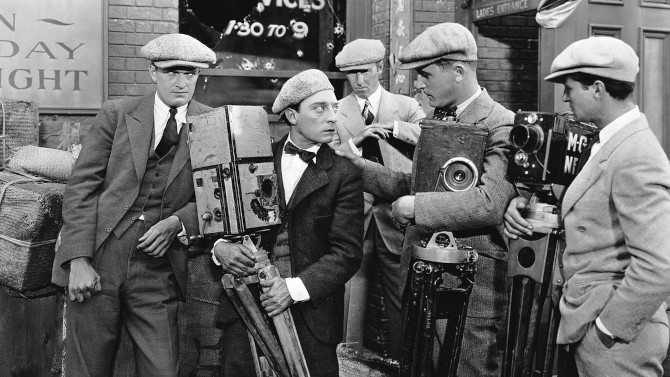
Plights, Camera, Action
The CameramanFebruary 22, 2025Often deemed to be the last classic film made by the great Buster Keaton, The Cameraman (1928) was the final time the silent legend would have anything close to full creative control over one of his own features... as he folded his independent studio to sign with Metro-Goldwyn-Mayer (MGM) – who promptly made him their third highest paid star. Though his future would soon turn very bleak, this first film with the new studio was his own idea.
-

Finishing School
Naked You DieFebruary 18, 2025With its rather edgy, alluring title, 1968's Naked You Die (also known as The Young, the Evil and the Savage, as well as Schoolgirl Killer), you’d think you are in for a highly controversial giallo, but, as this dates from the 60s, a few years prior to when this style of film started pushing the boundaries of violence and sex, you’re actually in for a slightly more traditional murder mystery compared to what the title might suggest. After an unknown piece of luggage in the form of a giant, heavy trunk arrives at St. Hilda’s College (which is basically a posh boarding school for young women) along with a few new staff members, including husky voiced, goth like science teacher Mrs. Clay (Betty Low) and ultra athletic gym teacher and swim instructor Di Brazzi (Giovanni Di Benedetto), things turn unexpectedly murderous rather quickly.
-

A Prequel for the Sequel
Furiosa: A Mad Max SagaFebruary 14, 2025Filling in a lot of the back story gaps of the 2015 sensation Mad Max: Fury Road – which was a spectacle for its non-stop pedal to the medal action, George Miller’s prequel to the fourth film of the franchise, Furiosa: A Mad Max Saga (2024), sets aside some of the thrills (but don’t worry, they are still aplenty) in order to explain more about his post-apocalyptic landscape and his main character at the centre of the story – the titular Furiosa. Rather intriguingly, this screenplay was already written during the filming of Fury Road – it was handed out at the time to help the actors better understand who their characters are and where they came from. For those of you who have seen the 2015 edition, this narrative will explain how Furiosa (originally Charlize Theron in Fury Road, now the younger version is played by Alyla Browne, the teen version by Anya Taylor-Joy)
-

What Could Have Been: Shopworn
February 10, 2025It’s usually hard to bet against Barbara Stanwyck. Starting her career in the late 1920s, within a few years she was already churning out star making roles as plucky working class girls who could rise to the top: think Ten Cents a Dance (1931) and Baby Face (1933) – both reviewed here on Filmizon, only to further elevate herself during the film noir era with starring roles like Double Indemnity (1944) and The Strange Love of Martha Ivers (1946) – also both on Filmizon, she even conquered television later in her career as matriarch Victoria Barkley in 112 episodes of Big Valley from the mid to late 1960s. In other words, it’s rather unusual to see her in a clunker... though with the film looked at here today, Shopworn (1932), directed by Nick Grinde, Stanwyck herself described it as, “one of those terrible pictures they sandwiched in when you started”.
-

Me and My Shadow
The Man Who Haunted HimselfFebruary 5, 2025The movie Roger Moore made directly before taking over the iconic role of James Bond for over a decade starting in 1973, The Man Who Haunted Himself (1970), co-adapted and directed by Basil Dearden from the novel “The Strange Case of Mr Pelham by Anthony Armstrong, is perhaps as un-Bond-like as possible (despite Moore uttering the quote above), which may be why the star also frequently suggested that this was his best film. Harold Pelham (Moore) is in a high stress position at a marine technology company – in which a merger is being pressured from an outside company, which, when combined with his rather awkward version of a stiff upper lip attitude, has left his marriage with Eve (Hildegarde Neil) rather cool and aloof.
-
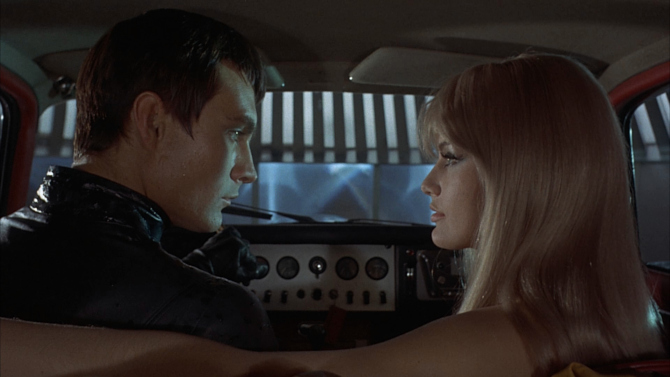
Diabolical Danger
Danger: DiabolikJanuary 24, 2025Transporting its Italian comic book roots to the big screen, Danger: Diabolik (1968), directed by Mario Bava (Blood and Black Lace) and produced by powerhouse Dino De Laurentiis (Barbarella), plays like a vivid three dimensional escapade that fuses elements of swinging sixties spy chic, an early take on the anti-hero, a greedy twist on the Robin Hood tales of yore, and splashes of kitschy Batman (that is, the television series), all coming together for plenty of frivolous fun. The titular Diabolik (John Phillip Law) is a sort of master thief, a black spandex wearing, Jaguar E-type driving genius who thrives on stealing money from an unnamed European government – which, at best, is incompetent, at worst, corrupt users of their taxpaying base. Though, unlike Robin Hood, he keeps the oodles of cash for himself and his helpful mini-skirt wearing girlfriend Eva Kant (Marisa Mell).