 Films That Matter
Missed the Bloody Cut: 2026 (Part 1)
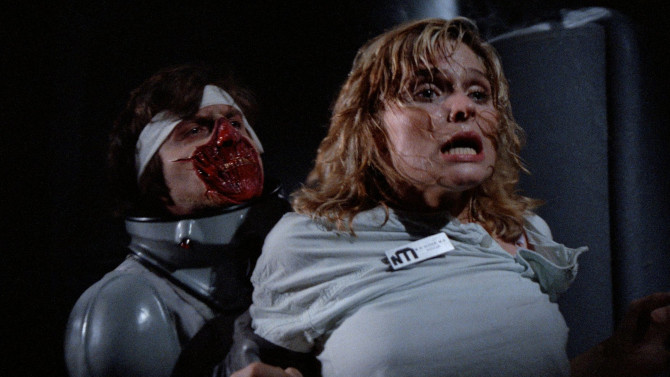
The first Missed the Bloody Cut horror selection of this 2026, here are some more horror movies that did not meet my strict criteria (a rating of 7.0 or higher)... but are still entertaining films (horror fanatics may enjoy) that do not deserve to be shrugged off like a slow walking group of mindless creatures – and that are definitely worth a watch (just maybe not several re-watches).
-
A Rabbit and a Gent Walk Into a Bar…
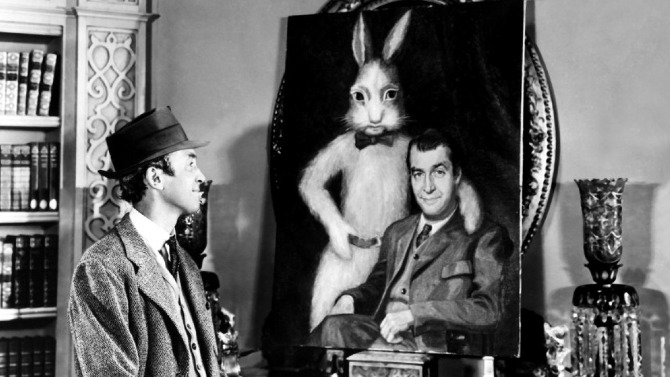
HarveySeptember 4, 2016If a stage play is to be successful, it needs to rely on the strength of two very important aspects – its actors and sharp dialogue. The one thing that I have come to notice when watching an adaptation of a play is that the dialogue that transitions over to the big screen is almost always beautifully written, unbelievably witty and surprisingly eloquent. There is perhaps no better example of this than the 1950 classic Harvey. Mary Chase adapts her own Pulitzer Prize winning play (with some help from Oscar Brodley), bringing with her Jimmy Stewart and Josephine Hull, two actors who had already tackled the material on the stage. Stewart plays Elwood P. Dowd, a kindly and charming gentleman who comes from a well-to-do family. He has a lovely demeanor, but is thought to drink too much (he does spend most of his days frequenting bars) . . . and also just happens to be friends with an invisible, six foot three and a half inch tall rabbit named Harvey.
-
Sink or Swim
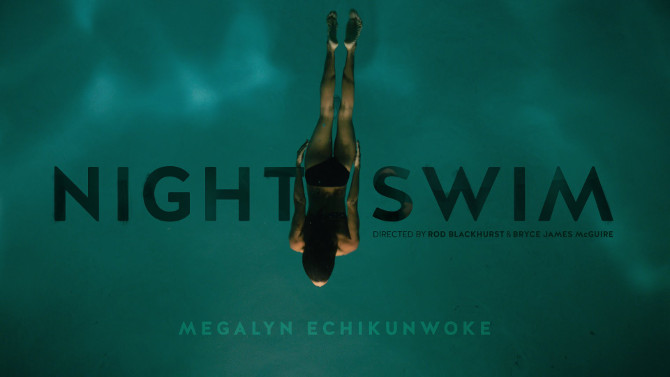
Night SwimSeptember 2, 2016Tomorrow, the St. Lawrence International Film Festival will be putting on a special gala (in Potsdam, NY) where they are screening the Audience Award winner (for best Narrative Picture) from the Tribeca Film Festival – the dramatic horror movie Here Alone. One of the best little glitches that occurred at last years St. Lawrence International Film Festival was when I sat awaiting the showing of The Corpse of Anna Fritz. Instead of the foreign flick beginning, the projectionist mistakenly began to screen Here Alone director Rod Blackhurst’s 2014 short film Night Swim. Thankfully, the festival worker did not stop the compact flick, allowing it to play out before starting the full length feature.
-
Star Pick with Steve Coulter
 Cool Pick for Dog Days of SummerDog Day AfternoonAugust 30, 2016
Back in April of 2016, I sat down with actor Steve Coulter (twice). He was one of the special guests attending the Cornwall and Area Pop Expo (CAPE). The character actor, who has had a plethora of interesting roles over his career, is perhaps best remembered as the kind hearted, intellectual Reg Monroe (the mastermind behind the walled compound of Alexandria) on the ever popular series The Walking Dead. He has also had a recurring role as Amishman Elijah Bowman on the standout Cinemax series Banshee. On the film front, he has worked with horror maestro James Wan an impressive five times, including as Father Gordon in The Conjuring and its sequel, as well as playing Carl in Insidious: Chapter’s 2 and 3. He also portrayed Roger, a lawyer, in one of my favourites – Mr. Brooks. Mr. Coulter was gracious enough to be interviewed twice, once as part of a local Cogeco special, while on day two of CAPE, we chatted all things Banshee. Check out both meetings below to hear some great stories from all the things mentioned above, as well as his favourite film.
-
A Bloody Funny Misunderstanding
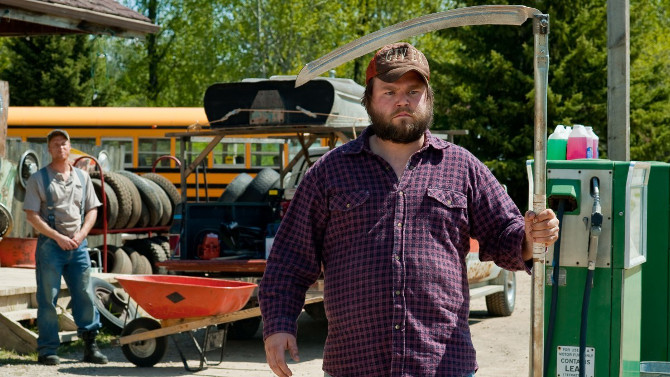
Tucker and Dale vs EvilAugust 28, 2016Words are funny (and I don’t necessarily mean ha ha funny). Let me explain by way of an example: if I were to say, select the highest number between 5 and 8 – half of you would likely say 8, while some others would choose 7 (or 7.9), depending on how you perceive the word between. I use the word perceive, because perception is equally as fickle. Three people witnessing an automobile accident can sometimes see three very different things. Words and perception are used in clever fashion to exhume bloody humour in the 2010 comedy/horror flick Tucker and Dale vs. Evil. Co-writer/director Eli Craig (as well as second co-scribe Morgan Jurgenson) flip our perception of what ‘should be’ from the very beginning. Tucker (Alan Tudyk) and Dale (Tyler Labine) are two, for lack of a better word, hillbillies. . . but not those of horror past who enjoy slaughtering local travellers.
-
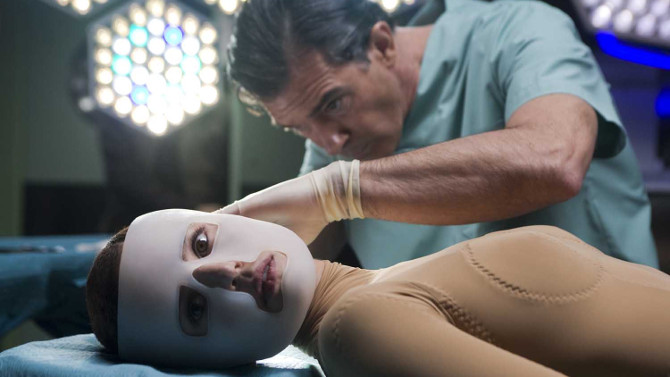
Under My Skin
The Skin I Live InAugust 26, 2016Three weeks ago today, I reviewed Tie Me Up! Tie Me Down!, a 1989 film directed by Pedro Almodóvar that starred Antonio Banderas. I said that in some ways it was similar to another motion picture that features the iconic director and actor – 2011's The Skin I Live In, which will be reviewed here today. Feeling like a modern take on the Frankenstein story (or perhaps Bride of Frankenstein), Banderas plays Robert Ledgard, a plastic surgeon and scientist at the forefront of his field. He has been successful in developing a type of artificial skin that is resistant to burns as well as insect bites. Controversial in the scientific community, he claims to have only tested it on mice – though when he hints that he has used it on a human being, he is strictly prohibited from continuing his research.
-
Star Pick with John 'Moose' Wensink
 Paint Your Wagon; An Oddly Entertaining MusicalPaint Your WagonAugust 23, 2016
Back in September 2013, former heavyweight tough guy for the Boston Bruins, John ‘Moose’ Wensink, was roasted in Cornwall to raise money for the Children's Treatment Centre. Following the event, I interviewed the former NHLer. When asked what his favourite film of all-time was, he quickly proclaimed Paint Your Wagon. When asked why, he simply replied, "Why not?" This article, with a few changes added, is the same that was published back on December 17th, 2014. I recently golfed with Wensink at Upper Canada Golf Course in Morrisburg, Ontario (on July 22nd, 2016), and he was gracious enough to expand on the interview we did back in 2013. You can see the video interview down below, where the man takes us through his storied career and expands on his love of Paint Your Wagon.

