 Films That Matter
Pit Stop
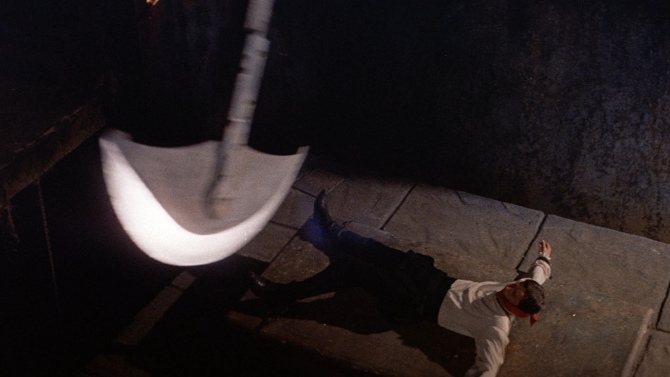
After Roger Corman’s major success with House of Usher (1960), he promptly turned to adapting another Edgar Allan Poe story to start a franchise of sorts, with The Pit and the Pendulum (1961) being an even bigger win... with it making over two million dollars on a modest budget of only three hundred thousand. Getting Vincent Price (House of Wax; Laura) back after House of Usher’s critical and commercial winnings, this time he plays Nicholas Medina, a tortured soul living in a tomb of a castle with his servants after his gorgeous wife Elizabeth (Barbara Steele – Black Sunday; The Horrible Dr. Hichcock) has seemingly died of a massive heart attack brought on by fright. Feeling as if he is truly cursed, he resides in the same place that his sadistic Spanish Inquisition father once tortured his victims, where his mother and uncle died, and now where his wife has met her untimely end. It has become so bad that even Nicholas’ sister Catherine (Luana Anders) has returned home to try and ease his sorrows.
-
‘Marvel’ous
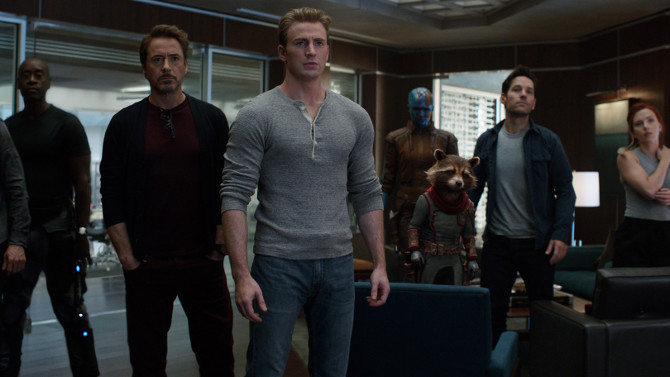
Avengers: EndgameMay 7, 2019Every once in a while, a film becomes part of the zeitgeist – capturing the spirit and mood of its time, uniting viewers in a shared experience that will never be forgotten. Think Gone With the Wind, Casablanca, The Godfather, Jaws, Star Wars, Titanic, the Lord of the Rings trilogy, Avatar. . . you get the idea. Capturing lightening in a bottle, this shared experience unites moviegoers worldwide, the most recent example, Avengers: Endgame (2019). Whether you love comic book films or hate them, it is hard to argue with what Marvel has done since 2008 (starting with Iron Man). A three phase initiative, with almost too many superheros to name, Endgame is the twenty-second feature in the last eleven years, and, in many ways, the end of this unique vision. Something never done before, standalone and ensemble films have been combined to great effect, grossing (to this point) over twenty billion dollars, and, for the most part, winning critics over along the way.
-
Star Pick with Jason Momoa
 Magnificent SamuraiSeven SamuraiJanuary 8, 2019
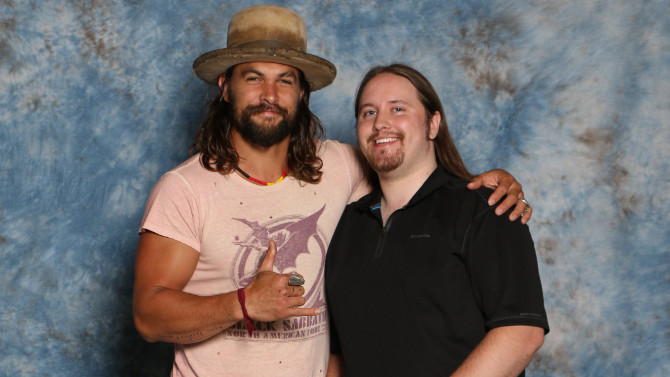
With a towering warrior frame, Jason Momoa is a rare actor whose size onscreen matches his larger than life build in person (no offense to other stars, but usually, for whatever reason, height is not one of their trademarks). Yet, despite his imposing height and breadth, he is chill and zen when you meet him – a relaxed, calming presence. Momoa has quickly built up his star status, most wholly unaware of his time on Baywatch (44 episodes, no less), often forgotten in his role on Stargate: Atlantis, or his turn in the remake of Conan the Barbarian, most thinking his take on Khal Drogo (on the surface, a savage barbarian, Momoa built a fascinating, multi-faceted character) in Game of Thrones was his first major performance. . . and since, he has made intriguing, surprising, and most importantly, quality choices with his career – splitting time between film and television. Eccentric roles in B movies like Bullet to the Head and The Bad Batch, or selecting the Canadian series Frontier (where he plays a part-Native outlaw involved in the fur trade), fit the man like a glove, personas that meld with the actor, for even his most recent win, that of Arthur Curry, better known as Aquaman (currently, as of January the 8th, 2019, the number one film in the world), could have been considered a risky bet. . . for the underwater superhero has often been the joke of the industry (remember Vincent Chase’s lack of interest in Entourage) – after all, he swims around the ocean talking to fish, yet Momoa (and director James Wan) have made the hero cool again – a slick, at times comedic warrior hero in the vein of King Arthur or Indiana Jones.
-
Takin’ Care of Business
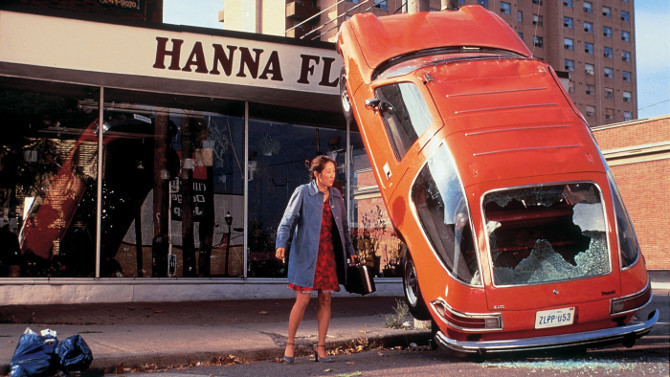
Last NightJanuary 6, 2019What would you do if you knew the end of days was nigh? Maybe you’d relish in your memories of the good old times, or revel in the anarchy going on around you. . . perhaps you’d party the night away, then go out in a blaze of suicidal glory just to spite a foregone conclusion? ? ? These are some of the topics covered in the Canadian understated-apocalyptic Indie dramedy Last Night (1998). Written, directed and starred in by Don McKellar (his first feature film; also the scribe of the fascinating picture The Red Violin), he litters Canada’s largest city, Toronto, with not only trash (and a few remaining stragglers), but also a simple melancholic poignancy, a dry and awkward humour that covers up the anguish that the ‘New Year’s Eve-like countdown to the end’ brings with it. McKellar’s take on the “2000, Seen By” project (which had filmmakers looking at the approaching excitement and fears of the Millennium), had him making the wise choice of depicting 2000 as the end of the world (rather than a current fad that would have it feeling passé almost immediately after the fact).
-
I Believe
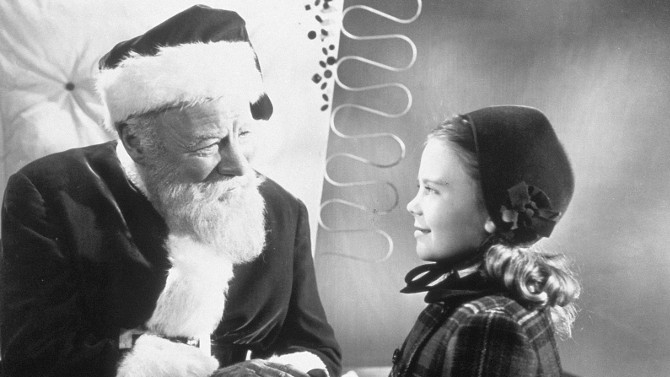
Miracle on 34th StreetDecember 23, 2018A Christmas movie that is truly special has that moment. . . that specific sequence magically able to transcend the medium – enlivening our spirits, touching our hearts, rejuvenating the soul. . . a bell ringing – it giving an angel its wings; a humbug of a man able to get another chance at really living life; a family, despite all odds, getting home to their young son that has been left home alone; and, in today’s film, though the ending could arguably be it, a woman brings her newly adopted (orphaned) Dutch daughter to see Santa Claus at the mall, as the little girl truly believes she will be able to speak to him – her mother, knowing that he can’t speak the language, is gobsmacked when he starts to talk to her – bringing so much joy to her cherub-like face. Of course, you’ve probably guessed it, I am referencing George Seaton’s 1947 classic Miracle on 34th Street (he both writes and directs). After a drunk Santa is removed from his post during the Macy’s Thanksgiving Day Parade thanks to the complaint of Kris Kringle (Edmund Gwenn – winning an Oscar for the role), methodical event director Doris Walker (Maureen O’Hara) asks the man to don the suit – filmed during the actual parade.
-
Post-War Noir
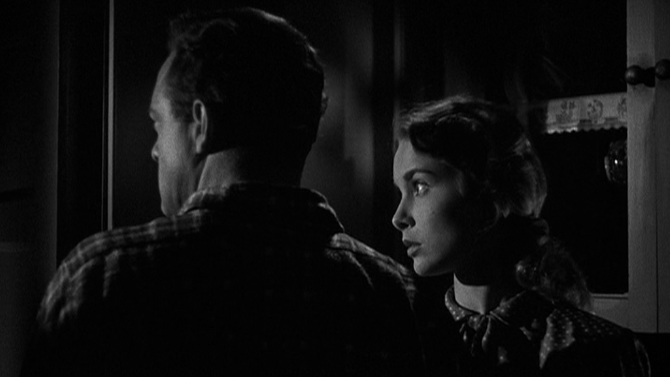
Act of ViolenceNovember 9, 2018A perfect example of ‘you can’t outrun your past, present or future’, 1949's Act of Violence, directed by Fred Zinnemann (High Noon; From Here to Eternity), starts with quite the hook: a man, limp noticeable, hurriedly, and with purpose, makes his way through a city in the clutches of the glum night, eventually entering a room that holds a deadly object – a gun. . . hopping onto a bus, it does not bode well. With a deliberate, unyielding presence, Joe Parkson (Robert Ryan – for another one of his great film noirs, see The Set-Up) is the thing of nightmares. . . a stalking figure in trench coat and fedora – the Michael Myers of the noir genre. Ryan, with his lined face, imposing size, and disturbed demeanor, is an ominous heavy – the enigmatic grunt opening a phone book and circling the name of one Frank R. Enley (Van Heflin).
-
A Fly in the Ointment
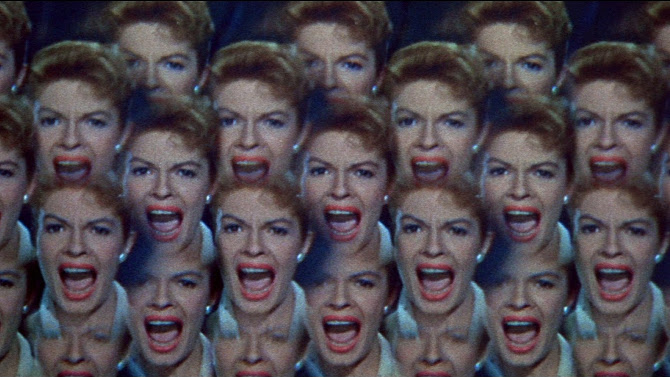
The FlyOctober 19, 2018We’ve all had it happen before. . . an experiment goes awry – a recipe doesn’t turn out (and the cake somehow turns green), or we simply think ‘the old Mentos in a bottle of Coke trick’ is just a myth, but you’ve likely never had a day quite like scientist André Delambre (David Hedison – the only actor to play Felix Leiter in two James Bond flicks), a moment that will change his life forever – so, without further ado, I present to you 1958's: The Fly. Written by James Clavell (based upon a short story by George Langelaan) and directed by Kurt Neumann, the story is set in exotic Montreal, the french speaking Canadian city that is one of the oldest continuously inhabited locations in North America. It is here that a wealthy industrialist family is seemingly struck by a more than unusual tragedy – André Delambre has been found dead, head and arm obliterated by a hydraulic press. . . further adding to the mystery, his loving wife Hélène (Patricia Owens) is seen running from the scene of the crime.