 Films That Matter
Between the Devil and the Deep Blue Sea
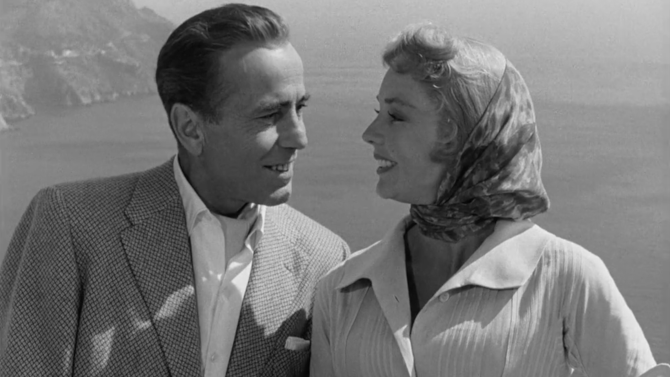
What would seemingly have been a massive hit crime film with an utterly impressive cast, Beat the Devil (1953) instead became a most bizarre experiment. With unhappy director John Huston having thrown the script out the window, he brought in the legendary Truman Capote to then help him co-write the story based upon British journalist Claud Cockburn’s novel of the same name at the very last minute. With a cast already assembled in Italy, names like Humphrey Bogart, Jennifer Jones, Gina Lollobrigida (in her first English language movie), Peter Lorre and others were simply sitting there and waiting to get started.
-
Hope For the Best, Expect the Worst
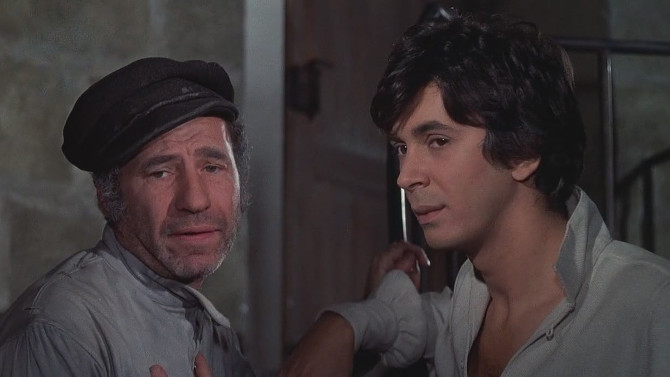
The Twelve ChairsJune 9, 2019A slick con artist, an unscrupulous priest and a ruined aristocrat walk into a house. . . sounds like a joke; it kind of is – for this is the lead-in to Mel Brooks’ 1970 comedy The Twelve Chairs. Loosely based on the 1928 Russian novel of the same name (written by Ilf and Petrov), this film is arguably the black sheep of Brooks’ filmography, a more artsy piece that is less laugh out loud funny, and instead, more of a thinking man’s funny – for instance, as a character wanders the Soviet streets at the beginning of the film (set in 1927), he passes two different street signs, the original: “Czar Nicholas II Avenue”; the new one, “Marx, Engels, Lenin & Trotsky Street – with a line running through the final name” – if you know your history, Nicholas and his family were executed during the Russian Revolution of 1917, while the name Trotsky has been eliminated, as in the very year this story is set, Joseph Stalin ran him out of the country and into exile – in 1940, Stalin would have him killed in Mexico City by way of an ice axe (I almost had a really good ice pun for this, but it slipped my mind). . . fear not, Brooks works some cheesy humour into the story as well.
-
The Bachelorette
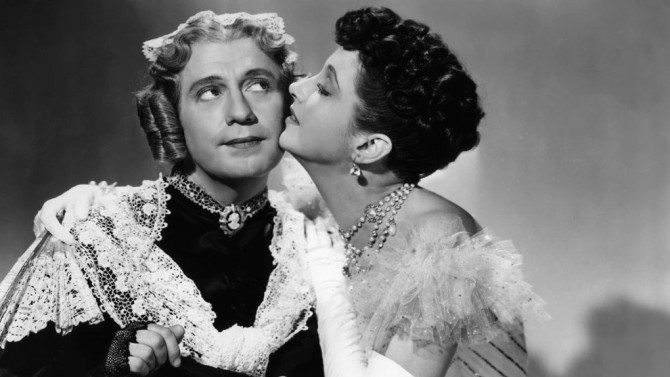
Charley's AuntMay 15, 2019Before Kinky Boots, Mrs. Doubtfire, and Tootsie, even before Some Like It Hot, there was the original cross-dressing comedy, 1941's Charley’s Aunt (directed by Archie Mayo). Based upon the famed stage play by Brandon Thomas, this was actually the third filmed version of the farce – and they say Hollywood is remake happy today! No better place to set such a premise than at the stuffiest of Universities, Oxford, the madcap premise is only further exaggerated by its time – 1890's Victorian England.
-
Lougennaire’s Disease
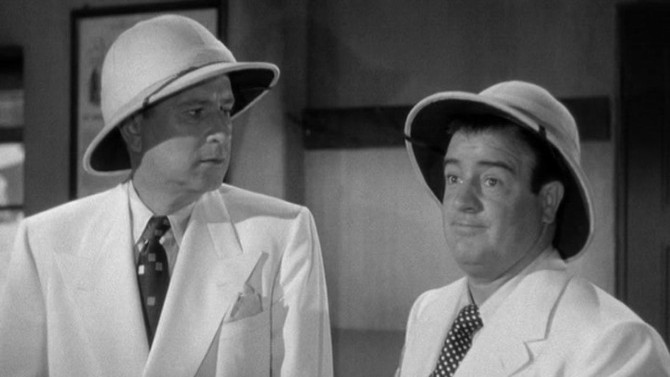
Abbott and Costello in the Foreign LegionMarch 26, 2019What do boxing promoters have to do in the Middle East? Other than throwing a he-jab or two (I know, I know, a touch lame), absolutely nothing, unless you are caught up in another one of Bud and Lou’s zany misadventures. . . namely, Abbott and Costello in the Foreign Legion (1950). Directed by Charles Lamont (his first of eight features with the comedy team –the efficient filmmaker was not overly excited to head these simple projects) and written by frequent A&C screenwriters’ John Grant (every one except Lost in Alaska and Dance With Me, Henry), Martin Ragaway and Leonard Stern (both wrote three), the story finds two boxing promoters, Bud Jones (Bud Abbott) and Lou Hotchkiss (Lou Costello) – a rare time the pair used their first names, losing control of one of their star wrestlers, Prince Abdullah (William ‘Wee Willie’ Davis) – who is infuriated that he is slated to lose his next match, returning home to Algiers instead of taking the loss (but not before roughing up poor Lou – who did all of his own wresting stunts in the film – leading to a wrenched arm socket and a stretched tendon).
-
Perspective Analysis
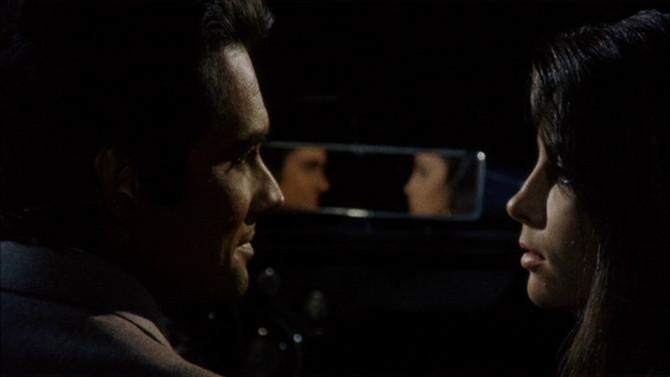
Four Times that NightMarch 10, 2019An Italian sex comedy with some class – I know, I know, that sounds like an oxymoron, the great Mario Bava (Black Sunday) co-adapts and directs Four Times That Night (1971), a film that structures itself in a similar way to Akira Kurosawa’s classic Japanese motion picture Rashomon – also, for a more modern example, think of the television series The Affair (starring Joshua Jackson, Dominic West and Ruth Wilson). Looking at one fateful night, four individuals get a chance to tell their side of the story. Dealing with perspective and viewpoint, the narrative revolves around Gianni Prada (Brett Halsey) and Tina Brandt (Daniela Giordano), a wealthy man always on the prowl – this time spotting a pious young woman in Tina.
-
Busta Move
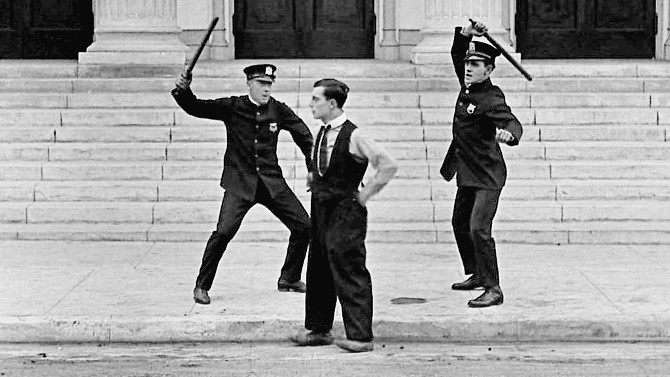
CopsFebruary 10, 2019A tale of visual trickery, rotten luck, and arguably, the bleakest of Buster Keaton’s shorts, Cops (1922) finds The Great Stone Face losing the girl (she is unwilling to even think of dating the man until he makes something of himself) – so, he heads out into the streets of Los Angeles (actually filmed on them) to do just that. Shot during the third trial of his good friend Rosco “Fatty” Arbuckle (charged with manslaughter), it is perhaps evident that the comic actor is not at his most cheerful. After making a few mistakes – Keaton’s use of the space onscreen and the items cleverly placed within it always awes and amazes, he accidentally purchases a cop’s furniture from a street scammer who has spotted that he has some dough (he also buys a horse and carriage that is not actually for sale). . . trotting away with the furniture in tow, he finds himself amidst a police officers’ parade and has the rotten luck of having an anarchist’s bomb land on the vehicle – completely unaware of what it is, he lights his cigarette with it, tossing it aside as it explodes (this idea very well could have come from fellow comedian Harold Lloyd, who, three years earlier, thought it would be funny to pose for photos as he lit a cigarette from the fuse of a bomb – it ended up being real. . . and the man lost his thumb, index finger, and a portion of his palm, it also left him partially blind for more than half a year).
-
Buster Boo
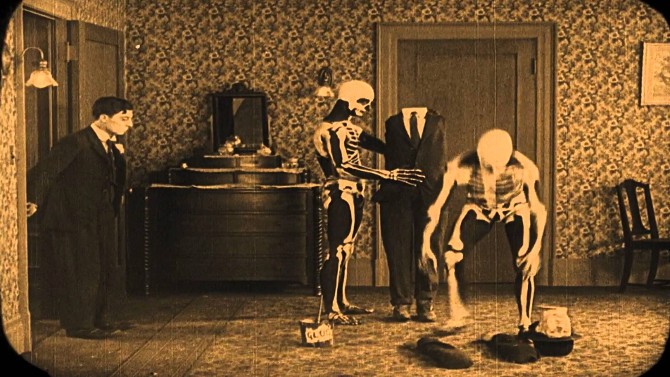
The Haunted HouseOctober 5, 2018Though not one of Buster Keaton’s most iconic shorts, 1921's The Haunted House is, at its best, like one of those uber-fun Scooby-Doo, Where Are You? chase scenes – ghosts, skeletons, demons and other unexpected spooks flitting in and out of rooms and doorways, dodging, ducking, dipping, chasing, and ultimately, scaring our jarred, though still somehow stone-faced, hero. Where it struggles slightly is its setup. Keaton is a clerk, a hard working employee at a small time bank. The larger than life money manager (behemoth Joe Roberts) has hatched a plan to rob said bank, his team of thieves looking to a crumbling old home, long rumoured to be haunted, as their hidy-hole – preparing for the cops or any other unlucky trespasser, they have booby-trapped the long since abandoned abode while also gathering white sheets to act as ghosts, building on its infamous reputation. After a glue gag that kind of falls flat, Keaton is spotted by the owner with guns in hand (after having chased off the robbers) – it looking like he is the criminal mastermind. . . fleeing, he hopes to find respite in the haunted house.