 Films That Matter
A Deadly Good Time
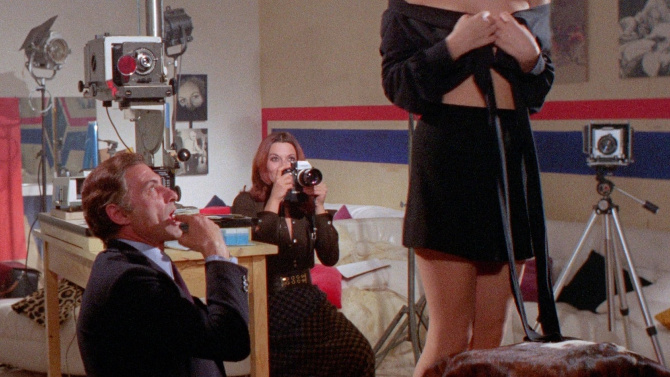
A slightly more obscure giallo released during the heyday of the craze, co-writer/director Silvio Amadio’s Smile Before Death (1972) is a psychological mystery thriller that certainly pushes the boundaries of the already boundary-pushing Italian genre. Amadio starts with a wild opener, as wealthy Dorothy Emerson (Zora Gheorgieva) is found brutally murdered by an unknown assailant... with it promptly being classified as a suicide by the incompetent police, this then turns into a slow burner of sorts.
-

Murder ‘Mystery’
MystèreMay 19, 2025Sometimes a movie just doesn’t fit perfectly within its own genre... going against a few of the tropes that define what something is, all while hitting enough of them to still be what it is – confusing! That’s the case with this latter-day Italian giallo, Mystère... sometimes better known by its English title Dagger Eyes (1983). Co-written and directed by Carlo Vanzina, the film opens with a rather impressive, though more crime inspired assassination in Rome... resembling the real life John F. Kennedy car killing. It will start a chain reaction of murders that will rock the Eternal City.
-
A Different Type of Photobomb
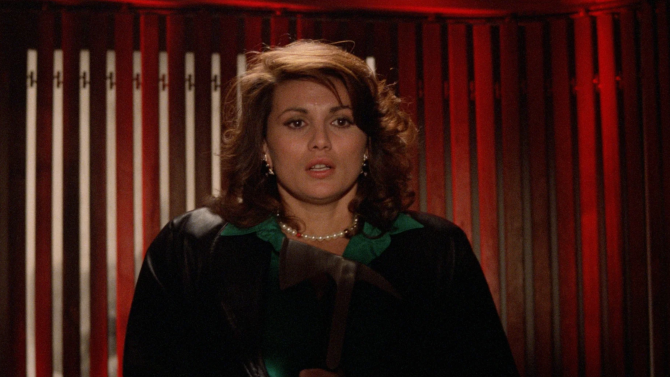
DeliriumApril 8, 2025Some might know that icon Mario Bava is often considered to be the first filmmaker to make a giallo with 1963's The Girl Who Knew Too Much... though unless you’re a big fan of the genre, many will probably not know that his son, Lamberto Bava, continued on with the gialli tradition well past its heyday in the early 1970s – releasing a number of horror tinged mystery thrillers, including today’s Delirium (1987)... sometimes also known as The Photo of Gioia. Welcome to what very well could be the Italian rival of Hugh Hefner’s Playboy, fluffily called Pussycat – a high end nudie magazine that brings some class (and a bit of kitsch) to artistic nude photography. Run by former supermodel Gloria (Serena Grandi), she inherited the business when her husband tragically died.
-

Eggistentialism
Death Laid an EggMarch 14, 2025There is no denying that gialli can be a bit out there. These Italian twisty murder mysteries can often combine abstract writing, new age technologies of the 1960s and 70s, and some sex and drugs to make for a trippy experience... but you ain’t seen nothing yet. The most surrealist giallo of them all might just be 1968's Death Laid an Egg, directed by Giulio Questi. Welcome to the most posh chicken farm you’ll ever see. With a scientist (Biagio Pelligra) working nearly around the clock to genetically produce a new form of poultry that will almost instantly fatten with limited bone structure... all while countless chickens are being prepared for market by some new fangled automated technology, wife Anna (Gina Lollobrigida) and her secretary cousin Gabrielle (Ewa Aulin) lounge around their resort-like swimming pool as the former’s hubby, Marco (Jean-Louis Trintignant), gets his kinky rocks off with prostitutes at a hotel as he falls deeper and deeper into a fugue state.
-
Brave the Elements
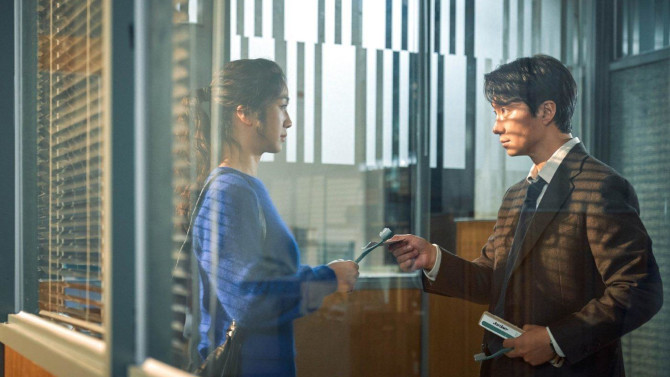
Decision to LeaveMarch 10, 2025Park Chan-wook has never hidden the fact that he is a huge fan of Alfred Hitchcock – frequently highlighting Vertigo as the movie that got him into film making. Like many before him, perhaps most notably Brian De Palma, he has found clever ways to integrate influences from The Master of Suspense within his own work, the easiest comparison being Stoker... a loose remake of Shadow of a Doubt. But his most recent feature, Decision to Leave (2022), which he co-writes and directs, might even be more so – though crafted so subtly that you really need to know your Hitchcockian filmography to see where he is pulling from. Originally getting the idea from the song “Mist” by Jung Hoon Hee and Song Chang-sik, which fuses quite nicely with the above quotation from Confucius, this mystery crime thriller flits between the always mist filled skies of seaside Ipo and the mountainous city of Busan. Though insomniac detective Jang Hae-joon (Park Hae-il) resides in the former with his wife Jeong-ahn (Lee Jung-hyun), he lives six days a week in the latter – a place that he has moved to for his job.
-

Finishing School
Naked You DieFebruary 18, 2025With its rather edgy, alluring title, 1968's Naked You Die (also known as The Young, the Evil and the Savage, as well as Schoolgirl Killer), you’d think you are in for a highly controversial giallo, but, as this dates from the 60s, a few years prior to when this style of film started pushing the boundaries of violence and sex, you’re actually in for a slightly more traditional murder mystery compared to what the title might suggest. After an unknown piece of luggage in the form of a giant, heavy trunk arrives at St. Hilda’s College (which is basically a posh boarding school for young women) along with a few new staff members, including husky voiced, goth like science teacher Mrs. Clay (Betty Low) and ultra athletic gym teacher and swim instructor Di Brazzi (Giovanni Di Benedetto), things turn unexpectedly murderous rather quickly.
-
Johnny on the Spot
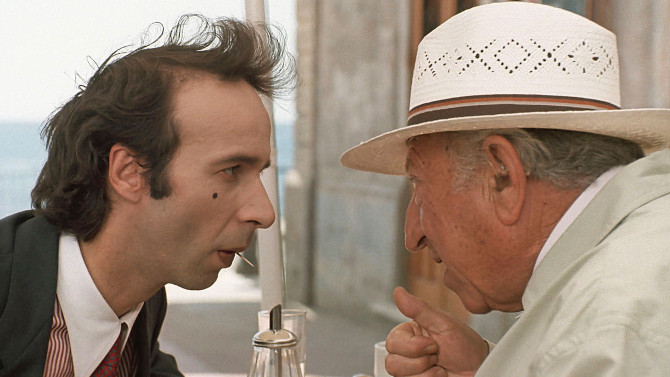
Johnny StecchinoJanuary 11, 2025There is no doubt that Roberto Benigni will forever have his name etched in the annals of film history after his Academy Award winning film Life is Beautiful – which took home Best Foreign Language Film, Best Score (for Nicola Piovani), and brought forth a most special moment when Benigni climbed atop the seats of the theatre to accept his Best Actor award. Yet, it is a bit of a shame that some of his pre-1997 works are lesser known outside of his native Italy. Case in point, the comedy Johnny Stecchino, circa 1991. Co-written (along with Vincenzo Cerami), directed and starring Benigni, he plays the titular character as well as a near identical lookalike of the man (who is actually our protagonist). Here’s a quick translation – Stecchino means toothpick. So, to explain, Dante is a charming yet rather simple bus driver (who is also trying to pull a disability scam with the government), when one day, he luckily. . . or perhaps unluckily, almost gets run into by a beautiful woman named Maria (Nicoletta Braschi – Benigni’s real life wife) – who seems to be immediately intrigued by the man. As she would exclaim – “Santa Cleopatra!”