 Films That Matter
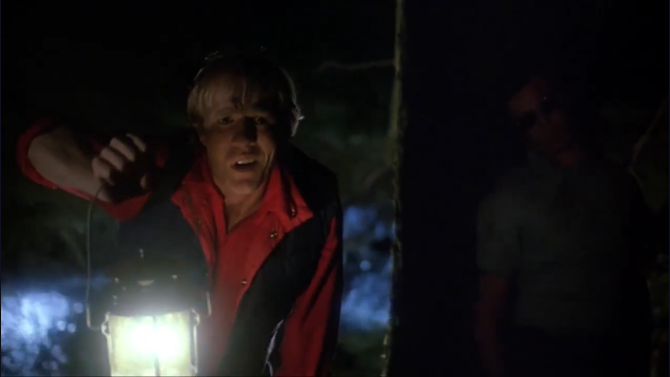
Dawn of the Dread
Today’s feature really had me divided as to where it should be placed on my site – in a ‘Missed the Bloody Cut’ feature, a ‘What Could Have Been’ analysis, or as a typical ‘review’... I decided to go with the final option. Falling within the burgeoning slasher horror genre of the early 1980s, Jeff Lieberman co-writes the screenplay and directs Just Before Dawn (1981). Finding a group of friends heading into the Oregon mountains to investigate a plot of land Warren (a young Gregg Henry – Femme Fatale; Guardians of the Galaxy) has inherited, he is joined by his girlfriend Constance (Deborah Benson), another couple in Jonathan (Chris Lemmon) and Megan (Jamie Rose), as well as Jonathan’s brother Daniel (Ralph Seymour) – who has notoriously bad eyesight.
-
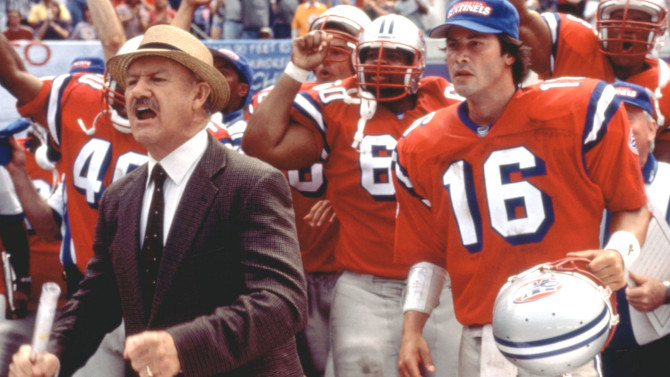
Survival of the Fittest
The ReplacementsJanuary 2, 2021A film that, upon its initial release, failed to garner much praise (in fact, most critics despised it), or earn more than the budget in which it cost but has since been reappraised by a growing cult of fans who truly appreciate it, The Replacements (2000), directed by Howard Deutch (Pretty in Pink), is a clever sports comedy that feeds off of stereotypes, giving the audience exactly what it wants – a true underdog story. Loosely based on the 1987 NFL strike, Eddie Martel (Brett Cullen) is the prototypical conceited athlete, the cocky quarterback who is the face of the franchise and the voice of why he and his teammates need more millions. Forcing Washington Sentinels owner Edward O’Neil (Jack Warden – in his last onscreen performance) to fill the void, he woos back a coach he has previously fired, Jimmy McGinty (Gene Hackman), to recruit a new team to finish the season off (they need to win three of their last four games to make the playoffs).
-
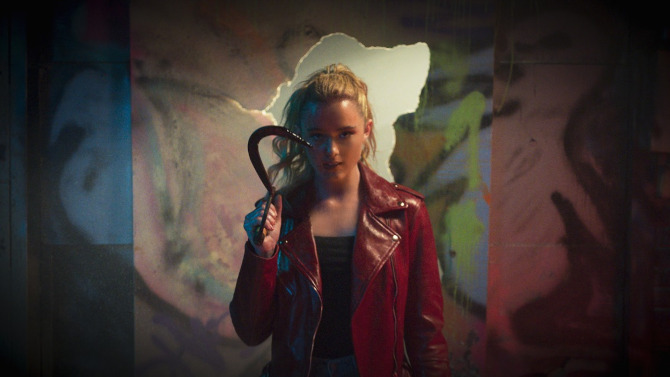
Freak Out
FreakyNovember 18, 2020If you’ve ever wanted to see what Freaky Friday mixed with Friday the 13th would look like (outside of a Wheel of Fortune ‘Before & After’ category), then you’re in luck, as 2020's Freaky, which deftly mixes horror and comedy, is for you. Co-written and directed by Christopher Landon, Millie (Kathryn Newton) is a senior in high school. . . a girl struggling with her depressed, alcoholic mother, Paula (Katie Finneran) – who is recently widowed, a group of manipulative female bullies, a prick of a teacher, Mr. Bernardi (Alan Ruck – channeling his inner Mr. Rooney), and going seemingly unnoticed by her crush, Booker Strode (Uriah Shelton). . . plus it doesn’t help that she is known as the school’s beaver – no, this isn’t some sort of hussy-infused sexual slang, she is actually their mascot (the majestic, often Canadian associated buck-toothed rodent). In fact, if it wasn’t for her two besties, Nyla (Celeste O’Connor) and Josh (Misha Osherovich), she’d be completely lost.
-
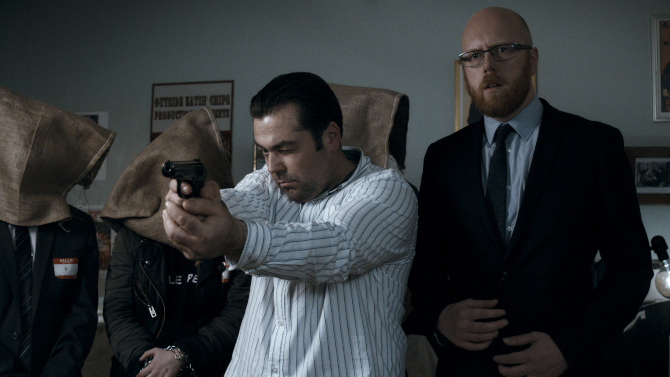
Criminal Minefield
Criminal AuditionNovember 8, 2020Another intriguing indie coming out of the U.K., 2019's Criminal Audition, co-written and directed by Samuel Gridley, is a highly original, uniquely twisted mystery drama with a subtle undercurrent of dark humour running just below the surface – something the British are so bloody good at. A little like an intricately written stage play, Gridley drops us into a most claustrophobic setting. . . first introducing us to a dilapidated, soon to be flattened old theatre during the hyper-stylized opening credits, this soundproof tomb is the location chosen by twitchy, highly stressed criminal mastermind, William (Rich Keeble). Though he’s the boss pulling the strings, our eyes are those of Ryan (Luke Kaile – the other co-writer of the script), a much younger grunt worker who knows William and his operation all too well.
-

Catch Latch
LatchOctober 28, 2020When given a specific set of instructions, it is always best to follow them. . . after all, Ikea furniture can look pretty daunting if you’re missing that annoying Allen key and have to improvise. But, as horrific as the above scenario might sound, of course I’m actually talking about horror movies – specifically, a hair-raising four minute short film called Latch (2017), written and directed by Landon Stahmer. It all starts off simple enough – here are the instructions: “Hold out the match and say ‘show me the light or leave me in the darkness’. . . If you hear something, turn away, light the match and wait. DON’T LOOK BACK. . . but if you look, you might see something looking back at you”. A somewhat typical game teens might play late into the night during a sleep over, our girl receiving said instructions is Sofia (Sarah Bartholomew), a prototypical ‘I’m not scared of anything’ kind of teen. . . her brother, Daniel (Brandon Johnston), the one seemingly trying to spook her. But we know better, there is no Narnia in the wardrobe she is entering, but rather, she is playing with some sort of folkloric ritual.
-
Flashback Slashback
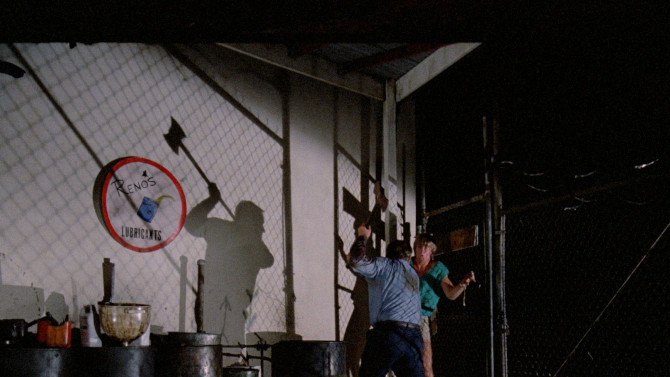
Evils of the NightOctober 13, 2020A bizarre, below B grade indie horror/sci-fi/teen sex comedy hybrid, 1985's Evils of the Night, co-written and directed by Mardi Rustam, attempts to bring in the most popular genre films of the decade – think a combination of Friday the 13th, The Thing, and Revenge of the Nerds (minus the nerds), making for a surprisingly entertaining, if poor film (that all revolves around a battle of the ages – notice I used the word ‘of’ instead of ‘for’). An overly excessive, gloriously pushed to the brink example of the 80s indie horror scene, you’ll see more legs and breasts than in a family size bucket of KFC chicken, more hair than a twenty-four pack of Busch beer, and, as it is mostly set in a picturesque forest, you’ll see more hardwood than softwood – if you catch my drift. Of course, I’m talking about the raucous teen party going on here, including some fetching young men and women – engaged couple Ron (Keith Fisher) and Heather (Bridget Holloman), as well as poor Brian (David Hawk), who endlessly struggles to win over ditzy blonde Connie (G.T. Taylor) and the slightly less ditzy Nancy (Karrie Emerson). Now, before you feel too sorry for the girls in regards to the nudity, for these young actresses, fear not – ringers, and by that, I mean pornstars (i.e. Amber Lynn, Crystal Breeze), were brought in for the edgier stuff.
-
No Strings Attached
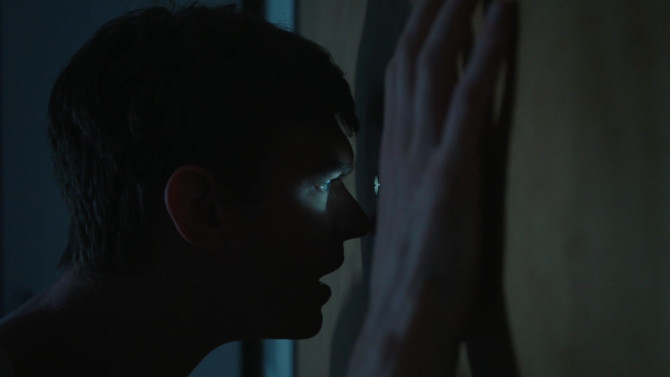
PeepholeOctober 5, 2020Having everything that is needed to build a spine tingling horror short, writer/director/cinematographer Jaron Henrie-McCrea’s just under four minute film, Peephole (2018), is one of the easiest and spookiest watches you’ll enjoy this Halloween season. Centred on a sole person, simply known as Man (Tim Lueke), and never hearing even a single word of dialogue, our character can be found asleep on his comfy couch in his small apartment. We’ve all been here before. . . late at night, our eyes becoming heavy, the television, whether exciting or boring (after all, not every infomercial has a knife that can cut through shoes), isn’t enough to keep us from dozing off.