 Films That Matter
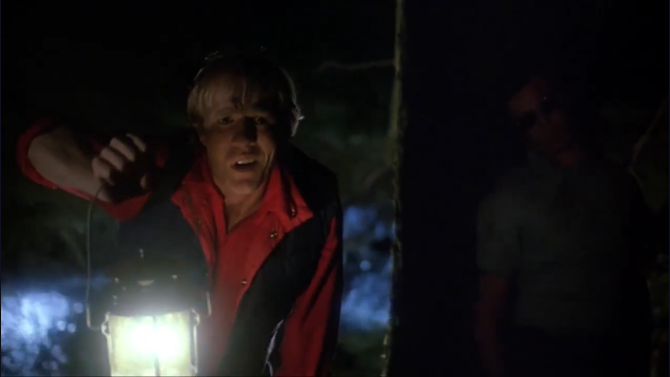
Dawn of the Dread
Today’s feature really had me divided as to where it should be placed on my site – in a ‘Missed the Bloody Cut’ feature, a ‘What Could Have Been’ analysis, or as a typical ‘review’... I decided to go with the final option. Falling within the burgeoning slasher horror genre of the early 1980s, Jeff Lieberman co-writes the screenplay and directs Just Before Dawn (1981). Finding a group of friends heading into the Oregon mountains to investigate a plot of land Warren (a young Gregg Henry – Femme Fatale; Guardians of the Galaxy) has inherited, he is joined by his girlfriend Constance (Deborah Benson), another couple in Jonathan (Chris Lemmon) and Megan (Jamie Rose), as well as Jonathan’s brother Daniel (Ralph Seymour) – who has notoriously bad eyesight.
-
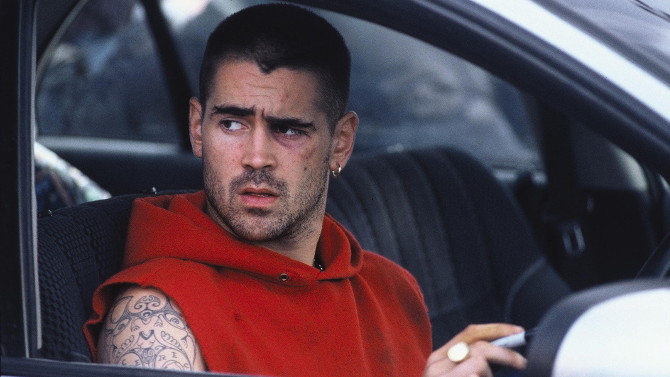
Mission: Interact
IntermissionMarch 20, 2020Like watching a magician shuffle a deck of cards (including jokers) into perfect numerical order, director John Crowley (Brooklyn) takes Mark O’Rowe’s screenplay, which consists of a whopping fifty-four characters (hence the jokers) and eleven separate storylines, weaving them together in wholly interesting ways to make Intermission (2003). What is it about Irish screenwriters that gives them the ability to build these complex stories in clever ways? I really don’t have an answer, but like the works of brothers Martin and John Michael McDonagh, there is a unique essence in this narrative that avoids tropes, Crowley intersecting all of O’Rowe’s stories in an impressive way.
-
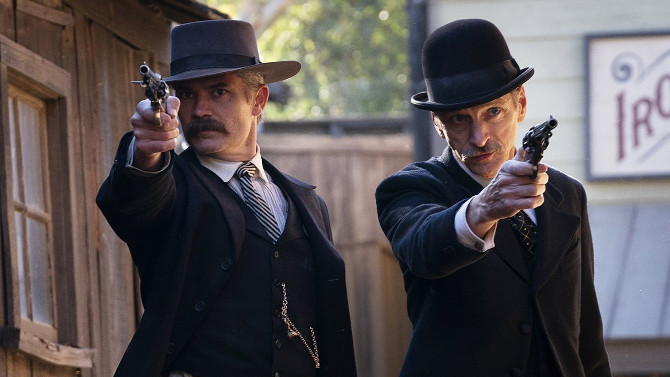
The Black Hills Are Alive
Deadwood: The MovieMarch 6, 2020When you are so in love with movies and tv series (as I am – and I’m sure many of you are as well), you can really get drawn into the idea that what you are watching is vital art and thrilling entertainment. Though that may be true, it can sometimes lead us to forget that at its core, everything we watch is actually a money making decision – which makes sense, though it can cause film lovers many frustrations. Movies shelved due to political issues, sequels canned due to underperforming box office returns, projects never getting green-lit due to their uniqueness, beloved television series being cancelled before getting their just endings. . . there are countless examples of disgruntled and frustrated fans never seeing projects they have long hoped for coming to fruition (or getting a satisfactory conclusion). Yet, every once in a while, a miracle happens. Flashback sixteen years and I was a movie and television obsessed teenager, bingeing numerous shows on DVD that have long since ended (somehow, Supernatural and The Simpsons are still there), one of which was Deadwood. A story like none seen before, it was western both traditional and modern, a cacophony of bloody good violence, foul language, entrancing historic stories and so much more. A show that opened firing on all cylinders, fans sopped up its muddy streets (and equally muddy characters), critics embraced every minute detail, and everything seemed right with the world. A few years later, all still seemed well in the world of Deadwood. . . until, out of blue, it was unceremoniously cancelled (after season three).
-
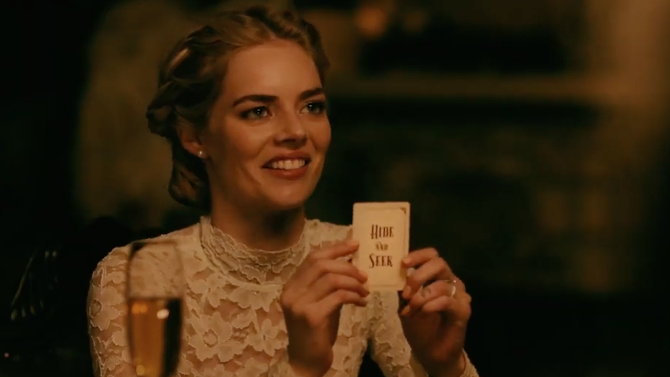
. . . Here I Come
Ready or NotMarch 3, 2020Marriage is not something to be taken lightly. Not only is there the traditional “for better, for worse; for richer, for poorer; in sickness and in health; to love and to cherish; till death do us part. . .”, but with rising divorce rates, it is more important than ever to be confident in your relationship before taking the plunge. Flipping marriage on its head, 2019's Ready or Not is a unique comedy-tinged horror film – a rom com this is not. . . it may also make you rethink those sacred vows. Written by Guy Busick and R. Christopher Murphy and directed by the team of Matt Bettinelli-Olpin and Tyler Gillett (better known as members of Radio Silence – third member Chad Villella is also on hand to executive produce), we are immediately put on our guard as we watch a violent flashback that hints at the unlikely flourishing of a present day couple – foster raised Grace (Samara Weaving) is marrying into the famed Le Domas family – with wealth, traditions, and more than a few dark secrets.
-
Voice-Over of Reason?
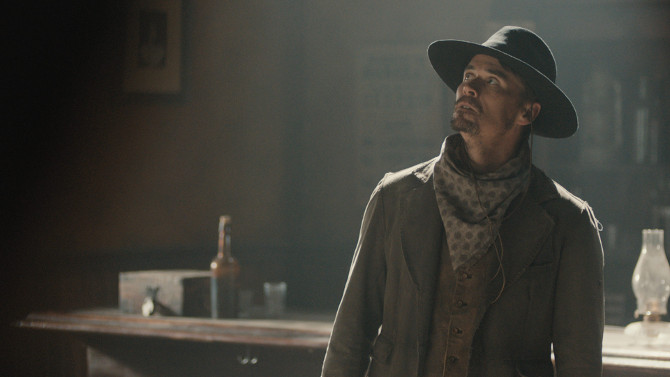
The GunfighterFebruary 28, 2020The narrator – the gateway into so many stories. From film noir and western, to coming of age. . . or a plethora of others, this is the voice that guides us through these movies. Sometimes we listen to a seemingly doomed main character like Fred MacMurray’s Walter Neff in Billy Wilder’s Double Indemnity, or an author reflecting back on his youth (Richard Dreyfuss in Stand By Me), perhaps it is a more obscure Stranger like Sam Elliot’s character in The Big Lebowski, or one of my favourites – The Grim Reaper (Gabriel Byrne) overlooking the sordid happenings in Perrier’s Bounty. In any case, they can lead and mislead, critique and reflect, observe and report, infer or be all knowing. . . a wonderful vehicle to drive a narrative to its conclusion. One of the most unique premises I’ve seen in some time, editor Eric Kissack (Daddy’s Home; Veep; The Good Place) takes a turn directing the 2014 western short The Gunfighter (written by Kevin Tenglin), in what you would expect to be a pretty typical nine minute shoot `em up. . . yet it is anything but.
-
Finders Keepers
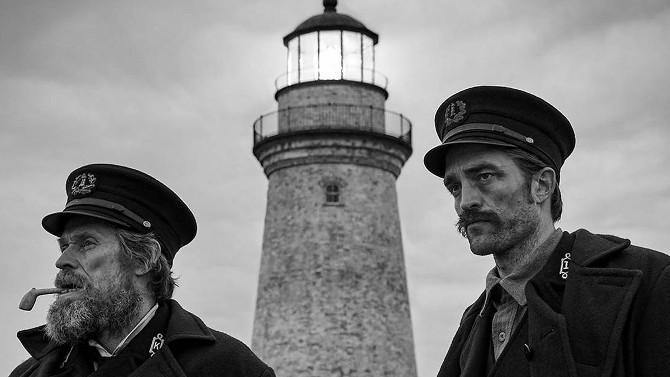
The LighthouseFebruary 25, 2020You could quite easily argue that Robert Eggers has created a new sub-genre of horror. His first film, 2015's The VVitch, developed an historically accurate look at seventeenth century America – from the puritanical Calvinist family and authentic-to-the-time language, to painstakingly recreating the period’s buildings, clothing, fences, and, more impressively, cinematography. Built around real fears of the time, the horror comes from what would have gone through the minds of these people in this early America. Eggers follows this up with 2019's The Lighthouse, a nineteenth century-set yarn about two lighthouse keepers stranded on an isle. Forced to build a lighthouse from scratch in Nova Scotia, Canada, the filmmaker also made the bold decision to etch this almost alien world in eerie black and white, furthering the claustrophobia and atmosphere by utilizing 35 mm black and white film, vintage Baltar lenses from the early twentieth century, and a 1.19:1 aspect ratio – meaning that instead of the widescreen we are used to, the picture is basically a square portal into this world. And, like The VVitch, look for intricately made set design, sound, costumes, cinematography and dialogue (expect to hear the word ‘wickie’ quite often – meaning lighthouse keeper, it is a reference to the wick trimming performed on the job).
-

I Left My Heart in San Francisco
Time After TimeFebruary 23, 2020I know you’ve all been desperately waiting for it – my in depth retrospective on the career of Cyndi Lauper. . . alas, you will have to continue to wait. So then, you must all be wondering what exactly the above quote has to do with today’s film. The above song, Time After Time, was inspired by a movie of the same name. . . Lauper writing the hit tune soon after seeing the title in TV Guide. Adapted and directed by Nicholas Meyer (a screenwriter best known for directing two Star Trek films – yet this was his first directorial effort), and inspired by Steve Hayes and Karl Alexander’s story (the latter had a yet unfinished novel of the same name at the time), this highly original premise finds the great H.G. Wells (Malcolm McDowell – a far cry from his previous film, Caligula) living his life in the late nineteenth century while Jack the Ripper stalks his prey in the streets of London (the opening scene, featuring a lengthy single take, sets the mood – the entire film done tastefully with limited violence shown).