 Films That Matter
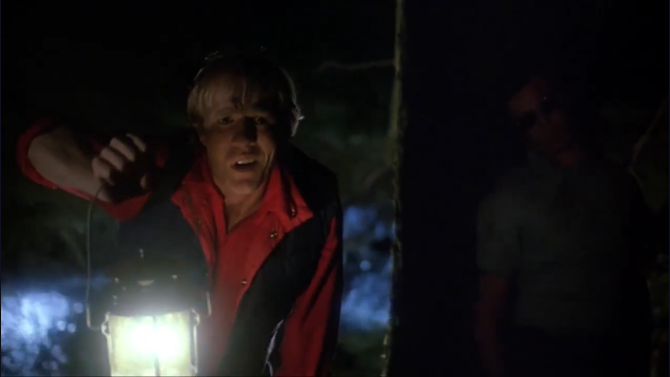
Dawn of the Dread
Today’s feature really had me divided as to where it should be placed on my site – in a ‘Missed the Bloody Cut’ feature, a ‘What Could Have Been’ analysis, or as a typical ‘review’... I decided to go with the final option. Falling within the burgeoning slasher horror genre of the early 1980s, Jeff Lieberman co-writes the screenplay and directs Just Before Dawn (1981). Finding a group of friends heading into the Oregon mountains to investigate a plot of land Warren (a young Gregg Henry – Femme Fatale; Guardians of the Galaxy) has inherited, he is joined by his girlfriend Constance (Deborah Benson), another couple in Jonathan (Chris Lemmon) and Megan (Jamie Rose), as well as Jonathan’s brother Daniel (Ralph Seymour) – who has notoriously bad eyesight.
-

Birthday Blowout
Happy Birthday to MeAugust 6, 2019Ah, the birthday – a time for family, friends, presents and cake. . . but what if no one was to show up to that party? Could the effects of such a frightful occurrence have repercussions on a young child’s psyche? The genesis event of the 1981 Canadian slasher film Happy Birthday to Me finds veteran director J. Lee Thompson (1962's Cape Fear) transporting the audience into a violent murder mystery with a twist. Straddling the line of a slasher film and an Italian giallo, the killer is no mindless harbinger of undefeatable evil seen in features like Halloween and Friday the 13th, rather a sometimes straight-razor-wielding killer dressed all in black except for their white running shoes – I know what you are probably thinking, what horrible fashion sense. Furthermore, those being killed recognize their murderer, adding another layer to the mystery.
-
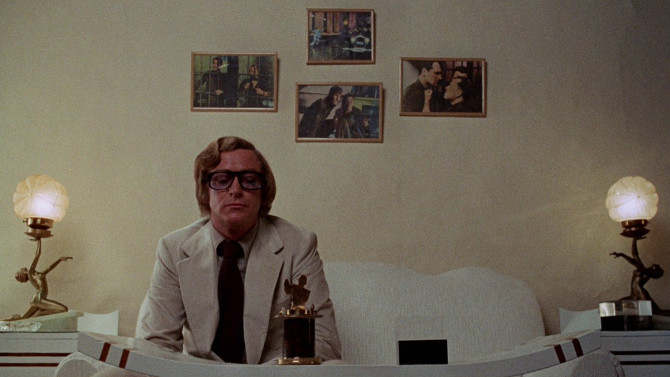
Stranger Than Pulp… Fiction
PulpJuly 2, 2019Just a year after making one of the greatest crime pictures ever to come out of the United Kingdom – 1971's Get Carter, the film’s three Michaels, producer Michael Klinger, writer/director Mike Hodges, and star Michael Caine reunited for a rather eccentric mishmash of genres and ideas – Pulp. Bringing together an all-star team of creative minds, on top of the above mentioned Michaels, the film is edited by iconic director of five James Bond flicks John Glen (his first, 1981's For Your Eyes Only, his last, 1989's Licence to Kill), cinematographer Ousama Rawi (perhaps best known for his excellent television work on shows like The Tudors and Borgia), while the music was composed by famed Beatles’ producer George Martin (often nicknamed the fifth Beatle).
-
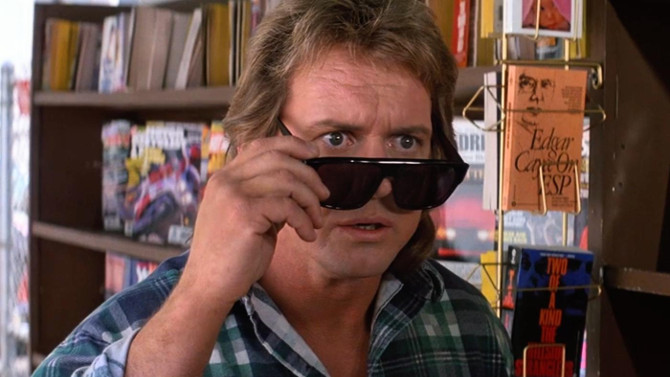
Control Freak
They LiveJune 30, 2019Let’s face it, some movies don’t age too well, but if they’ve got the three main ingredients – solid writing, visuals, and acting, usually they can stand the test of time. One film that is still as timely today as it was back in 1988 is John Carpenter’s horror tinged sci-fi action film They Live. Welcome to Reagan era America, all trickle down economics, high unemployment rates and rising poverty. Set in ‘any city’ USA, Nada (Roddy Piper) is an out of work drifter looking for a semblance of the American dream. . . a job would be a start. Finally finding some employ on a construction site, fellow hard worker Frank (Keith David) takes him to a sort of shantytown, where the long travelling man can find a warm meal and a night’s rest.
-

Spinning Your Wheels
Red, White & WastedJune 16, 2019To be completely honest, when a producer acquaintance of mine, Noah Lang, who I met at the St. Lawrence International Film Festival several years ago, contacted me and was wondering if I would watch a documentary he was producing on ‘mudding’, I was wholly unaware of the term. Defined in the Urban Dictionary, “To go out in the mud in the back of a truck or jeep or other 4x4 vehicle and spin in the mud until all occupants are covered in mud”, directors Andrei Bowden-Schwartz and Sam B. Jones focus this topic on a family living in Orlando, Florida.
-
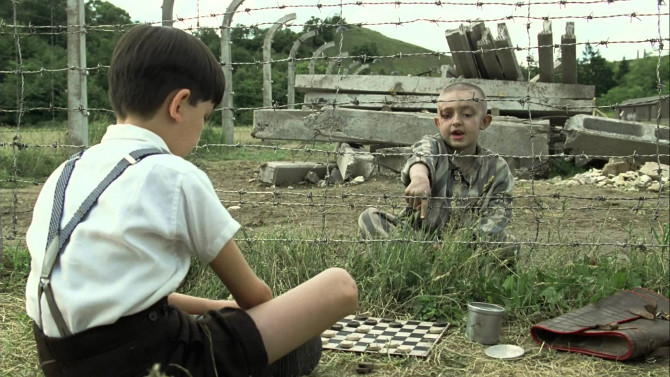
Across the Fence
The Boy in the Striped PyjamasJune 12, 2019An effective method of telling a dark story is often through the eyes of a child. . . and there is arguably no darker event in human history than the Holocaust. Earning praise from audiences worldwide and criticism by academics who lament its inaccuracies, The Boy in the Striped Pyjamas (2008), directed by Mark Herman (who also adapted the story for the screen, based upon John Boyne’s novel of the same name), is an emotional, poignant depiction of one of the most horrific blemishes of our collective past. Bruno (Asa Butterfield) is an eight year old boy living in Berlin. With a father (David Thewlis) moving up in the military, a supportive mother (Vera Farmiga), and an older sister, Gretel (Amber Beattie), they are leaving their life in the big city for a cold home in the rural unknown.
-
Hope For the Best, Expect the Worst
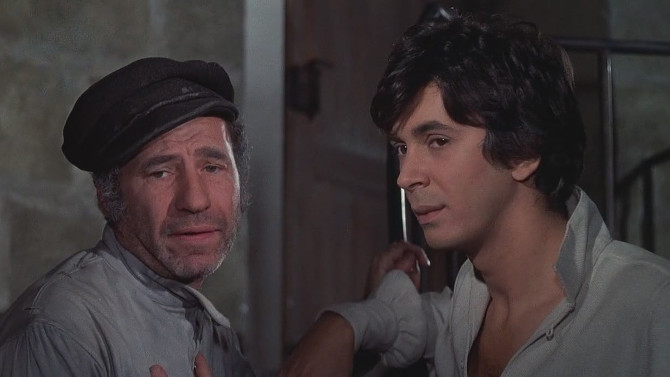
The Twelve ChairsJune 9, 2019A slick con artist, an unscrupulous priest and a ruined aristocrat walk into a house. . . sounds like a joke; it kind of is – for this is the lead-in to Mel Brooks’ 1970 comedy The Twelve Chairs. Loosely based on the 1928 Russian novel of the same name (written by Ilf and Petrov), this film is arguably the black sheep of Brooks’ filmography, a more artsy piece that is less laugh out loud funny, and instead, more of a thinking man’s funny – for instance, as a character wanders the Soviet streets at the beginning of the film (set in 1927), he passes two different street signs, the original: “Czar Nicholas II Avenue”; the new one, “Marx, Engels, Lenin & Trotsky Street – with a line running through the final name” – if you know your history, Nicholas and his family were executed during the Russian Revolution of 1917, while the name Trotsky has been eliminated, as in the very year this story is set, Joseph Stalin ran him out of the country and into exile – in 1940, Stalin would have him killed in Mexico City by way of an ice axe (I almost had a really good ice pun for this, but it slipped my mind). . . fear not, Brooks works some cheesy humour into the story as well.