 Films That Matter
Dawn of the Dread
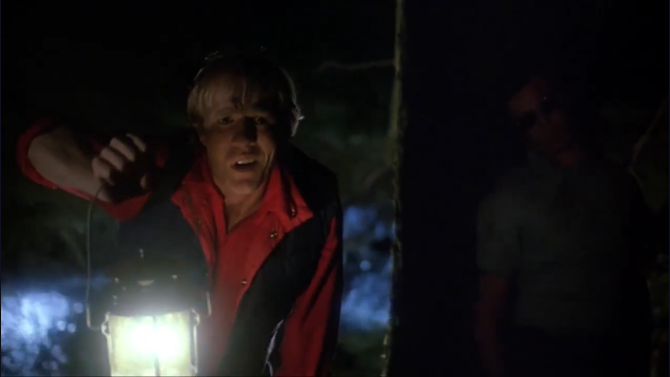
Today’s feature really had me divided as to where it should be placed on my site – in a ‘Missed the Bloody Cut’ feature, a ‘What Could Have Been’ analysis, or as a typical ‘review’... I decided to go with the final option. Falling within the burgeoning slasher horror genre of the early 1980s, Jeff Lieberman co-writes the screenplay and directs Just Before Dawn (1981). Finding a group of friends heading into the Oregon mountains to investigate a plot of land Warren (a young Gregg Henry – Femme Fatale; Guardians of the Galaxy) has inherited, he is joined by his girlfriend Constance (Deborah Benson), another couple in Jonathan (Chris Lemmon) and Megan (Jamie Rose), as well as Jonathan’s brother Daniel (Ralph Seymour) – who has notoriously bad eyesight.
-
Star Pick with Jayson Warner Smith
 High School ConfidentialRushmoreMay 1, 2018
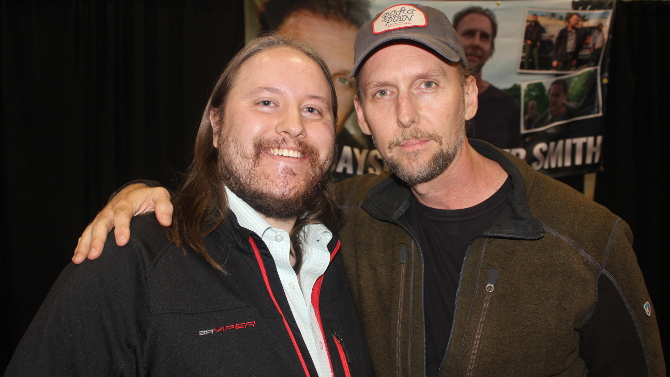
I was fortunate enough to sit down with actor Jayson Warner Smith at CAPE (Cornwall and Area Pop Expo) recently. Perhaps best known as Gavin, Negan's trusted and rather level-headed manager of the Kingdom in The Walking Dead, he has quickly carved out several quality roles on both television and the silver screen in a short time. Also with a key role on the highly acclaimed series Rectify (which ran for four seasons and ended in 2016), his character of Wendall Jelks is a master antagonizer and death row inmate, while he takes a wholly different turn as a loyal yet wild right-hand man airplane pilot to Tom Cruise's character in 2017's American Made (directed by Doug Liman). He has also appeared on the big screen in films such as Footloose (the remake), Mississippi Grind, Christine, and Birth of a Nation.
-
Flying High Under the Radar
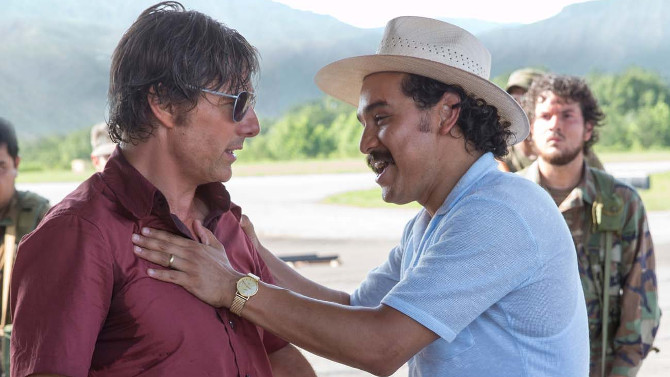
American MadeApril 27, 2018With the “based on real events” thing getting a bit old, some recent films have started to have fun with this oft-used opening – American Hustle introed with “Some of this actually happened”, while today’s film, Doug Liman’s American Made, was described by the director as “a fun lie based on a true story”. . . a clever way to accentuate the addition of many fictional plot points to enrich the narrative. Tom Cruise plays Barry Seal, a seemingly staid airplane pilot secretly looking for a thrill in his exhausting, routine-driven life. Married to Lucy (Sarah Wright), they have what a traditionalist would coin – the middle class dream – family, home, and solid income. Yet, a well informed CIA agent, Monty ‘Schafer’ (Domhnall Gleeson), tracks Barry down at the end of one of his flights – it does not take much to convince the pilot to sign up, and he is soon working questionable missions for the agency all over Central America.
-

Phantasmagoria
PhantasmApril 17, 2018The English language has so many fascinating and underused words: conundrum, copasetic, and, most importantly, at least to this review, phantasm. . . a term that I would likely not even know if it wasn’t for two distinct sources – the works of Edgar Allan Poe as well as the title of the 1979 horror film Phantasm and its sequels. Defined as a figment of the imagination or disordered mind, as well as an apparition of a living or dead person, Poe often used it in reference to his characters, who wandered around in a fugue state, while writer/director Don Coscarelli visualizes this word, concocting a fantastical dream-like (or should I say, nightmarish) horror landscape. Seen through the eyes of thirteen year old Mike (A. Michael Baldwin), he is a boy who fears so much. Losing his parents to an accident, he constantly trails his older brother Jody (Bill Thornbury), worried that he too will leave him. To flash back for a moment, the movie actually opens with another death, that of a family friend who is killed after climaxing in a graveyard. . . the mysterious Lady in Lavender (Kathy Lester) finishing him off after she is satiated. Made to look like suicide, it is another unpleasant reminder of how death has haunted Mike’s short life. The only other person in their circle is Reggie (Reggie Bannister), a loyal, oft present friend of Jody’s.
-
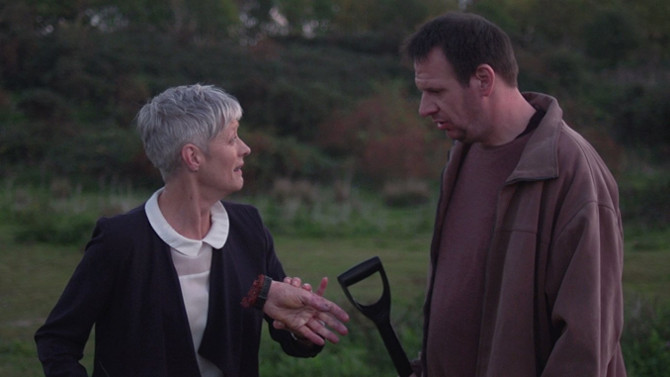
Hand it Over
The Missing HandMarch 20, 2018Don’t you hate when this happens. . . while working outside, you by chance stumble upon a severed hand. It is this absurdist situation that comes to vivid life in writer/director Daniel Harding’s 2016 dark comedy short film The Missing Hand. Right out of the Alfred Hitchcock playbook, think The Trouble With Harry (and, if you do not recall the premise, I’ll let you in on a little secret – Harry’s dead) or Rope, the narrative finds two very different people, Ms. Whitman (Meryl Griffiths) and Trevor (Neil James) walking a plot of land they are thinking of developing. The former – a shrewd, business-driven financier, the latter – an energetic, simple-minded builder; the pair are destined to make a killing on the vacant lot.
-
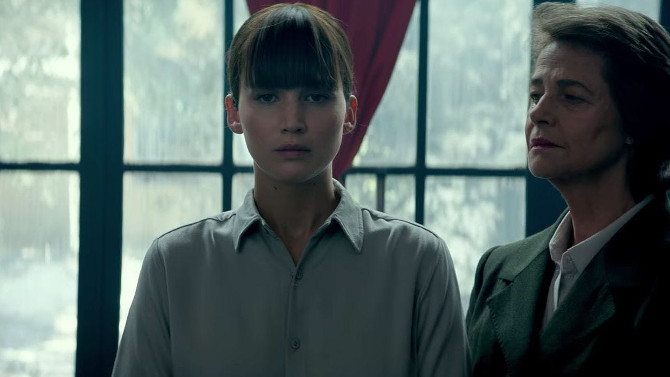
Seeing Red
Red SparrowMarch 4, 2018If it was ever possible for a film to be of the wrong time as well as utterly relevant for its time, Francis Lawrence’s Red Sparrow would be it. Like a hybrid of a 1970's B exploitation pic and Italian giallo thriller (it relishing in its moments of sadism, violence and nudity), at the same moment, it is a worthwhile vehicle for its female lead. Dealing with topics such as rape, revenge, retribution, and politics, its old-school style story-telling (with twenty-first century glossy filter) has likely pushed it to the fringes – with such issues ripping through Hollywood and American politics itself, it may be too close to home for many to enjoy. A motion picture that would have thrived on the drive-in circuit back in the day, it is a twisty (and twisted) Machiavellian tale of spy-craft and game-playing. . . a dog eat dog, cutthroat world. Led by a daring performance from Jennifer Lawrence (reuniting with her Hunger Games director – that is, of films two, three, and four), she plays Dominika Egorova, a prima ballerina in Russia. After a horrible injury, she is left in a precarious position, as she does not have the money to support herself or her sickly mother, Nina (Joely Richardson).
-
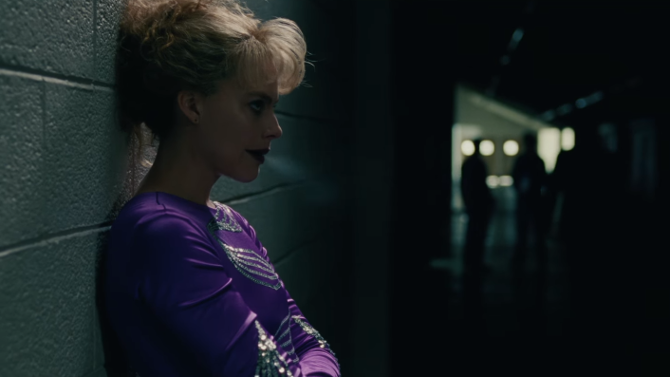
Spinning a Tale
I, TonyaFebruary 23, 2018Like landing a triple axel, figuratively speaking, I, Tonya writer Steven Rogers and director Craig Gillespie (Lars and the Real Girl) conquer the difficult feat of bringing the complicated career of figure skater Tonya Harding to vivid life on the big screen. Relishing in the ‘perception of truth’, Rogers and Gillespie develop a bio-pic mockumentary style approach, each character having their own version of the story. Complex in its narrative direction, multiple persons have their say, sometimes breaking the fourth wall and talking directly to the audience – at one point, Harding (Margot Robbie – Academy Award nominee for Best Lead Actress), gun in hand, makes it quite clear that this portion of the tale never actually happened – a rebuttal to her husband, Jeff Gillooly (Sebastian Stan), and his unflattering perspective.