 Films That Matter
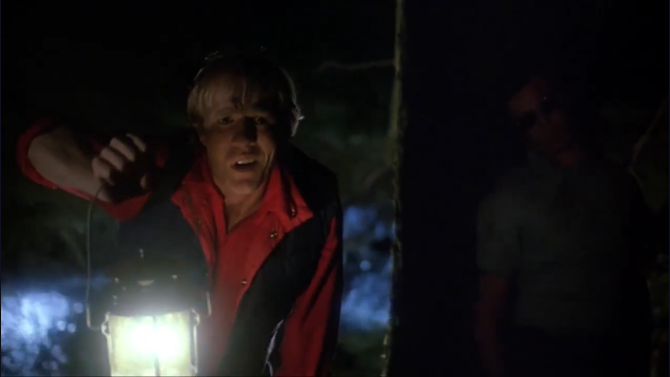
Dawn of the Dread
Today’s feature really had me divided as to where it should be placed on my site – in a ‘Missed the Bloody Cut’ feature, a ‘What Could Have Been’ analysis, or as a typical ‘review’... I decided to go with the final option. Falling within the burgeoning slasher horror genre of the early 1980s, Jeff Lieberman co-writes the screenplay and directs Just Before Dawn (1981). Finding a group of friends heading into the Oregon mountains to investigate a plot of land Warren (a young Gregg Henry – Femme Fatale; Guardians of the Galaxy) has inherited, he is joined by his girlfriend Constance (Deborah Benson), another couple in Jonathan (Chris Lemmon) and Megan (Jamie Rose), as well as Jonathan’s brother Daniel (Ralph Seymour) – who has notoriously bad eyesight.
-
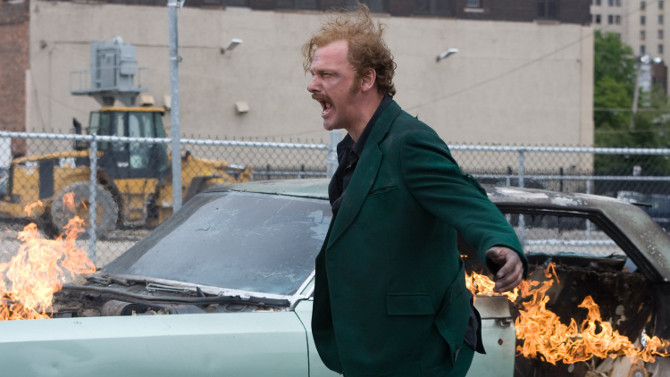
Oh Danny Boy
Kill the IrishmanApril 23, 2017A true example of a hidden gem, the based-on-a-true-story crime film Kill the Irishman, directed by Jonathan Hensleigh and released in 2011, earned just over one million dollars at the box office, making it a motion picture that has sadly been missed by way too many people. Set in Cleveland, we are first introduced to our lead, Danny Greene (Ray Stevenson – Rome; Thor) in 1975, a criminal who always seems to be in the line of fire – at this point, he dodges death by leaping from his moving car after realizing it has been wired to blow. Hensleigh then transports us back to the beginning of the tale through narrator and cop Joe Manditski (Val Kilmer), as he provides us with a look at the complex gangland of Cleveland and the childhood of our main player (as he grew up on the same streets as Greene), eventually leading us to the point where Danny’s story skyrockets, in 1960, with him working as a longshoreman on the docks. It is an opening that in many ways pays tribute to Martin Scorsese’s Goodfellas.
-
Star Pick with Noah Lang
 Off to See the WizardsWizardsApril 11, 2017
Some time ago, I was fortunate enough to attend a special screening of the Tribeca Audience Award Winner for Best Picture, Here Alone, at an event held by the St. Lawrence International Film Festival in Potsdam, New York. In attendance were director Rod Blackhurst, writer David Ebeltoft and producer Noah Lang. Over the next several weeks, each of their respective Star Picks will be posted (in honour of the release of the film in theatres), each with a lengthy interview that should give you an insight into the world of movie making from three talented up and comers in the industry. Today, I introduce Noah Lang. Son of talented character actor Stephen Lang (Avatar; Don’t Breathe), Noah has had a fruitful start to his career. With a wide array of films to his name already, he also produced another feature that was shown at the St. Lawrence International Film Festival, the well received Band of Robbers, though Here Alone is what I am going to focus on today – as it has solid momentum heading into its release. Lang’s work on the project is detailed quite nicely in the interview, and it will most likely say more that I can say here with the written word, so check it out below. It will give you insight into Here Alone, a clear picture for those unsure as to what a producer actually does, an idea of the complexity of the business, as well as so much more.
-

Lost. . . in the Adirondacks
Here AloneApril 7, 2017Filmed in the heart of the Adirondacks in New York State, Tribeca Film Festival Audience Award Winner Here Alone utilizes its locale to great effect. Capturing its rich vivid landscapes, be it rolling hills and mountains or lush forests surrounding a still lake, screenwriter David Ebeltoft and director Rod Blackhurst juxtapose the idyllic setting with a sense of loneliness, loss and secluded dread. Though at first glance, Here Alone may resemble your typical zombie flick, it is, at its heart, a searing character drama, while the infected flit around the periphery. Our main character is Ann (Lucy Walters), a young woman living by herself in the middle of a leafy forest which surrounds a chilly lake. The first portion of the motion picture plays like a taut, tense silent film, as we witness her struggles to survive. Lacking food, fighting the elements and struggling with her own pained past, she is utterly alone. By way of flashbacks, we are introduced to her baby girl and her survivalist husband Jason (Shane West), the one who brought her way out into the woodsy setting to survive. We slowly learn their fates over time.
-
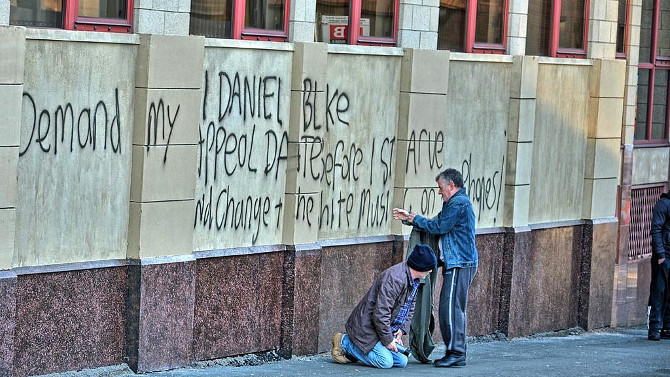
Another Brick in the Wall
I, Daniel BlakeMarch 26, 2017A trenchant piece of social commentary, I, Daniel Blake could have been a one dimensional film filled with gloomy despair, but in the capable hands of director Ken Loach and first time actor and long time comedian Dave Johns, it is laced with deft, dry, sarcastic humour throughout – making it a relevant, multi-faceted dramedy. Written by Paul Laverty (a regular collaborator with Loach), the modern day tale, which is set in Newcastle, England, follows a fifty-nine year old carpenter named Daniel Blake (Johns), who, as the film begins, is frustratingly dealing with a government employee over the phone. They have denied his claim for ‘employment and support allowance’ – despite the fact that he has had a debilitating heart attack and his doctors vehemently state that he is in no shape to return to work. A wonderful piece of sardonic humour, this opening scene finds the man having to put up with a plethora of unrelated questions that have nothing to do with his particular condition. Highlighting the lack of common sense or logic found in the modern day governmental system, it is somewhat akin to a man continuously banging his head around the rim of a toilet seat (it hurts, is irritating and, in the end, gets you absolutely nowhere).
-
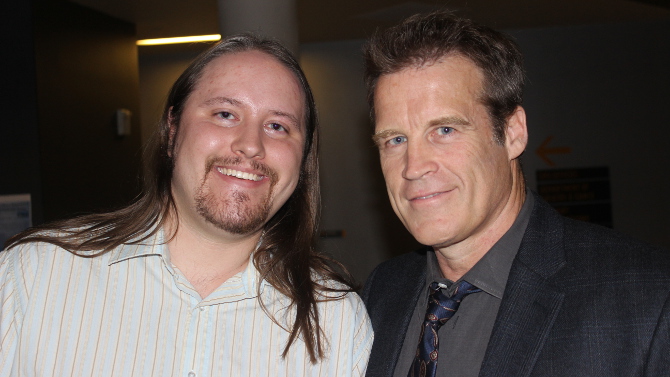
Star Pick with Mark Valley
 Dream WeaverLéoloMarch 21, 2017
I was fortunate enough recently to spend some time with Mark Valley. The actor has become a major player in the world of television, already having left a lasting impact in what has been termed ‘The Golden Age’ of the medium. Playing major roles on Boston Legal (Brad Chase), Human Target (Christopher Chance), Harry’s Law (Oliver Richard), Body of Proof (Tommy Sullivan), Crisis (CIA Director Widener), CSI: Crime Scene Investigation (Daniel Shaw), and so many other shows, he has developed many unique and intriguing characters over his twenty plus years in the business. If I had to choose one performance that exemplifies his craft, it would be his turn as John Scott in the science fiction drama Fringe – though he only appeared in twelve episodes (in a series that lasted five seasons), his character left a lasting impact that was felt long after his arc was over. Valley is currently working on a new series titled Famous in Love, which premieres next month. Valley has also dabbled in film, most notably in features like The Siege, Stolen, Zero Dark Thirty, Live by Night, as well as voicing The Cyclops in Shrek the Third. A proud Northern New Yorker (born in Ogdensburg), Valley has played an integral part in starting the St. Lawrence International Film Festival, set on both the American (Potsdam and Canton) and Canadian (Ottawa and Brockville) sides of the border. Having a place on the advisory board, the festival is currently expanding online, highlighting short films which deserve kudos each month.
-

Night Moves
Nocturnal AnimalsFebruary 28, 2017Some of you may recall famous clothing designer Tom Ford deciding to enter into the world of film making back in 2009. Though some were sceptical, his first foray into the movie business was a huge critical success, as A Single Man became one of the most lauded pictures of the year. Now seven years on, the choosy, multi-talented man has finally found another project that has piqued his interest. Based upon Austin Wright’s 1993 novel "Tony and Susan", Ford adapted it, changing the title to Nocturnal Animals. A complicated, three pronged tale, the story, at least in the real world, follows a wealthy art gallery owner named Susan Morrow (Amy Adams), a cold, calculating woman, who, despite seemingly having everything (a handsome husband named Hutton – Armie Hammer, a beautiful Hollywood hills house, good looks, and money), is empty and dead inside.