 Films That Matter
Dawn of the Dread
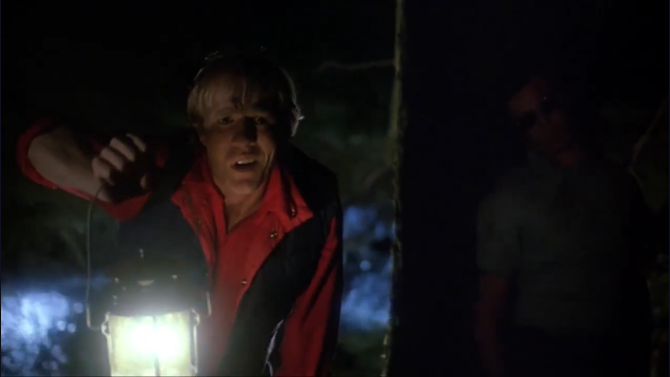
Today’s feature really had me divided as to where it should be placed on my site – in a ‘Missed the Bloody Cut’ feature, a ‘What Could Have Been’ analysis, or as a typical ‘review’... I decided to go with the final option. Falling within the burgeoning slasher horror genre of the early 1980s, Jeff Lieberman co-writes the screenplay and directs Just Before Dawn (1981). Finding a group of friends heading into the Oregon mountains to investigate a plot of land Warren (a young Gregg Henry – Femme Fatale; Guardians of the Galaxy) has inherited, he is joined by his girlfriend Constance (Deborah Benson), another couple in Jonathan (Chris Lemmon) and Megan (Jamie Rose), as well as Jonathan’s brother Daniel (Ralph Seymour) – who has notoriously bad eyesight.
-
Confessions of a Fatal Femme
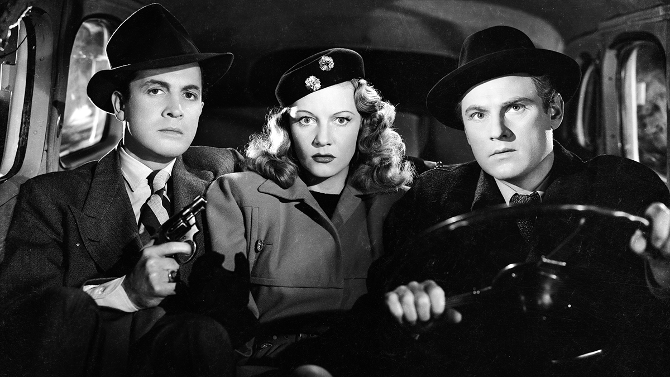
DecoyNovember 30, 2016Taking the rare angle of having the femme fatale be the voice-over narrator, the 1946 film noir Decoy, directed by Jack Bernhard, does a lot with the little budget it had. Perhaps the most brutal dame of them all, Margot Shelby (Jean Gillie) is shot at the very beginning of the story, wounded by a then unknown assailant. It is at this point that she recounts her sordid tale. Honey to a rough and tumble aging gangster, Frankie Olins (Robert Armstrong), the man has been placed behind bars following a robbery – which left a guard dead and the thief four hundred thousand dollars richer (which he hid before he got caught). Soon to be sent to the gas chamber, he still has hope that his girl, along with a gangster associate, Jim Vincent (Edward Norris), will find a way to help him escape his doomed fate. Vincent, already short tens of thousands in aiding his fellow hoodlum, is not eager to throw more dough his way.
-

Ties that Bind
Blood FatherNovember 1, 2016Following in the footsteps of movies like the Taken franchise, Mel Gibson’s most recent film (I am sure some of you are surprised to hear that he has a new flick) is a formulaic, yet entertaining action thriller that hits the right spot. Titled Blood Father, the motion picture is directed by Jean-François Richet (who made the underrated remake of Assault on Precinct 13 and the sadly overlooked Mesrine movies) and starts with a young woman buying an abundance of ammunition at a superstore – enough that we know that she is up to no good. Her name is Lydia (Erin Moriarty) and she soon joins a gang of thuggish looking men in the car, with her being attached to their slimy leader Jonah (Diego Luna). A player in the cartel, he has a number of stash houses being run by ordinary looking people – one of which has stolen from him. In too deep, Lydia is forced to tag along, as she has also gypped them, though she denies it. After an egregious mistake, the girl flees, luckily escaping the group’s long, hard grasp.
-
Highway to Hell or High Water
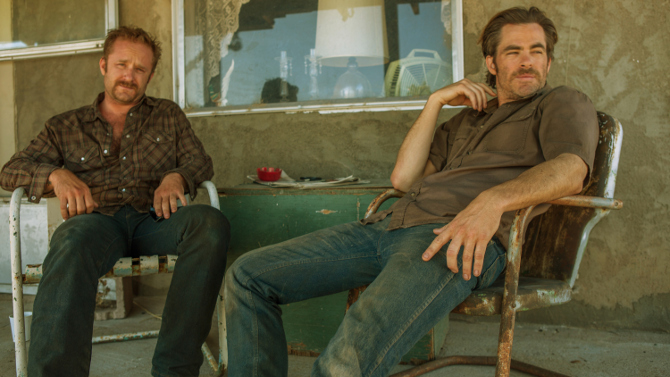
Hell or High WaterOctober 7, 2016Taking characters from the classic western and transporting them into the modern age, Hell or High Water has its requisite share of cowboys, Indians, and cops and robbers, though it cleverly pairs the cowboy and Indian as two Texas Rangers hunting down a pair of outlaw bank robbers. Written by Taylor Sheridan and directed by David Mackenzie, the story follows brothers Tanner (Ben Foster) and Toby Howard (Chris Pine) as they travel through small Texas towns, robbing bank after bank as they go. Tanner, the older sibling, is a wild card criminal who has spent ten of his thirty-nine years behind bars. The brains of the operation, however, is Toby, a charming, clever man who meticulously plans each robbery. He has a melancholic aura, as the death of his mother, as well as a strained relationship with his ex-wife and two sons, has left him flapping alone in the wind.
-

It’s the Time of the Season for Horror
CronosOctober 2, 2016Guillermo del Toro has quickly elevated himself to the level of super-stardom. The horror leaning director crafts loving stories that revolve around the monsters that haunt our nightmares, concocting vivid worlds that both touch our hearts as well as stop them – using stunningly crafted eerie atmospheres and shocking spectacles to succeed. So, I thought that I would reflect back on the director’s first motion picture, 1993's Cronos. Written and directed by the horror maestro, the film contains many of his staples that we have come to know and love – including rich characters, gothic horror elements, a fix of Ron Perlman, as well as countless other things.
-

Mum’s the Word
Keeping MumSeptember 9, 2016In September we will mark the seventh anniversary of the death of Patrick Swayze. Becoming a powerhouse star of the 1980's and 1990's with classics such as Dirty Dancing, Ghost, Road House, Point Break, among others, the man left an indelible impact on the film industry. So, as a tribute here today, I am going to write about one of his last movie roles that can be found in the small, rarely seen 2005 British comedy Keeping Mum. Directed by Niall Johnson, the story follows a married reverend, Walter Goodfellow, played masterfully by Rowan Atkinson (Mr. Bean), his wife Gloria, Kristin Scott Thomas (The English Patient), and their two children, as their lives become more and more impacted by their new housekeeper Grace, the endearing Dame Maggie Smith (Professor McGonagall from the Harry Potter franchise).
-

Sink or Swim
Night SwimSeptember 2, 2016Tomorrow, the St. Lawrence International Film Festival will be putting on a special gala (in Potsdam, NY) where they are screening the Audience Award winner (for best Narrative Picture) from the Tribeca Film Festival – the dramatic horror movie Here Alone. One of the best little glitches that occurred at last years St. Lawrence International Film Festival was when I sat awaiting the showing of The Corpse of Anna Fritz. Instead of the foreign flick beginning, the projectionist mistakenly began to screen Here Alone director Rod Blackhurst’s 2014 short film Night Swim. Thankfully, the festival worker did not stop the compact flick, allowing it to play out before starting the full length feature.