 Films That Matter
Dawn of the Dread
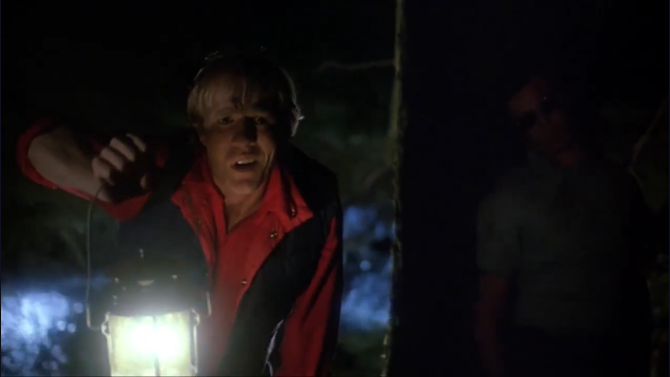
Today’s feature really had me divided as to where it should be placed on my site – in a ‘Missed the Bloody Cut’ feature, a ‘What Could Have Been’ analysis, or as a typical ‘review’... I decided to go with the final option. Falling within the burgeoning slasher horror genre of the early 1980s, Jeff Lieberman co-writes the screenplay and directs Just Before Dawn (1981). Finding a group of friends heading into the Oregon mountains to investigate a plot of land Warren (a young Gregg Henry – Femme Fatale; Guardians of the Galaxy) has inherited, he is joined by his girlfriend Constance (Deborah Benson), another couple in Jonathan (Chris Lemmon) and Megan (Jamie Rose), as well as Jonathan’s brother Daniel (Ralph Seymour) – who has notoriously bad eyesight.
-

That Old Black Magic Called Love
The Love WitchOctober 22, 2019Like bathing in the seductively sweet smells of incense and peppermint (and we mustn’t forget to add a tinge of hallucinogenic drugs), writer/director/producer Anna Biller’s 2016 fantastical multi-genre film The Love Witch is an amorous hand penned letter to the classic Hollywood era, as well as both the sexploitation and horror pictures of the 1960s and 70s. Shot in glorious 35mm film (a rare thing these days), the narrative follows Elaine (Samantha Robinson), a stunning young woman getting away from San Francisco to start a new life in Arcata. The first time we see her she is entirely in red. . . a classic vermilion tinged convertible, ruby dress, and even luggage to match – a stop light with mixed messages that is somehow prompting you to go. Yet it is her perfectly done eye makeup that must be watched. . . for it draws you into her piercing gaze, a look that will force you into those chestnut orbs – turning you into a reverse narcissist, only obsessed with a women you’ve never even met.
-

Slow Mo
EndlessOctober 18, 2019Opening with a quotation from Dr. David Eagleman, “When your death is near, time will seem to slow to a crawl”, writer/director/producer Matt Bloom takes these words to heart, his horror short film Endless (2011) an eight minute hors d’oeuvre shot entirely in slow motion (you don’t see that everyday). Showing every minute detail, what would in reality be a thirty second action scene slows to a crawl, an intense roller coaster ride full of intricate twists as well as dramatic ebbs and flows of mixed emotions. You wouldn’t think that thirty seconds of anything could lead to more ups and downs, but Bloom takes what looks to be a thrilling possible murder scene (like something you would see in Alfred Hitchcock’s Psycho), and tweaks it in a unique way where things are not what they seem.
-
Circles in the Dark
 WhirlpoolVampyresOctober 12, 2019
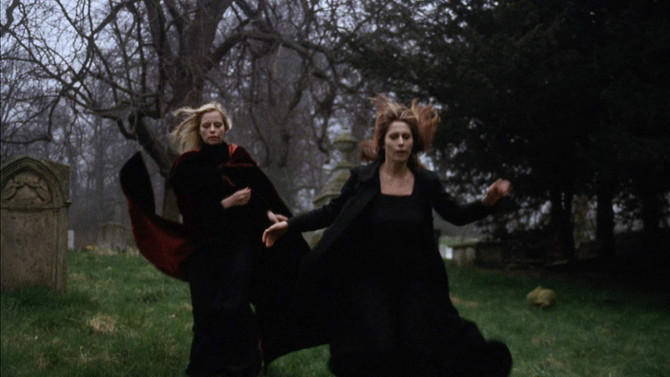
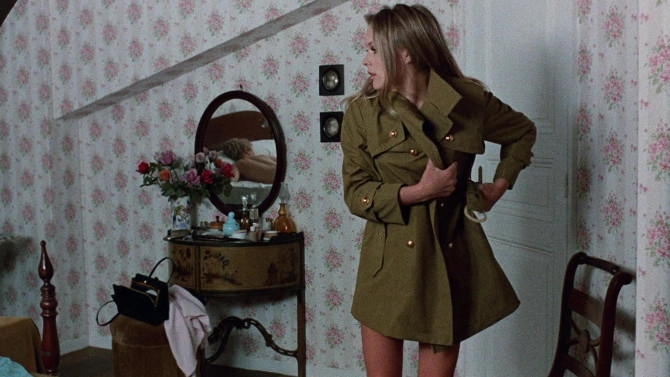
Ushered away by the undercurrent of some uncharted territorial waterway, the mostly unknown films of José Ramón Larraz are a warped ride like no other. Not well known enough to be placed on any chart or map, likewise, they are near inexplicable. . . stuck within the cracks of multiple genres, but not beholden to, or perhaps, even accepted by any one of them. A Spanish filmmaker, the early portion of his career is comprised of his English work – five features shot in the rural British countryside, with the two that bookmark this period being looked at here today, 1970's Whirlpool (a film that was long thought to be lost) and 1974's Vampyres. Comprising many of the same themes, the first thing that stands out within the man’s oeuvre is its atmosphere. . . striking doom and gloom – you almost feel like The Rolling Stones’ tune is echoing their mystery – “I had a dream last night, That I was piloting a plane, And all the passengers were drunk and insane, I crash landed in a Louisiana swamp, Shot up a horde of zombies. . . What’s it all about? Guess it just reflects my mood, Sitting in the dirt, Feeling kind of hurt. When all I feel is doom and gloom, And all is darkness in my room. . .”. Whether you are watching the boggy fall forests that surround a picturesque country home in Whirlpool, or the Hammer-esque, dilapidated mansion, with its side doors guarded by two ominous gryphons in Vampyres, there is something unsettling in every minute detail of the way the auteur builds his narratives.
-

‘The Thing’ On a Train
Horror ExpressOctober 7, 2019With a locomotive that is Agatha Christie’s “Murder on the Orient Express”, passenger cars encompassing John W. Campbell’s “Who Goes There?” (the story that inspired both 1951's The Thing from Another World and 1982's The Thing), a luggage car that is packed to the brim with historical drama, and it all being coupled together by a combination of gothic and Hammer-style horror, 1972's Horror Express, directed by Eugenio Martín, is a suspenseful non-stop trip along the Trans-Siberian Railway. A hodgepodge that seemingly shouldn’t work (the third act even turns into something akin to a zombie movie), this Spanish export somehow melds a variety of genres together to develop an early 20th century set, sci-fi/horror inspired murder mystery with a gothic tinge – I know, quite a mouthful. Following Professor Sir Alexander Saxton (Christopher Lee), a tall mustachioed man with an undeniable presence, the world-renowned anthropologist has discovered a prehistoric half ape/half human hybrid frozen in ice.
-
Even the Best Laid Plans…
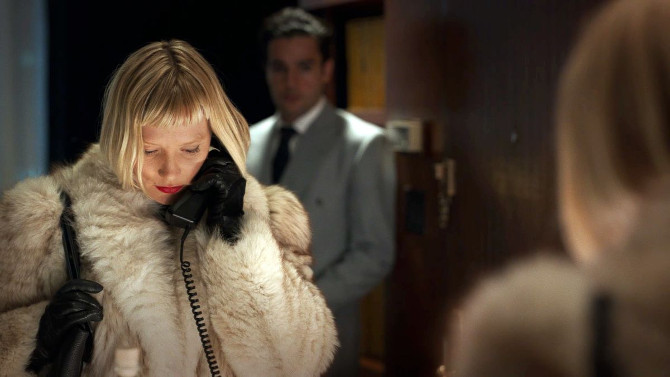
PiercingSeptember 15, 2019To dance with the devil. . . perhaps not the cheeriest of thoughts. But, what if the person the devil is dancing with is another devil? Of course, I’m speaking on a metaphorical level, and this is basically what happens in the mysterious 2018 thriller Piercing, written and directed by Nicolas Pence. To be brutally honest, if you do not like films where there is really no single person to root for, then this will probably not be for you. Opening with a playful combination of music and credits, as I listened, it sounded to me like something you would hear in a 1970s giallo (and, lo and behold, the soundtrack features Goblin’s Tenebrae score), which plays over a fabricated city skyline, cold and lacking life. Like something heard in a music box with a dark twist, it warns of a sinister love story (and I use the word love loosely).
-
Sci-Fi to the Core
 The AdeptFTLSeptember 10, 2019
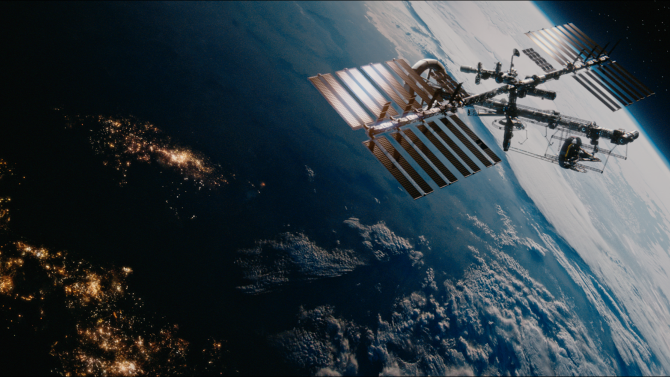
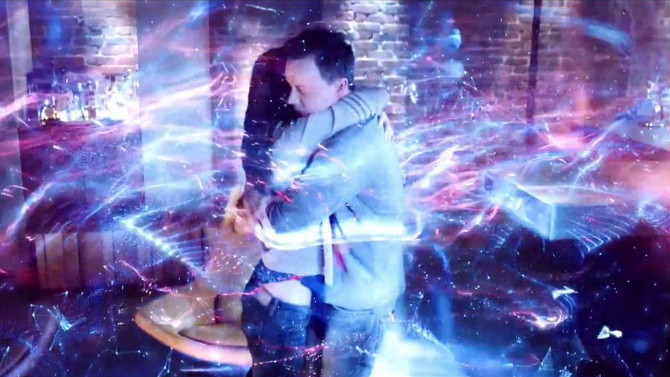
A double feature that will only run you twenty-four minutes, writer/director Adam Stern (a visual effects guru, whose production house Artifex Studios has worked on everything from Mission to Mars and The Core, to television series, including Continuum and Wayward Pines) has developed two intriguing short sci-fi films that deal, in different ways, with discovering the unknown (and how very dangerous that can be). Feeling a little bit like entering the Twilight Zone, 2015's The Adept follows scientist couple Ben (Adam Greyson Reid) and Maddy (Jennifer Spence) as they ruminate on their most recent theoretical physics project. Before going to do the dishes, Ben wants to show Maddy his newest card trick. . . not overly interested, she continues to discuss their work. As they spitfire ideas off of each other, the multitasking Ben mysteriously makes the cards disappear – where to? – not even he is sure.