 Films That Matter
Closing the Book
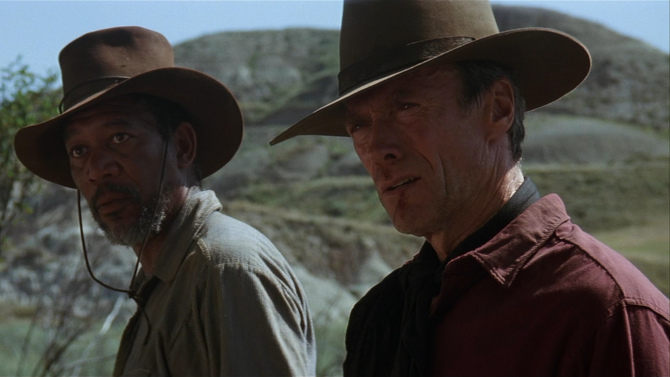
A revisionist feature that in many ways is the closing bookend to the classic western, Clint Eastwood directs and stars in (notably his last picture in the genre he helped make famous again) 1992's Academy Award Best Picture winner Unforgiven. Throwing the traditional rhythm out the door, David Webb Peoples writes a tale set at the end of the Wild West where in every characters’ mind, they are the ‘good’ guy. Centred around a town called Big Whiskey, Wyoming, Sheriff ‘Little Bill’ Daggett (Gene Hackman – The Replacements) runs the town with an iron fist – banning any guns in the place (if they don’t listen, he makes an example of them). Also of note, the lawman, though not a great craftsman, is trying to build his own home.
-
A Unique Take on the Traditional Western
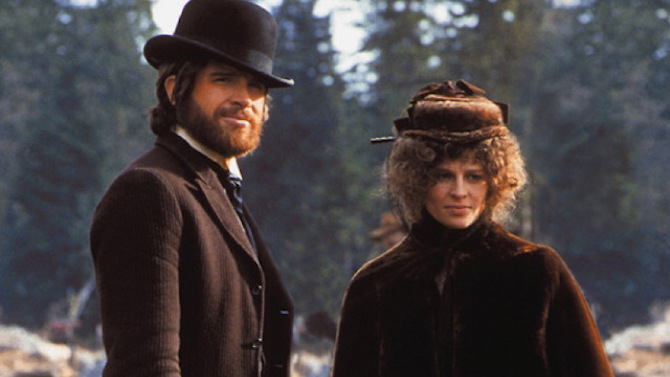
McCabe & Mrs. MillerJuly 9, 2017We often think of the western as being set in the sunbaked, sand-filled deserts of the John Wayne and Clint Eastwood epics. Turning this idea on its head, Robert Altman takes us into the frontier lands of the wet and snowy northwest (filmed in and around Vancouver, Canada), an equally picturesque yet no less hostile terrain, in the 1971 film McCabe & Mrs. Miller. Riding into town with his bushy beard and no less hairy fur coat, John McCabe (Warren Beatty) is a businessman looking for his next big opportunity. He sees the tiny, half-built town of Presbyterian Church (just over one hundred people) not as a hindrance, but as the perfect location to set up a one stop saloon, gambling den and whorehouse. Hiring some local men, they get to work while he heads off to procure the working girls – purchasing some lower class ladies for the gruff, rough, and equally low class frontier men of the area.
-
Star Pick with Michael Dickson
 Butch and Sundance Ride OnButch Cassidy and the Sundance KidJanuary 24, 2017
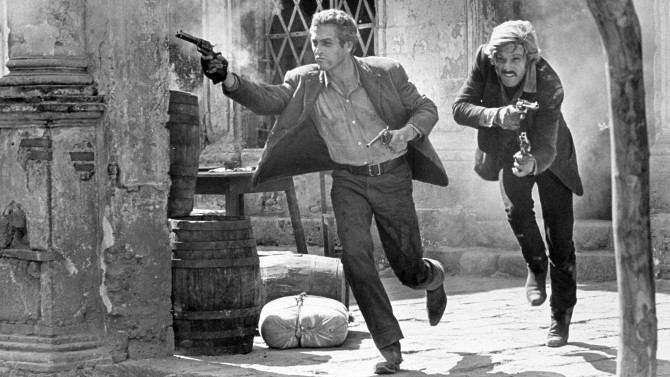
One of the most prolific westerns (and sometimes argued to be the last great western) to come out of Hollywood, George Roy Hill adapts William Goldman’s script that brings to life the real, mythical-type figures of Butch Cassidy and the Sundance Kid. The background of the script is quite something, with Goldman sending it out to all of the studios – only one was interested (and that was if he made a major change to it). Instead, a few minor adjustments were made, after which Goldman discovered that every studio in town now desperately wanted it. In the end, it was 20th Century Fox President Richard D. Zanuck (son of co-founder Darryl F. Zanuck) who purchased the screenplay for a whopping 400,000 dollars (the biggest sum ever spent on a script up to that point) – and 200,000 higher than he was allowed to spend. Putting his job on the line, it was a wise choice, as it became the highest grossing motion picture of 1969. Goldman ended up winning the Academy Award for Best Original Screenplay. Originally titled ‘The Sundance Kid and Butch Cassidy’, Zanuck didn’t find that the title sounded right when it was reversed to its final iteration – funnily enough, it now feels utterly awkward in its original form.
-
The Man with No Name
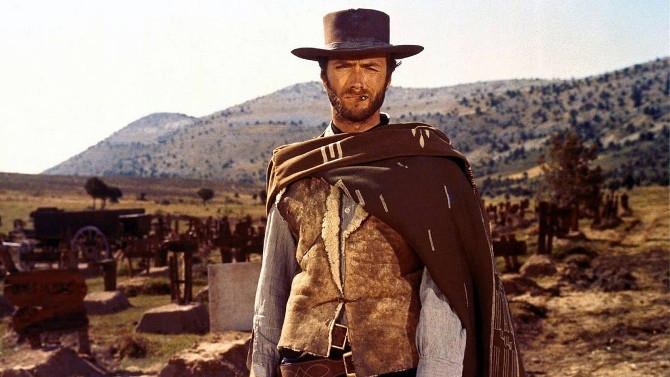
A Fistful of DollarsDecember 18, 2016Perhaps one of the most iconic introductions to a character finds Clint Eastwood’s Man with No Name riding into a dry, vile town, wearing the now legendary garb – dust covered poncho, brown gaucho-style hat, black jeans, spurs, and a Colt in his trusty holster (the stubby cigars will come a little later). Stopping for a drink of water, he takes in the violent, melancholic locale, where people gaze at him in a distrusting and ominous way through their wooden shutters, and children are shot at in the street by thuggish individuals. The first of what would become the "Dollars Trilogy" (or "The Man with No Name Trilogy"), A Fistful of Dollars, despite its now celebrated status, was poorly received by most North American and British critics when originally released. Once again showing how time is a fickle thing, the term Spaghetti Western (this type of motion picture), was first coined as a negative, disparaging term (ridiculing the European product for being of poorer quality to their American counterparts) – though today, it is generally thought of as an endearing and highly positive term. Directed by Sergio Leone, its unique visual style (beautifully framed close-ups that differ from the typical Hollywood use of the technique, as well as his then unorthodox use of viewpoint that places us in the moment over Eastwood’s gun), and attempt to move away from the traditional American tropes of the western, is now viewed as the beginning of the rejuvenation of the historic genre.
-
Star Pick with Chris Slade
 Classic Western EnsnaresThe Magnificent SevenSeptember 20, 2016
With the remake of the 1960 classic The Magnificent Seven coming out this week, I thought that it would be a good time to go back and revisit the original motion picture – though perhaps some will be surprised to find out that The Magnificent Seven is a remake of Akira Kurosawa’s iconic Japanese movie Seven Samurai. A while back, I was fortunate enough to chat with Chris Slade, the current drummer of AC/DC (who also performed with them during the years 1989 to 1994 – recording three albums with the high octane rock band: The Razors Edge, Live at Donington and AC/DC Live). Born in Wales, the percussionist has had a long and illustrious career, being the original drummer for fellow Welshman Tom Jones (and part of his first six records), as well as being a founding member of Manfred Mann’s Earth Band (recording eight albums along with Manfred Mann, Mick Rogers and Colin Pattenden from 1971 to 1978).
-
Star Pick with Felix Silla
 Great Things Come in Small PackagesHigh NoonSeptember 6, 2016
While at Trekonderoga on August 13th, 2016, the Ticonderoga, NY, comic con that is all things Star Trek (including the brilliant recreation of the original Starship Enterprise) , I was lucky enough to be able to interview several interesting actors – one of whom was Felix Silla, a man who has left an indelible yet oft hidden mark on the television and film industry over his five plus decades of work. Before I begin, I would like to thank the Trekonderoga staff for setting me up in such a wonderful (noise free) room for my interviews, with a beautiful background of the hilly, forested Adirondacks that frame the excellent three day event. The man behind the mask (or hair), was born in Italy in 1937, eventually making his way to the United States on November 24th, 1955, where the trained circus performer toured with the iconic Ringling Bros. circus (for seven years) and the Barnum & Bailey Show. Using his 3' 11" versatile frame to his advantage, he eventually made his way into show business in the early 1960s, taking on a plethora of intriguing roles. His big break came when he was cast as Cousin Itt on the original Addams Family television series in 1965.
-

Shot Through the Heart
Slow WestJuly 22, 2016I have recently been hyping several modern westerns (including the 2005 Australian flick The Proposition and the 2015 horror crossover Bone Tomahawk) that have created unique visions that pay homage while adding something new to the historic genre. Another film that fits the mould is the 2015 motion picture Slow West. The meandering tale (written and directed by first timer John Maclean) follows the young, hopeful Jay Cavendish (Kodi Smit-McPhee – The Road) as he journeys westward,