 Films That Matter
Pit Stop
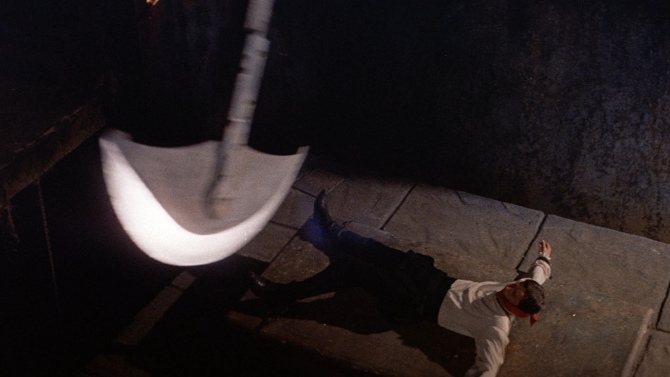
After Roger Corman’s major success with House of Usher (1960), he promptly turned to adapting another Edgar Allan Poe story to start a franchise of sorts, with The Pit and the Pendulum (1961) being an even bigger win... with it making over two million dollars on a modest budget of only three hundred thousand. Getting Vincent Price (House of Wax; Laura) back after House of Usher’s critical and commercial winnings, this time he plays Nicholas Medina, a tortured soul living in a tomb of a castle with his servants after his gorgeous wife Elizabeth (Barbara Steele – Black Sunday; The Horrible Dr. Hichcock) has seemingly died of a massive heart attack brought on by fright. Feeling as if he is truly cursed, he resides in the same place that his sadistic Spanish Inquisition father once tortured his victims, where his mother and uncle died, and now where his wife has met her untimely end. It has become so bad that even Nicholas’ sister Catherine (Luana Anders) has returned home to try and ease his sorrows.
-
When Art Imitates Life
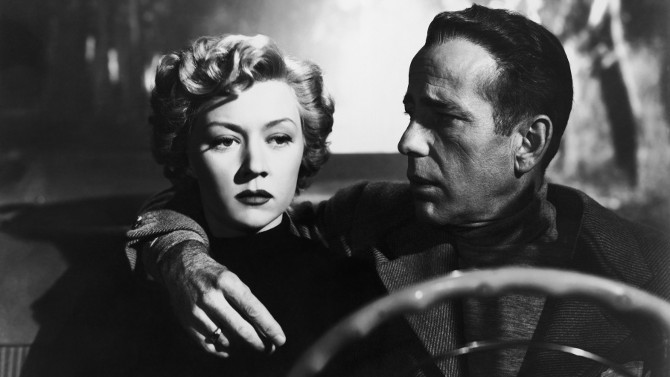
In a Lonely PlaceApril 25, 2017A man – lonely, laconic and quick to anger. A woman – cool, collected and in hiding. Both live in the same apartment complex in The City of Angels. Murder brings them together, but will it keep them together? Written by Andrew Solt and directed by Nicholas Ray, In a Lonely Place immerses us within the world of a Hollywood screenwriter, the rough-and-tumble, explosive Dixon ‘Dix’ Steele (Humphrey Bogart – who also produces the film); an apropos name to be sure. Struggling with a multitude of demons, he is quick to anger and even quicker to act. Despite not having a hit since before the war, he is given a solid opportunity by his agent, Mel Lippman (Art Smith), who asks him to adapt a novel. Seemingly uninterested, he invites the club’s hat-check girl, Mildred Atkinson (Martha Stewart. . . not that Martha Stewart), to his home to summarize the book for him (as she has just finished reading it). Following their business, he sends her on her way, directing her to where cabs usually gather nearby.
-
A Deliciously Fishy Caper
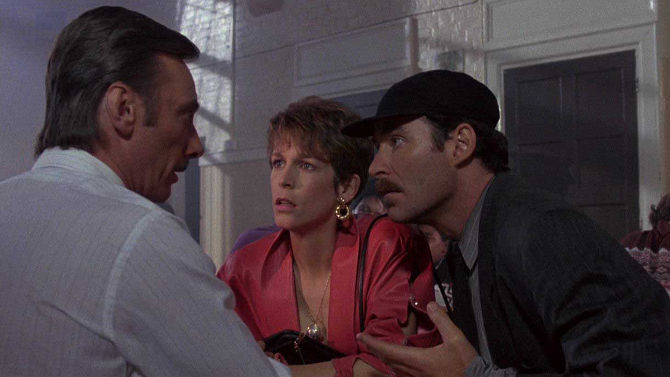
A Fish Called WandaApril 21, 2017Satirizing the stereotypical nature of Brits and Americans, John Cleese’s 1988 film A Fish Called Wanda, directed by Charles Crichton, is a kooky heist movie with loads of quirky humour. Following a gang of bank robbers, the group consists of a comic version of a femme fatale, Wanda (Jamie Lee Curtis), her secret lover pretending to be her brother, Otto (Kevin Kline), as well as an English duo, Georges Thomason (Tom Georgeson) and the severely stuttering Ken Pile (Michael Palin – he based the part on his father, who dealt with a similar issue). To further complicate things, Wanda is sleeping with Georges and is prone to flirting with Ken. Filled with doublecrosses and complications, Georges soon finds himself in jail – not knowing who put him behind bars. With only one quasi-witness, an elderly lady who spotted the man while they were driving away from the scene of the crime, the prisoner turns to his longtime compatriot Ken to finish the woman off in a way that will look accidental – knowing that without her, the case falls flat.
-
Star Pick with David Ebeltoft
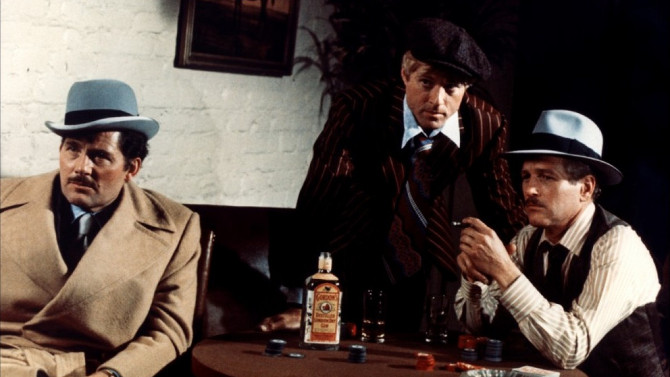
 A Buzzworthy ProductionThe StingApril 18, 2017
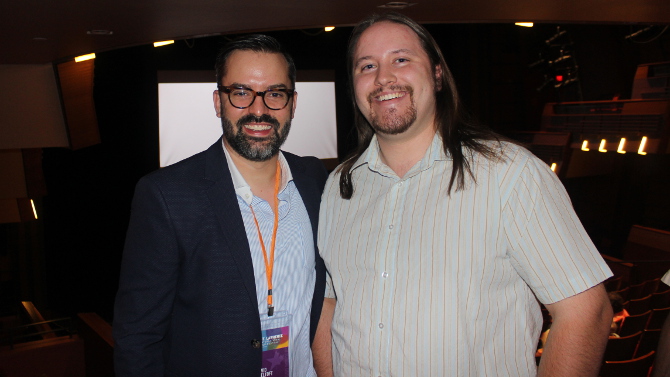
Whether you’ve seen The Sting or not, it is nearly impossible not to recognize its main theme, titled "The Entertainer". A feel good, catchy, ragtime tune that is heard on and off from very beginning to utter end, it is Marvin Hamlisch’s reworking of the 1902 song by Scott Joplin that adds an auditory flair to the piece. It is this classic cinematic work that screenwriter David Ebeltoft, scribe of the Tribeca Audience Award Winner Here Alone, highlights as being his favourite. An up and coming writer in the business, his union with director Rod Blackhurst and producer Noah Lang (who was featured in last week’s Star Pick) seems like it is going to be a fruitful one, as the film making team have already announced two more features, You Were Once Called Queen City and North, following their first united effort – which has just been released and is doing very well in both theatres and online.
-
Air Jordan
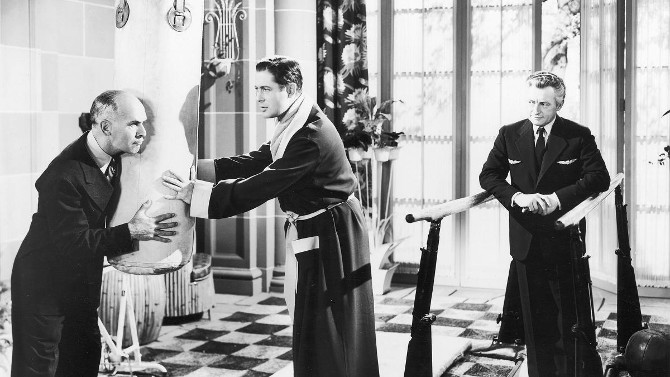
Here Comes Mr. JordanApril 9, 2017There may be no film with a more influential pedigree that is lesser known than the fantastical 1941 romantic dramedy Here Comes Mr. Jordan. Honoured with a sort-of-sequel (1947's Down to Earth – starring Rita Hayworth, it also features reprisals from actors James Gleason and Edward Everett Horton. . . which itself inspired the 1980 feature Xanadu), it was also remade by Warren Beatty in 1978 – titled Heaven Can Wait. Chris Rock had a go with the subject matter in 2001 with his version, Down to Earth – reusing the title from the original sequel. In 1968, it was even remade in India – Jhuk Gaya Aasman – English translation: The Skies Have Bowed. At one point, even Bill Cosby tried to get a version of the story produced – though this iteration fell through. The intensely bitter and sweet tale of a boxer who gets in a plane crash, which is followed by a mistake in Heaven, it can also be seen as the precursor and inspiration for motion pictures like A Guy Named Joe (1943), It’s A Wonderful Life (1946), A Matter of Life or Death (1946), The Ghost and Mrs. Muir (1947), as well as so many others. Mashing together a multitude of genres which I will explain later, the boxer, Joe Pendleton (Robert Montgomery), who is soon to be competing for the world title, is gearing up for his next big bout. Trained by his loyal manager, Max Corkle (James Gleason), the two argue over the fact that he wants to fly himself to his next fight in New York City. Unable to convince the genial but stubborn athlete, it is soon after that he plummets to his ‘supposed’ death.
-
This Scarecrow has Quite the Brain
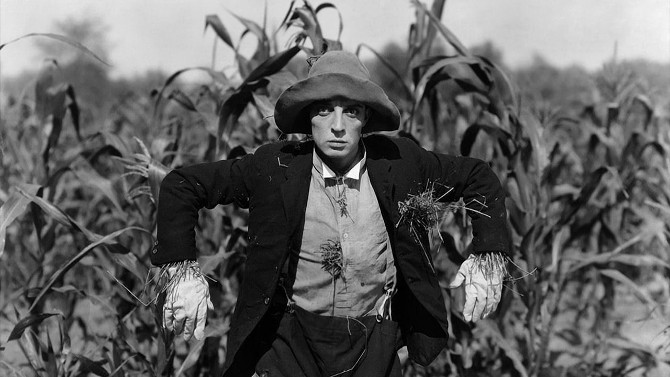
The ScarecrowApril 2, 2017I often wish the studio system would turn back time (in a sense) and begin to focus on developing short films again. A wonderful way to cultivate and produce young talents (think Charlie Chaplin or The Three Stooges), it also provides the audience with fun, brief excursions into fantastic worlds before even delving into the main feature. Comedy, drama, horror and even action work nicely in shortened versions, which is why I like to highlight certain pint-sized motion pictures from time to time – today, we will look at Buster Keaton’s 1920 comedy The Scarecrow. A premier example of ingenuity and the genius of motion, the nineteen minute tale follows two farmhands (diminutive Keaton and the much larger Joe Roberts – another example of the ever-comical combo of fatty and skinny) as they vie for the hand of the youthful and pretty farmer’s daughter (Sybil Seely). The two room together in a house of contraptions – the record player seconds as a stove, bed as a solid wooden piece of furniture/piano, bathtub as a settee and so on. Perhaps even more impressive is their dinner table design – ropes hang from the rafters on pulleys, meaning that everything from salt and pepper to food and beverages are attainable from anywhere at the table (Keaton had originally developed a similar mechanism at their family’s summer home when he was just a child). When done, they have a speedy way to do the dishes as well – afterwhich the ropes disappear and a light fixture descends from the ceiling. It is a spy’s house without the spy.
-
Star Pick with Doug MacLeod
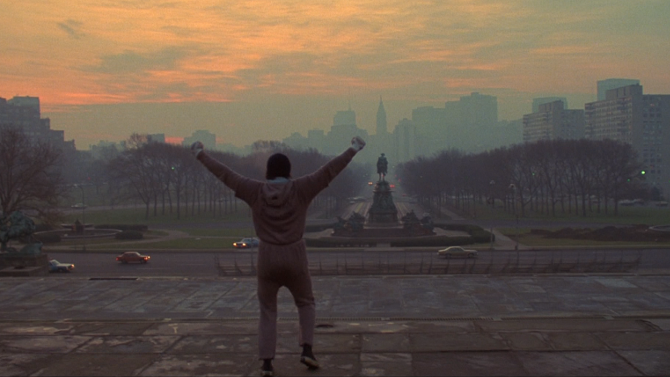
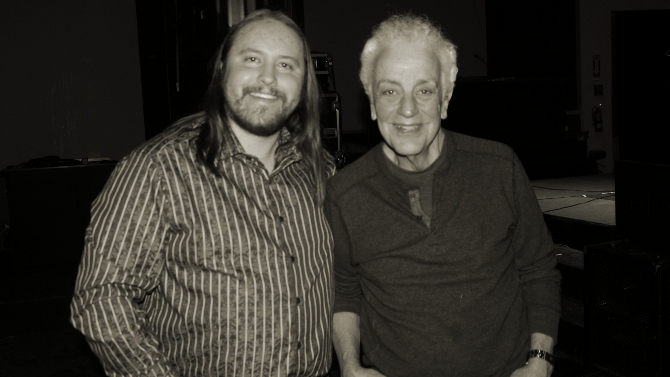 Beating the BluesRockyMarch 28, 2017
Recently, I was fortunate enough to sit down with blues legend Doug MacLeod. A one man show, the acoustic maestro does it all while on stage; not only does he sing, play the guitar and stomp, but he also throws out important life lessons, tells jokes, and regales his audience with engaging stories – making him just as much a philosopher (see him live to learn of his bucket theory), storyteller, motivational speaker and stand-up comedian (though as the blues man quite cleverly pointed out, he is actually a sit-down comic – as he performs while seated). The winner of countless awards for his craft, the last few years should provide you with a good idea of his pedigree: in 2013, he took home Male Blues Artist of the Year at the Blues Blast Music Awards. Then in 2014, MacLeod won both Acoustic Artist and Acoustic Album of the Year at the Blues Music Awards, once again claiming the top prize of Acoustic Artist of the Year in 2016. This year, he has been honored with a nomination for his most recent album "Doug MacLeod – Live in Europe" – which is up for Best Historical Album, while also looking for a third win in the Acoustic Artist category. He has released an impressive 24 albums over the past thirty plus years.