 Films That Matter
Pit Stop
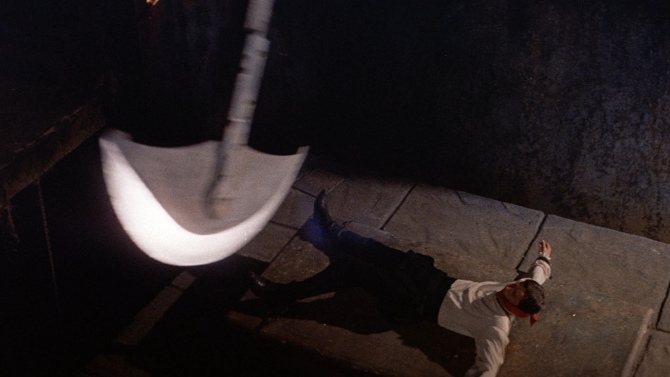
After Roger Corman’s major success with House of Usher (1960), he promptly turned to adapting another Edgar Allan Poe story to start a franchise of sorts, with The Pit and the Pendulum (1961) being an even bigger win... with it making over two million dollars on a modest budget of only three hundred thousand. Getting Vincent Price (House of Wax; Laura) back after House of Usher’s critical and commercial winnings, this time he plays Nicholas Medina, a tortured soul living in a tomb of a castle with his servants after his gorgeous wife Elizabeth (Barbara Steele – Black Sunday; The Horrible Dr. Hichcock) has seemingly died of a massive heart attack brought on by fright. Feeling as if he is truly cursed, he resides in the same place that his sadistic Spanish Inquisition father once tortured his victims, where his mother and uncle died, and now where his wife has met her untimely end. It has become so bad that even Nicholas’ sister Catherine (Luana Anders) has returned home to try and ease his sorrows.
-
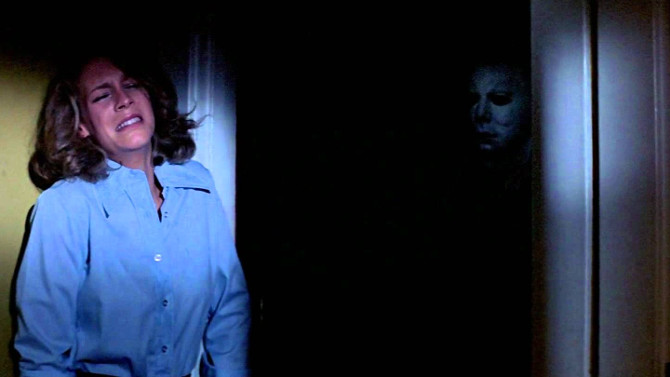
It’s Halloween
HalloweenOctober 31, 2017The penultimate movie to watch on October 31st, John Carpenter’s 1978 motion picture Halloween is the king of the slasher horror genre, fusing a villain of pure evil with suspenseful subtlety that keeps the viewer on the edge of their seat. Co-written by John Carpenter and Debra Hill (who also produces), the simple yet effective story begins with a young Michael Myers murdering his sister on Halloween night, 1963, in Haddonfield, Illinois. Committed to the Smith’s Grove Sanitarium, the Myers home, even fifteen years later, sits empty, dilapidated and believed by most community members to be haunted.
-
Star Pick with Lee Meriwether
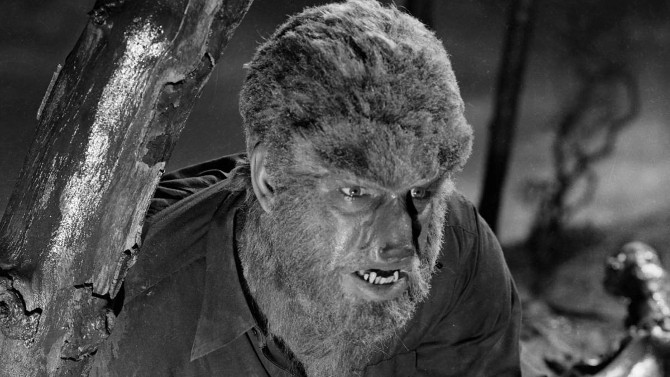
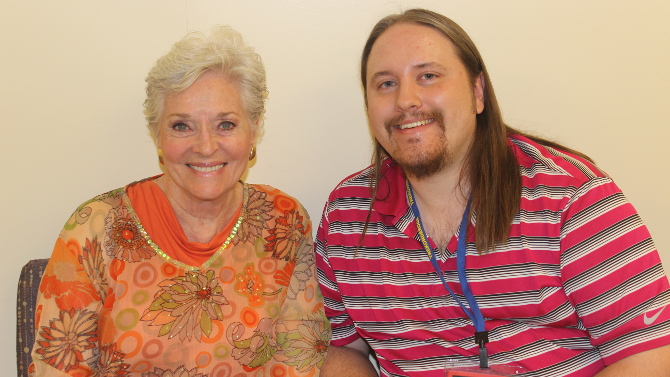 Feeling Wolfish?The Wolf ManOctober 25, 2017
It was an absolute pleasure sitting down with Lee Meriwether at Trekonderoga, the Ticonderoga, New York, convention that is all things Star Trek, this past August. An icon in the industry for the sixty plus years, Meriwether won Miss California in 1954, following it up by winning the Miss America pageant in 1955, the first year it was televised. Joining the Today Show soon after, it did not take long for her to nab her first major role in the 1959 sci fi horror flick 4D Man. Splitting time between television and the silver screen, she made guest appearances or had recurring roles on shows such as Dragnet, Leave It to Beaver, The Jack Benny Program, The Man From U.N.C.L.E., Perry Mason, The Fugitive, The Time Tunnel (all thirty episodes), Mission: Impossible, and of course, Star Trek – playing the mysterious Losira in the 1969 episode, “That Which Survives”. On the film front, Meriwether took over the role of Catwoman from Julie Newmar for Batman: The Movie (the first feature film, though there were two serial features created in the 1940s), also making two appearances as Lisa Carson soon after on the Batman series, she also starred opposite Andy Griffith in Angel in My Pocket, as well as John Wayne and Rock Hudson in the western The Undefeated, both motion pictures were released in 1969.
-
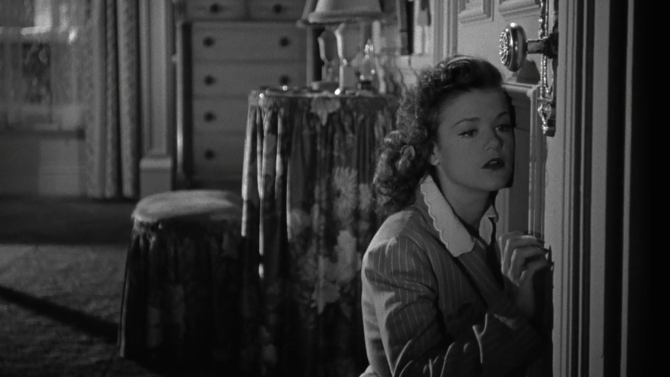
Catnip
Cat PeopleOctober 13, 2017In 1942, RKO Pictures set up a horror unit under producer Val Lewton, a former journalist, novelist and poet who had gone on to become a story editor for David O. Selznick. It was his job to develop low budget horror pictures for under 150,000 dollars, with the studio providing the titles for the films. His first task, the strangely named Cat People, almost seems like a joke. A way for RKO to compete with the popular Universal horror films of the time, Lewton hired writer DeWitt Bodeen (I Remember Mama), director Jacques Tourneur (Out of the Past), cinematographer Nicholas Musuraca (I kid you not, both Out of the Past and I Remember Mama), and composer Roy Webb (Notorious, Marty) – a quality ensemble. And, Lewton supervised everything, the type of producer who would do re-writes on scripts, aid with editing and be involved in every other minute detail of the production process. In a unique twist, the films Lewton created with RKO have become synonymous with him and his distinct style, rather than the directors’, a rare occurrence to be sure.
-
Star Pick with Guy Boucher
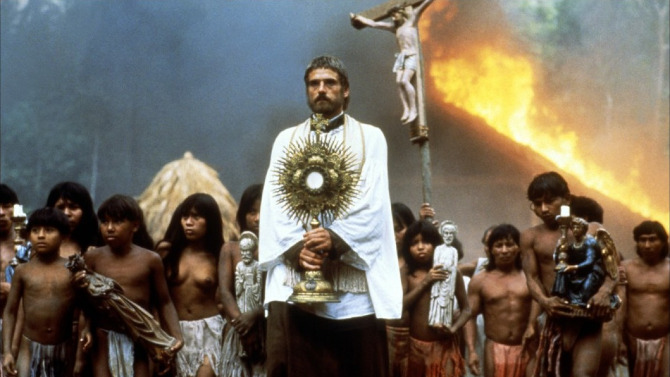
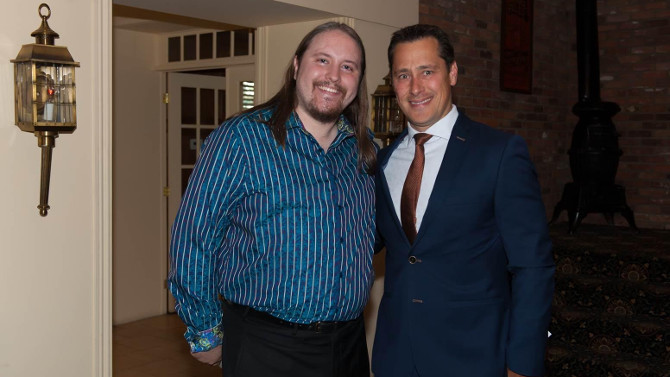 Mission StatementThe MissionOctober 10, 2017
It was an absolute pleasure sitting down with Guy Boucher just prior to the beginning of the 2017-2018 National Hockey League season. At a charitable event for The Children’s Treatment Centre, he was one of the roasters of Ottawa Senators’ assistant coach Marc Crawford, in what can only be termed a hilarious evening. With an impressive start to his coaching career, Boucher began in the Quebec Major Junior Hockey League, capping it off by winning the Paul Dumont Trophy in 2009 – awarded to the personality of the year, while with the Drummondville Voltigeurs. The success brought with it a head coaching job with the Hamilton Bulldogs in the American Hockey League, the affiliate of the Montreal Canadiens, where he took home the Louis A. R. Pieri Memorial Award (coach of the year) in 2010.
-
Star Pick with Tia Carrere
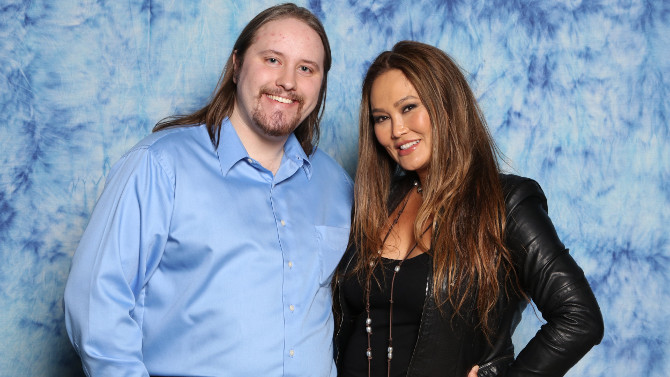 No Replicant RequiredBlade RunnerOctober 3, 2017
The last few years have been a dream for fans of films and television series of the 1980s and 90s, as it seems like more and more are getting sequels (often after many long years), usually with at least a portion of the original cast (and often the director back in either the same role or that of producer) returning to play a part left behind long ago. Think, in no particular order, Dumb and Dumber, Full House, Mad Max, Rocky (Creed), Star Wars, Wet Hot American Summer (actually early 2000s), Jurassic Park, and, as of this Friday, add Blade Runner to the list. Returning to the silver screen thirty-five years after the original, Ridley Scott this time puts his executive producer cap on, with Denis Villeneuve taking over directorial efforts, while Harrison Ford delves into the Rick Deckard character once again. . . though, you’ll have to wait to hear more on that. As a lead-in to the long awaited sequel, the original 1982 picture is the focus today.
-
Star Pick with Michael Dante
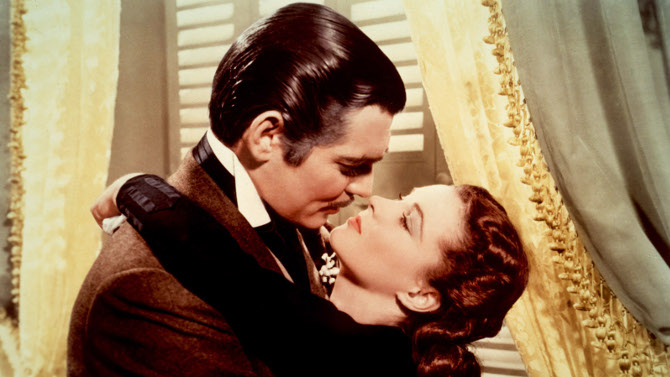
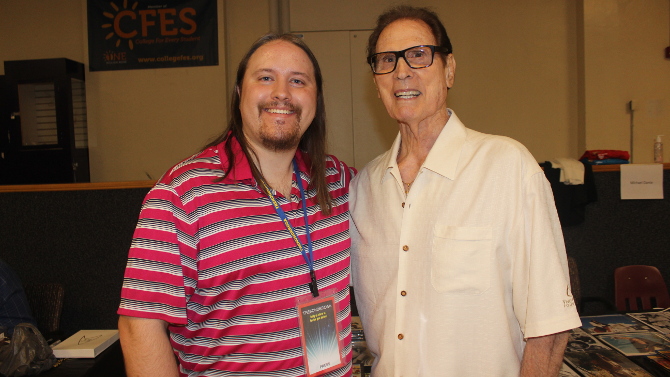 Gone with the Winds of ChangeGone with the WindSeptember 28, 2017
It was lovely sitting down with veteran actor Michael Dante at Trekonderoga this past August. In the business for more than sixty years, it was not his original path in life. A top baseball player, he was signed by the Boston Braves out of high school. As fate would have it, he travelled a less expected path, finding his way, through interesting circumstances, into his first feature film, Robert Wise’s Somebody Up There Likes Me, in 1956 (with legendary names like Newman, Duvall and McQueen). Leading to an impressive career, Dante has graced the silver screen in such films as Westbound, Seven Thieves (Edward G. Robinson, Rod Steiger, Joan Collins, Eli Wallach), Kid Galahad (Elvis), The Naked Kiss (with famed director Samuel Fuller), Apache Rifles, Willard, as well as playing the title character in Winterhawk. . . this is just a small sampling of his work.