 Films That Matter
Pit Stop
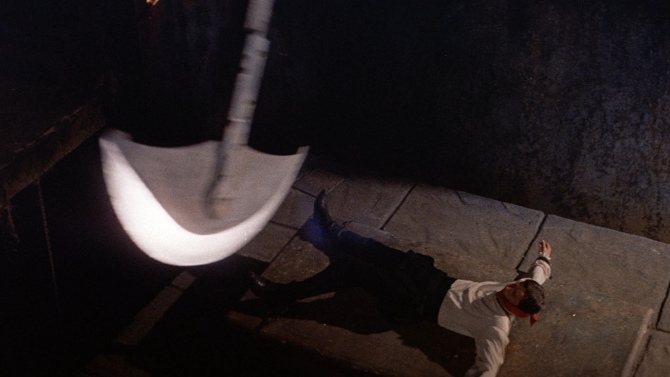
After Roger Corman’s major success with House of Usher (1960), he promptly turned to adapting another Edgar Allan Poe story to start a franchise of sorts, with The Pit and the Pendulum (1961) being an even bigger win... with it making over two million dollars on a modest budget of only three hundred thousand. Getting Vincent Price (House of Wax; Laura) back after House of Usher’s critical and commercial winnings, this time he plays Nicholas Medina, a tortured soul living in a tomb of a castle with his servants after his gorgeous wife Elizabeth (Barbara Steele – Black Sunday; The Horrible Dr. Hichcock) has seemingly died of a massive heart attack brought on by fright. Feeling as if he is truly cursed, he resides in the same place that his sadistic Spanish Inquisition father once tortured his victims, where his mother and uncle died, and now where his wife has met her untimely end. It has become so bad that even Nicholas’ sister Catherine (Luana Anders) has returned home to try and ease his sorrows.
-
Fantasy Island
 Sea SaltsSwiss Family RobinsonJuly 1, 2018
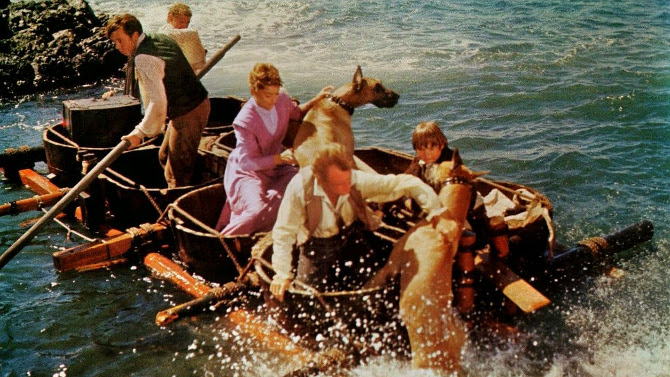
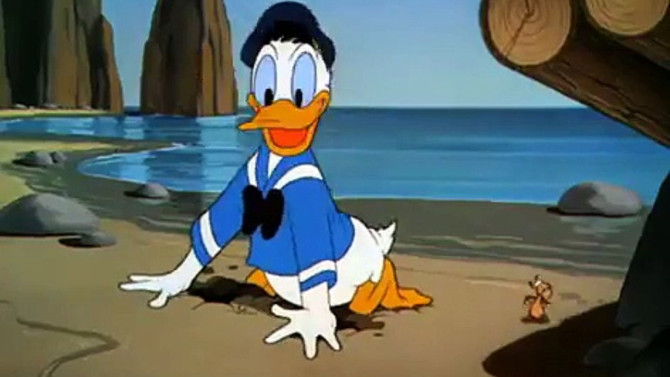
Ah, the way things were. Revel in the past for a moment, won’t you. Imagine walking into a movie theatre in 1960, preferably one built in the golden age of film watching – mohair seats, architectural detailing (crown moulding, wooden panelling), a proper sized atrium. . . and, as you make your way to your place, enjoying some popcorn as the lights dim, you are not bombarded by numerous commercials that take you out of that magic place (and sadly reminding you of the business-centric reality of show business), but rather, are greeted by an animated short, 1949's Sea Salts, the perfect lead-in to your Disney feature, Swiss Family Robinson. These two films did show back to back upon Swiss Family Robinson’s initial run, so they will both be reviewed here. Sea Salts, directed by Jack Hannah, finds ‘Mac’ Bootle Beetle (Dink Trout) recalling his long, rather unusual friendship with sea captain Donald Duck (Clarence Nash) – the pair were forced to abandon ship long ago, finding themselves stranded on a tiny, uncharted isle.
-
Waterloo… Couldn’t escape if I wanted to
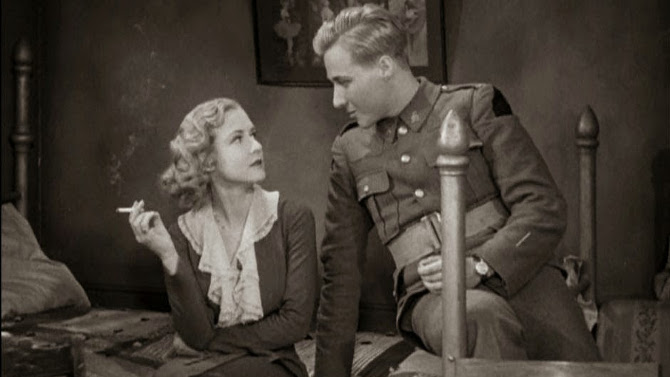
Waterloo BridgeJune 19, 2018One of the great horror directors of the 1930s, James Whale shot Frankenstein, The Old Dark House, The Invisible Man, and The Bride of Frankenstein in just four short years, an impressive feat that also somewhat overshadows a few of his lesser known, non-spook related features – specifically, 1931's Waterloo Bridge. . . which, interestingly enough, earned Whale so much favour with the head of Universal Pictures’ production department, that Carl Laemmle, Jr. (due to a combination of his quality work and coming in under budget), gave the director the choice of anything the studio had in early planning stages – the filmmaker chose Frankenstein, a smart decision. His Waterloo Bridge is based upon Robert E. Sherwood’s 1930 Broadway play of the same name (the playwright based it upon many of his own experiences), where we are transported to London, England, circa World War I. Stuck in the metropolis is Myra (Mae Clarke), a chorus girl who has fallen on hard times.
-
Star Pick with Damon Johnson
 Grave ConsequencesTombstoneJune 6, 2018
It was an absolute pleasure to sit down with guitar guru Damon Johnson a few months back. The co-founder of Brother Cane, the band helped shoot Johnson onto the national scene – partially thanks to three number one hits on rock radio, namely: “Got No Shame”, “And Fools Shine On”, and “I Lie in the Bed I Make”. And, for horror fans, “And Fools Shine On” was used in Halloween: The Curse of Michael Myers (the sixth entry in the franchise). Disbanding in 1998, Johnson has been in demand ever since. He has worked (either touring or writing/recording) with Sammy Hagar (album: Marching to Mars), Faith Hill, John Waite, Whiskey Falls, Queensrÿche, Stevie Nicks, as well as many others (including his own solo projects). In 2004, he joined Alice Cooper as his lead guitarist. . . also co-writing and recording the superlative album Dirty Diamonds – some standout songs include, “Woman of Mass Distraction”, “Perfect”, “Dirty Diamonds”, and “Sunset Babies (All Got Rabies)”. On the road for five consecutive tours until 2011 (I saw them back in 2006), he was asked to join another iconic rock band, Thin Lizzy – Cooper gave him his blessing, and he made the jump.
-
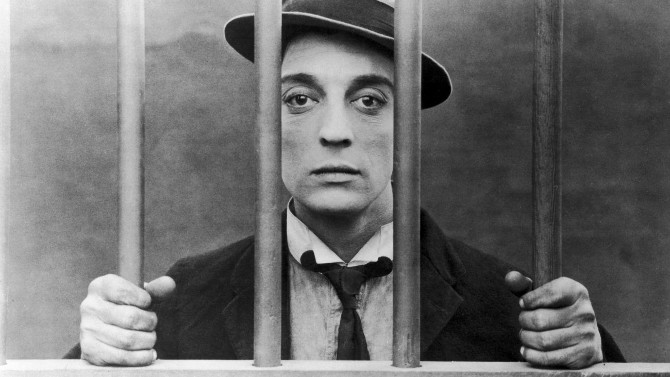
Escape Goat
The GoatMay 30, 2018Will Buster Keaton ever catch a break?. . . well, let’s be honest, by the end of the film, things usually work out alright. But, as The Great Stoneface hops, skips and jumps his way through a bevy of ever complicated (and might I add, intricately plotted) obstacles – no matter what movie, luck never seems to come his way. Case in point, 1921's two reel short, The Goat – which has nothing to do with an animal. Opening with a clever gag in which Keaton, (playing a famished, unlucky man monikered The Goat), is seen heading to the back of a bread line. . . misfortune reveals that the last three men in the procession are not actually men at all – they are mannequins showing off clothing for a store, hence, the never moving lineup.
-

Queen of the Galaxy
BarbarellaMay 22, 2018Like an episode of Star Trek on Viagra, 1968's Barbarella is an exploitative romp in space, a journey that will take you far past the gaseous crevices of Uranus and into another sci-fi tinged dimension. Written by a pair of era icons (and seven other collaborators), two time Oscar nominee Terry Southern and Roger Vadim (also the director), you will likely never see another movie have an opening credits sequence like this one – a 401st century astronaut, Barbarella (Jane Fonda – Vadim’s wife at the time), slowly removes her spacesuit whilst floating in a gravity-less craft. . . a most sultry, slow-motion striptease (the effect was achieved by having Fonda lie on a large piece of plexiglass with an image of the spaceship underneath her. . . filmed from above, it flawlessly reenacts the semblance of zero gravity).
-

Pork-Chop Suey
Big Trouble in Little ChinaMay 15, 2018One of the great anti-heros of the 1980's, Kurt Russell’s Snake Plissken (John Carpenter’s Escape From New York) is a quick-thinking cynic; a cool, level-headed former Special Forces military man with a plan. . . and let’s face it, his combination of quick wit and eye patch makes him one bad-ass muthafuka. Quite the opposite, Jack Burton (also played by Russell), with his diction having a John Wayne tinge, is a cocky, brash American, a fly-by-the-seat-of-his-pants ‘in his own mind’ leader who lacks the brains, the skills or the know how to be in that all-important position. The main protagonist of John Carpenter’s 1986 fantastical martial arts action/adventure/comedy Big Trouble in Little China, Burton is a truck driver (his big rig named The Pork-Chop Express), spending those long days and even longer nights spouting his unique brand of advice to whoever is listening on their CB – a prime example, “when some wide-eyed, eight-foot-tall maniac grabs your neck, taps the back of your favorite head up against the barroom wall, and he looks you crooked in the eye and he asks if ya paid your dues, you just stare that big sucker right back in the eye, and you remember what ol’ Jack Burton always says at a time like that: ‘Have you paid your dues, Jack?’ ‘Yessir, the check is in the mail’”.