 Films That Matter
Pit Stop
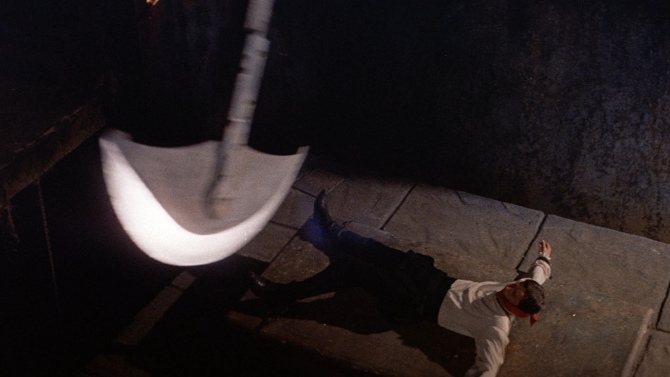
After Roger Corman’s major success with House of Usher (1960), he promptly turned to adapting another Edgar Allan Poe story to start a franchise of sorts, with The Pit and the Pendulum (1961) being an even bigger win... with it making over two million dollars on a modest budget of only three hundred thousand. Getting Vincent Price (House of Wax; Laura) back after House of Usher’s critical and commercial winnings, this time he plays Nicholas Medina, a tortured soul living in a tomb of a castle with his servants after his gorgeous wife Elizabeth (Barbara Steele – Black Sunday; The Horrible Dr. Hichcock) has seemingly died of a massive heart attack brought on by fright. Feeling as if he is truly cursed, he resides in the same place that his sadistic Spanish Inquisition father once tortured his victims, where his mother and uncle died, and now where his wife has met her untimely end. It has become so bad that even Nicholas’ sister Catherine (Luana Anders) has returned home to try and ease his sorrows.
-
Rumour Mill
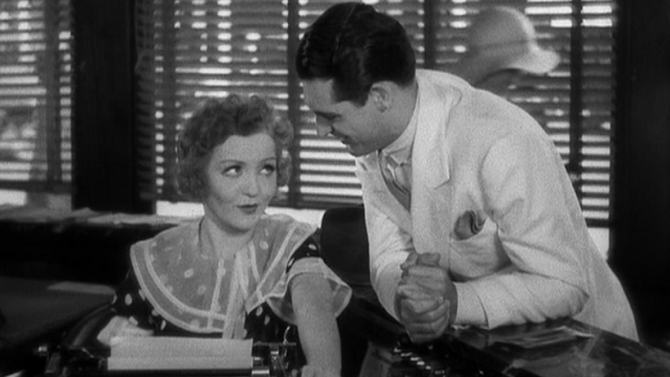
Hot SaturdayJanuary 20, 2019A film that gives you an excellent idea of how partying has changed, and not, 1932's Hot Saturday, directed by William A. Seiter, is an American pre-Code motion picture that pushed the moral boundaries of the time, or as the tagline put it, “They called me ‘BAD’_ So I tried to live up to my name!”. Following Ruth Brock (Nancy Carroll) , she is a young bank teller, a working girl and morally-minded flirt – loving daughter of a cigar smoking ne-er-do-well (William Collier Sr.) and a taskmaster of a mother (Jane Darwell). Living in the little locale of Maryville, it is an example of gossipy, small-town America.
-
Star Pick with Jason Momoa
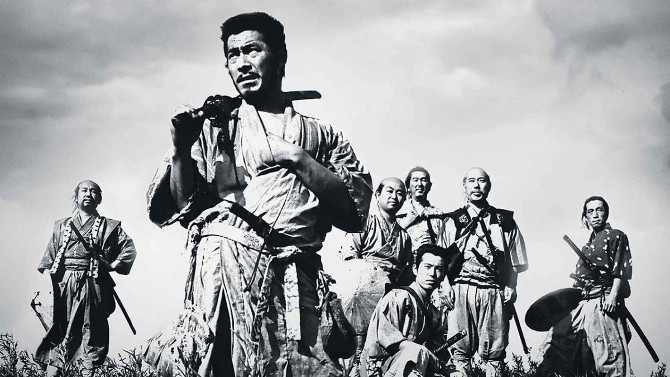
 Magnificent SamuraiSeven SamuraiJanuary 8, 2019
With a towering warrior frame, Jason Momoa is a rare actor whose size onscreen matches his larger than life build in person (no offense to other stars, but usually, for whatever reason, height is not one of their trademarks). Yet, despite his imposing height and breadth, he is chill and zen when you meet him – a relaxed, calming presence. Momoa has quickly built up his star status, most wholly unaware of his time on Baywatch (44 episodes, no less), often forgotten in his role on Stargate: Atlantis, or his turn in the remake of Conan the Barbarian, most thinking his take on Khal Drogo (on the surface, a savage barbarian, Momoa built a fascinating, multi-faceted character) in Game of Thrones was his first major performance. . . and since, he has made intriguing, surprising, and most importantly, quality choices with his career – splitting time between film and television. Eccentric roles in B movies like Bullet to the Head and The Bad Batch, or selecting the Canadian series Frontier (where he plays a part-Native outlaw involved in the fur trade), fit the man like a glove, personas that meld with the actor, for even his most recent win, that of Arthur Curry, better known as Aquaman (currently, as of January the 8th, 2019, the number one film in the world), could have been considered a risky bet. . . for the underwater superhero has often been the joke of the industry (remember Vincent Chase’s lack of interest in Entourage) – after all, he swims around the ocean talking to fish, yet Momoa (and director James Wan) have made the hero cool again – a slick, at times comedic warrior hero in the vein of King Arthur or Indiana Jones.
-
I Believe
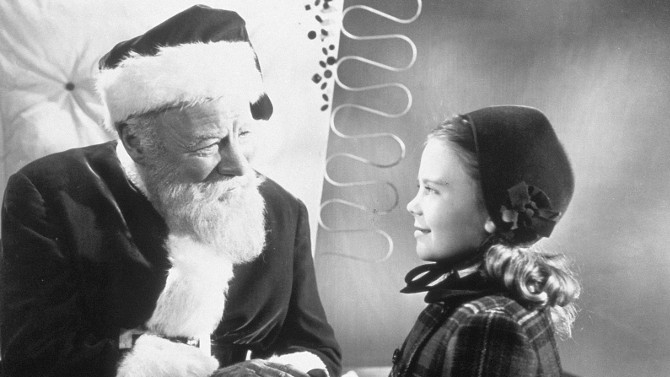
Miracle on 34th StreetDecember 23, 2018A Christmas movie that is truly special has that moment. . . that specific sequence magically able to transcend the medium – enlivening our spirits, touching our hearts, rejuvenating the soul. . . a bell ringing – it giving an angel its wings; a humbug of a man able to get another chance at really living life; a family, despite all odds, getting home to their young son that has been left home alone; and, in today’s film, though the ending could arguably be it, a woman brings her newly adopted (orphaned) Dutch daughter to see Santa Claus at the mall, as the little girl truly believes she will be able to speak to him – her mother, knowing that he can’t speak the language, is gobsmacked when he starts to talk to her – bringing so much joy to her cherub-like face. Of course, you’ve probably guessed it, I am referencing George Seaton’s 1947 classic Miracle on 34th Street (he both writes and directs). After a drunk Santa is removed from his post during the Macy’s Thanksgiving Day Parade thanks to the complaint of Kris Kringle (Edmund Gwenn – winning an Oscar for the role), methodical event director Doris Walker (Maureen O’Hara) asks the man to don the suit – filmed during the actual parade.
-
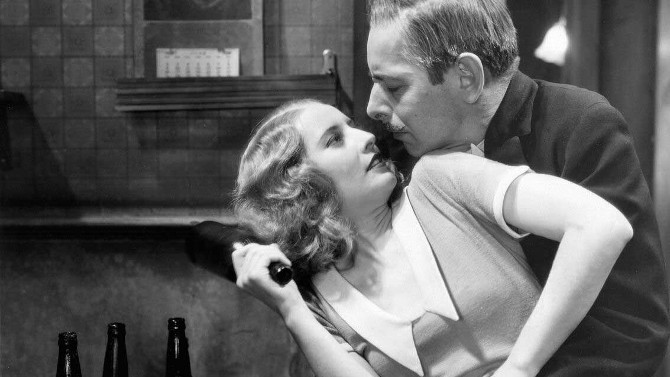
You’ve Got the Cutest Little Baby Face
Baby FaceDecember 12, 2018Arguably one of the most scandalous narratives to come out of the pre-code era, Alfred E. Green’s notorious 1933 romantic drama Baby Face was one of the films that was so very controversial that it ended up giving the Motion Picture Production Code (Hays Code) its bite – the reigning moral guide for the next thirty plus years. With a story from Darryl F. Zanuck (yes, the powerhouse studio head of 20th Century Fox – written under his pseudonym, Mark Canfield), the story follows Lily Powers (Barbara Stanwyck), aptly described by the bawdy tagline – “she had it and made it pay”.
-
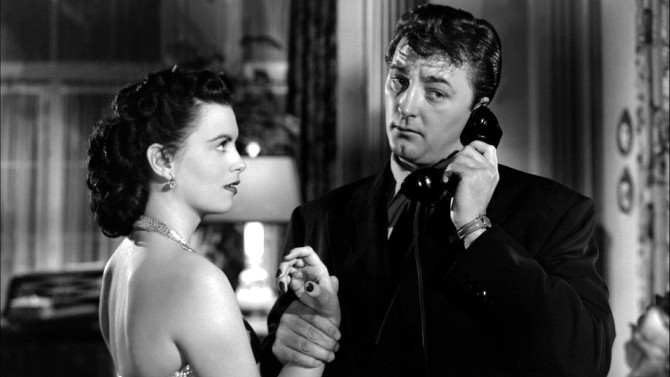
Life in the Fast Lane
Where Danger LivesNovember 29, 2018Imagine the scenario: a striking woman gets rolled into the hospital – an attempted suicide; a shapely mystery for a young doctor – with windswept hair and eyes that are as mesmerizing as a pool of slowly moving water. . . when he finally revives her, they look at each other. . . and time stops! Take one quick glance at the poster for Where Danger Lives, a thrilling 1950 film noir written by Charles Bennett (a man known to work with Hitchcock quite often in his earlier days – think The 39 Steps and Foreign Correspondent) and directed by John Farrow (Around the World in 80 Days and father of Mia), and you’ll know. . . the pair are in for quite the tempestuous roller coaster ride of a love affair.
-
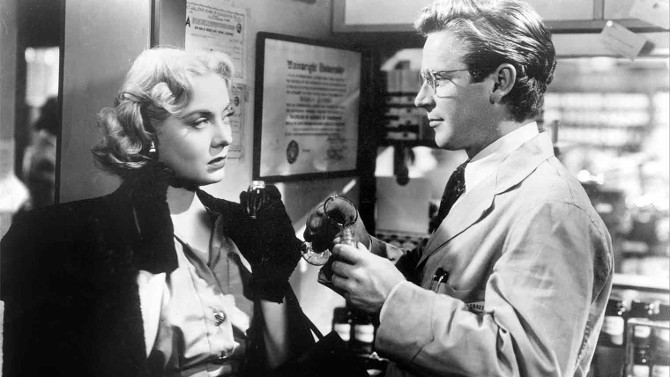
Rubber Band Man
TensionNovember 25, 2018You’ve gotta love a great film noir opening: “I’m Collier Bonnabel. I’m a cop. I’m a lieutenant detective in, uh, Homicide. That’s a fancy name for murder. We get plenty of tough cases. Solved most of them, sure. But how? I only know one way, one thing that breaks them wide open. Tension. I work on people, on suspects. Play up to them. Play up to their strengths, pour it on their weaknesses. Romance them or ignore them. Kiss them. Press them. But whatever way. . . keep stretching them. And when they get stretched so tight they can’t take it any longer: TENSION.” 1949's Tension, directed by John Berry, is narrated by Bonnabel (Barry Sullivan) – a hard-boiled, driven narrative that provides us with an intimate view into the detective’s mind. After this intriguing monologue (in which he speaks directly to the camera while playing with a rubber band), Tension opens with a prototypical film noir shot – a nighttime big city street, neon lights flashing, a pharmacy the main focal point.