 Films That Matter
Pit Stop
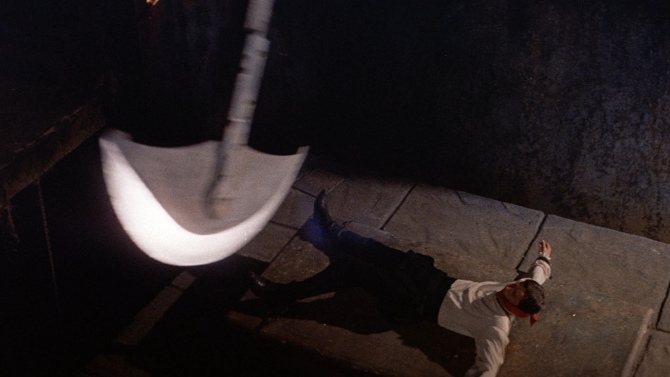
After Roger Corman’s major success with House of Usher (1960), he promptly turned to adapting another Edgar Allan Poe story to start a franchise of sorts, with The Pit and the Pendulum (1961) being an even bigger win... with it making over two million dollars on a modest budget of only three hundred thousand. Getting Vincent Price (House of Wax; Laura) back after House of Usher’s critical and commercial winnings, this time he plays Nicholas Medina, a tortured soul living in a tomb of a castle with his servants after his gorgeous wife Elizabeth (Barbara Steele – Black Sunday; The Horrible Dr. Hichcock) has seemingly died of a massive heart attack brought on by fright. Feeling as if he is truly cursed, he resides in the same place that his sadistic Spanish Inquisition father once tortured his victims, where his mother and uncle died, and now where his wife has met her untimely end. It has become so bad that even Nicholas’ sister Catherine (Luana Anders) has returned home to try and ease his sorrows.
-
Star Pick with Tasya Teles
 Echoes of FairytalesThe Princess BrideJuly 1, 2020
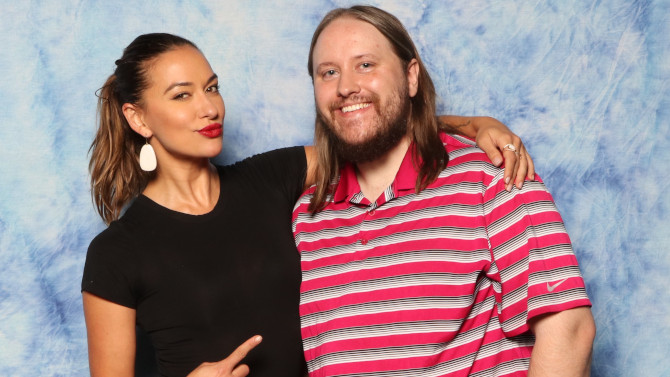
A couple of weeks ago, I started releasing star pick interviews with cast members of the long running television series The 100 (to honour its seventh and final season). First to feature was Bob Morley, and today Filmizon.com highlights fellow star Tasya Teles – who plays Echo. One of the most fascinating characters on the show, she first appeared in season 2 as a recurring character (a grounder and not one of ‘the 100’ teenagers sent to see if the planet was still habitable), growing into one of the major players by season 5. With intriguing storylines, she is a strong warrior assassin (that can lean towards ruthlessness), extremely loyal, yet willing to disobey orders if it doesn’t make sense. . . and, over the course of many seasons, has softened a bit – showing a caring side to those characters she originally only had disdain for. A most generous person, Teles was extremely cheerful as we chatted about her favourite film, 1987's The Princess Bride, directed by Rob Reiner. Explaining that the princess story has been told so many times before (usually in a very predictable way), she fell in love with this iteration for its fun, original, and quirky style. . . a film that turns every expected happening on its head – playing with previous stories and the tropes they have built, making for a most unique telling. Also noting the wonderfully etched characters, each actor is a standout when it comes to developing their pivotal role, be it revenge bent Inigo Montoya (Mandy Patinkin) or nearly unrecognizable Billy Crystal – as miracle worker Max, who has lost his confidence a bit of late.
-
Star Pick with Bob Morley
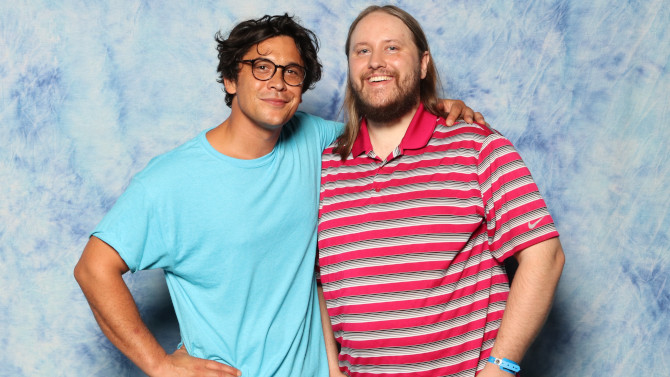 The Karate Kid Is Hot TonightThe Karate KidJune 13, 2020
If you are a fan of the television series The 100 - a post apocalyptic tale in which one hundred delinquent teens are sent to an uninhabitable Earth to allow those on a space station to survive (only for them to discover that the planet, that was ravaged by a nuclear war ninety-seven years earlier, is, in fact, alive and well), then this will be exciting for you. Over the next couple of months, in order to celebrate the show's seventh and final season (which started airing on May 22nd, 2020), I am happy to announce that there will be three Star Picks coming up in the near future with a triumvirate of stars from the extremely popular series. First up, the series' male lead - Bob Morley. An Australian actor who got his start on soap operas in his native country (his first big break coming when he was added to the main cast of Home and Away in 2006), just eight short years later and he's found his way to Vancouver, Canada to shoot The 100, taking on the role of Bellamy Blake (who would quickly become a fan favourite) - a riveting character that we have watched grow over the past seven seasons.
-
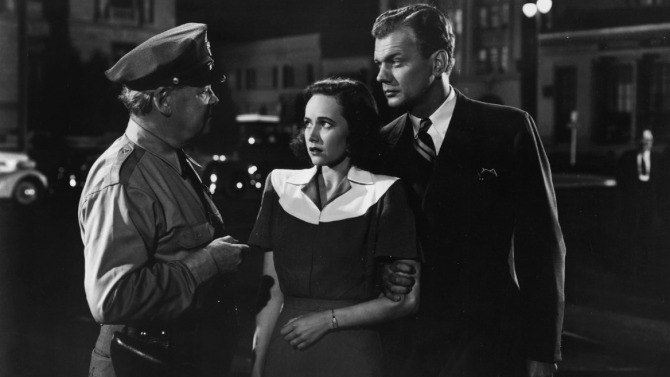
Creeping Charlie
Shadow of a DoubtJune 11, 2020If you didn't know and were asked to guess Alfred Hitchcock's favourite movie from his own filmography, I would think most people would probably select something from his Golden Age - ranging from the 50s and into the early 60s (think Dial M for Murder, Rear Window, To Catch a Thief, Vertigo, North by Northwest, Psycho, and The Birds), or you might pick one of his two most iconic British films - The 39 Steps or The Lady Vanishes, then again, his first film in the United States (Rebecca) was his only Best Picture win at the Academy Awards. . . or maybe it was his long awaited return to the UK after thirty-two years away - making the under seen Frenzy your selection. Perhaps it was one of his technical marvels. . . Lifeboat, set entirely in the film's titular object, or Rope, which was shot to look like one long take (and was itself set in a singular location). By now, you've probably guessed that it is none of these films, but rather, the 1943 motion picture Shadow of a Doubt - in part, due to the fact that he loved the idea of bringing menace to a small town. Funnily enough, I experienced this film's loose remake, Chan-wook Park's English language debut - Stoker, prior to this original version (which is something rare for me). And I must say, I appreciate both even more-so now. . . for it is a revelation to see a remake that is not just a carbon copy of the original. A story of the 'double', teenager Charlie Newton (Teresa Wright) lives a normal life with her family on the west coast. . . her father, Joseph (Henry Travers - everyone's favourite guardian angel from It's a Wonderful Life), is a banker, her mother, Emma (Patricia Collinge), a homemaker, her younger sister, Ann (Edna May Wonacott - absolutely endearing in the role), a fervid reader, and even younger brother, Roger (Charles Bates), is just as sharp as his two older siblings. . . very unlike her beloved Uncle Charlie (Joseph Cotten), a mysteriously wealthy east coast living businessman.
-
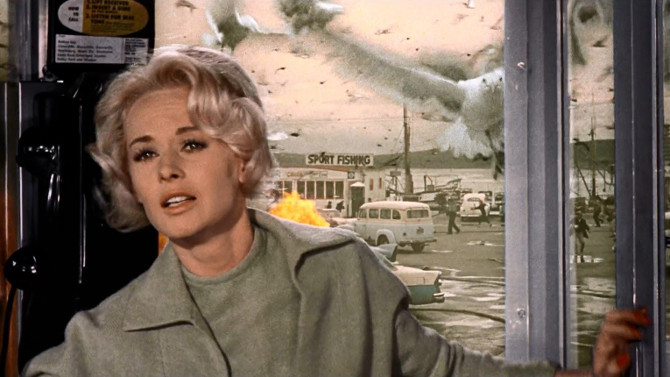
For the Birds
The BirdsMay 12, 2020Alfred Hitchcock was always looking for a good challenge – a way to test the boundaries of film, as well as wow his audiences. In 1944, he built a gripping thriller set in the smallest of locations. . . on a Lifeboat. Four years later he challenged himself to shoot murder mystery Rope (again in one location) to look like a single continuous take – due to limitations of the time, it was actually done in ten lengthy takes. In 1954, he tried his hand at 3D. . . though many think of this as a modern day thing, Dial M for Murder fits right within this kitschy novelty’s golden age (1952-54). Then, to get past censors, he reverted to black and white for 1960's Psycho. Yet one of his biggest challenges came with 1963's The Birds (a story loosely based upon Daphne du Maurier’s novel of the same name) – not simply because it would be a complicated film to make, but because it was made without any music (actually, it was his longtime musical collaborator Bernard Herrmann who suggested this). After lengthy years of working under the Motion Picture Production Code (aka, the Hays Code), its grip was finally starting to waver – though it would last until 1968, Hitchcock finally had a little more freedom to amp up the edginess.
-
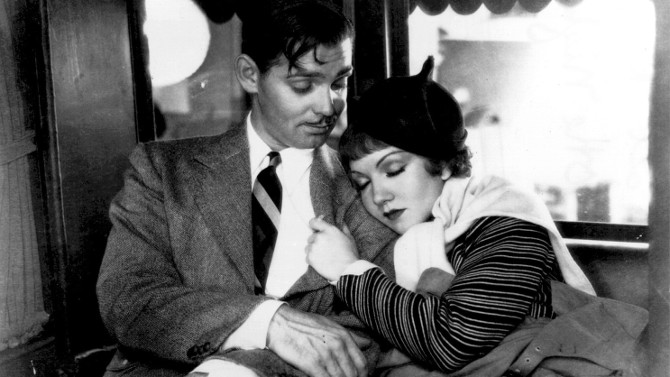
One Night To Remember
It Happened One NightMay 5, 2020It Happened One Night. . . what, you must be wondering? Well, on February 27th, 1935, at the 7th Academy Awards, the aforementioned film became the first ever to win the so-called ‘Big Five’ – Best Picture, Best Director (Frank Capra – his first of three wins for this category in the decade), Best Actor (Clark Gable), Best Actress (Claudette Colbert), and Best Screenplay – in this case, Adapted (Robert Riskin – based on the short story “Night Bus”). . . a rare feat that has only been replicated twice more (with 1975's One Flew Over the Cuckoo’s Nest and 1991's The Silence of the Lambs). Often referred to as the first great romantic comedy as well as the first screwball comedy, all of this success and glory was not guaranteed. Capra, a director at Columbia Studios. . . a name that, at the time, equated to ‘Poverty Row’, was not known as a major studio.
-
1969: A Great Year for Westerns
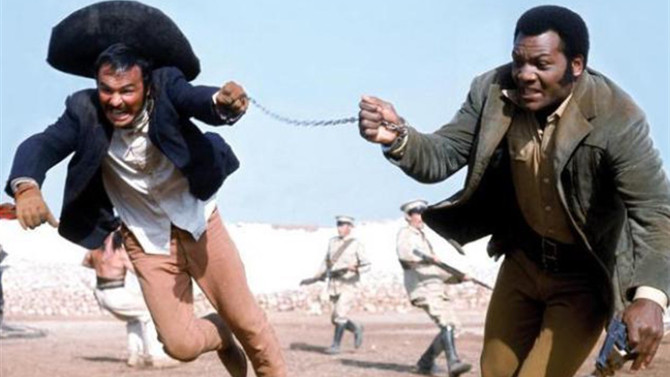
100 RiflesApril 12, 2020Often considered the best year for westerns (which is saying something), 1969 brought forth a wide array of spectacular and dynamic films (ranging from traditional to more modern style fare) – Butch Cassidy and the Sundance Kid, True Grit, The Wild Bunch, The Undefeated, Paint Your Wagon, Mackenna’s Gold, Support Your Local Sheriff!. . . the list goes on and on. Also add 100 Rifles, co-adapted and directed by Tom Gries (from the 1966 novel The Californio), to that illustrious list. Set in 1912, the narrative brings together three intersecting storylines in a rather engaging way: a beautiful young woman, Sarita (Raquel Welch), is forced to hang from her father’s legs as he is being hung (helping him die a little bit quicker); a half-Yaqui, half Alabaman robber, Joe Herrera (Burt Reynolds), hides out somewhere in Mexico (after having just stolen six thousand dollars from an American bank), while an African American officer, Lyedecker (Jim Brown), is on the hunt for this slippery fellow.