 Films That Matter
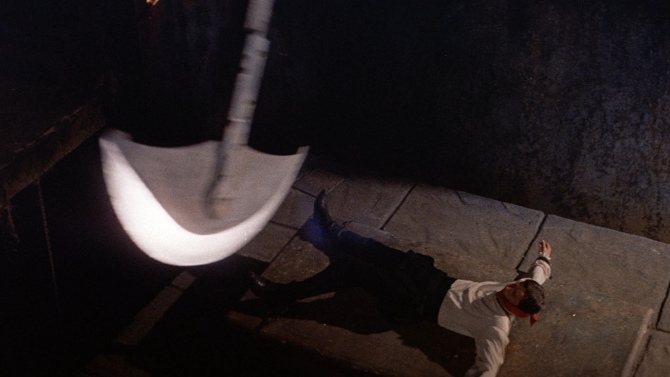
Pit Stop
After Roger Corman’s major success with House of Usher (1960), he promptly turned to adapting another Edgar Allan Poe story to start a franchise of sorts, with The Pit and the Pendulum (1961) being an even bigger win... with it making over two million dollars on a modest budget of only three hundred thousand. Getting Vincent Price (House of Wax; Laura) back after House of Usher’s critical and commercial winnings, this time he plays Nicholas Medina, a tortured soul living in a tomb of a castle with his servants after his gorgeous wife Elizabeth (Barbara Steele – Black Sunday; The Horrible Dr. Hichcock) has seemingly died of a massive heart attack brought on by fright. Feeling as if he is truly cursed, he resides in the same place that his sadistic Spanish Inquisition father once tortured his victims, where his mother and uncle died, and now where his wife has met her untimely end. It has become so bad that even Nicholas’ sister Catherine (Luana Anders) has returned home to try and ease his sorrows.
-

Christmas Follyday
Christmas HolidayDecember 13, 2020If you’ve delved into the world of film noir, you’ve likely seen a number of unusual ones. . . some may be set in other countries, or in a winter wonderland (a far cry from the expected asphalt jungle that is Los Angeles), even a nuclear bomb can be found in a mid 50s example. . . yet one set during the holiday season? That’s right, 1944's Christmas Holiday, directed by the great Robert Siodmak (Phantom Lady; Criss Cross), might mislead a few with its title (but more on that later). A vehicle for two very unexpected stars for this type of picture, Deanna Durbin (a name perhaps less known today), was a child actor turned girl next door who is often credited with helping save Universal Studios during the Great Depression. Close to bankruptcy, the teenage star took the world by storm, her musical numbers a massive draw in features like Three Smart Girls (at the age of only 14) and One Hundred Men and a Girl, it all leading to an Academy Juvenile Award in 1938. Her first role in which she attempted to break out of this child-like ingenue typecasting, you might be able to guess that there were many who were shocked and unimpressed by this new Durbin.
-
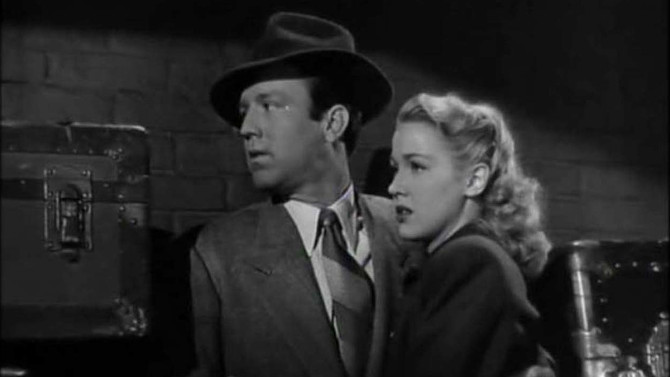
Desperately Seeking Steve
DesperateNovember 29, 2020Sometimes you just can’t catch a break. As if fate itself is against you, the dominoes fall, one at a time, each bringing with it another problem that places you in a further bind. Increasingly more Desperate (1947), you have to measure every step appropriately, for the tagline dramatically suggests, “MURDER at any moment! SUSPENSE. . . in every step!!!”. A film noir directed by Anthony Mann (he is also co-credited for the story along with Dorothy Atlas), our unlucky man is Steve Randall (Steve Brodie), a vet who has just returned from World War 2. Though he has married and found a job (as a truck driver), the next domino falls when a wily criminal gang, led by Walt Radak (Raymond Burr – yes, Perry Mason himself), reaches out to him for his driving skills and giant vehicle (on his anniversary, no less).
-
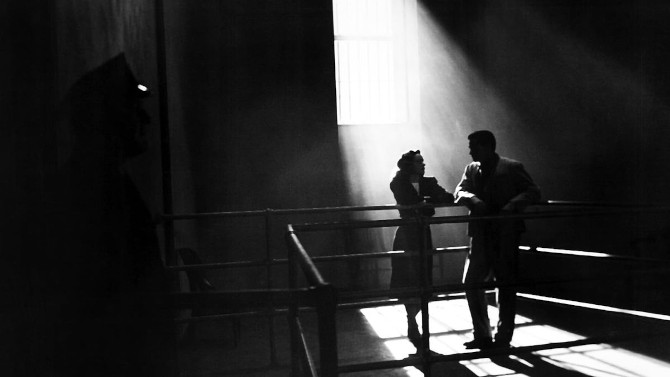
(Un)luck Be a Lady Tonight
Phantom LadyNovember 26, 2020A man, scorned by his ungrateful wife on their anniversary (he had front row tickets to a well reviewed live show), buries his head in alcohol at the local bar, only to stumble into a mysterious thirty-something woman in an equally sour mood (she does have quite a fabulous hat on though). Deciding to go to the show together (with the caveat that they are not to divulge their names to each other), it is a wonderful evening that buoys their spirits a bit. A seemingly serendipitous love story. . . the only problem, said man returns home to find three detectives in his living room waiting for him, as his wife has been strangled to death by some necktie wielding maniac. The introduction to the 1944 film noir crime drama Phantom Lady, directed by Robert Siodmak (and based on a Cornell Woolrich novel of the same name – under his pseudonym William Irish), Scott Henderson (Alan Curtis) is the unlucky chap mentioned above. His only alibi. . . the unknown woman, who will be so elusive that he will start to wonder if he simply imagined her (it doesn’t help that he cannot remember the woman in finer detail since learning of his wife’s murder).
-
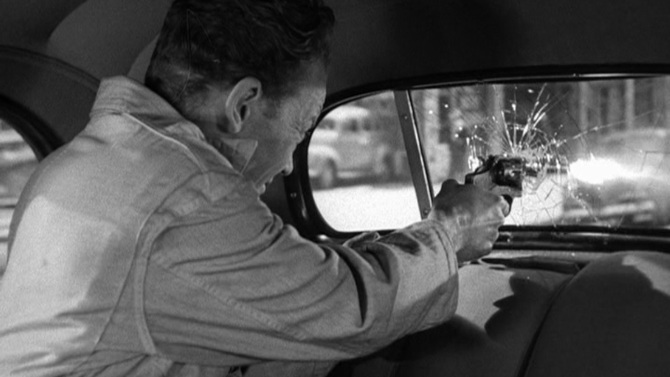
Blunt Force Trauma
Armored Car RobberyNovember 22, 2020As blunt as its title, Armored Car Robbery (1950) is fast-paced, intense, and to the point, a ninety-seven minute film noir (and one of the first heist movies) that brings us into an intricately planned robbery taking place in the City of Angels. Directed by Richard Fleischer (Soylent Green), the central crime takes place outside of Wrigley Field, so you might think the film maker has transported us to “Chicago, Chicago that toddling town, Chicago, Chicago I will show you around”, yet, don’t let the name confuse you. . . there was a second Wrigley that housed minor league teams until 1967 in Los Angeles. Entering the world of criminal mastermind Dave Purvis (William Talman), a man who has already pulled one impressive armored car robbery, every single moment of this venture is his plan.
-
Unchartered Terrain
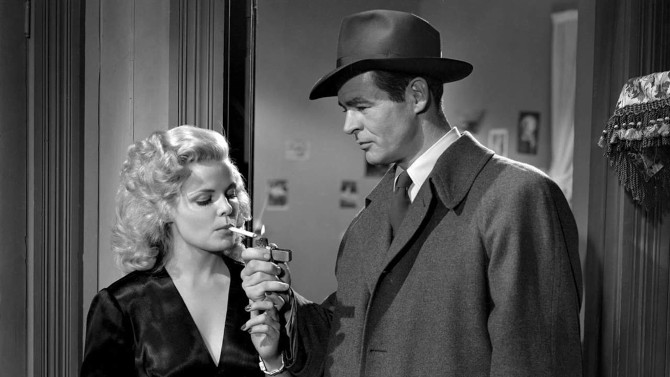
On Dangerous GroundNovember 16, 2020A film noir that flips the script (transforming into something very different in the second act), Nicholas Ray’s On Dangerous Ground (1951), written by A.I. Bezzerides (Kiss Me Deadly), follows the director’s penchant for looking at tortured, lonely individuals (think In a Lonely Place; Rebel Without a Cause), our main figure initially placed against the backdrop of a busy metropolis. Jim Wilson (Robert Ryan) is a hardened police officer on the beat, a man who is as serious as cyanide, as lonely as the night, as cynical as, well. . . a cop. Surrounded by lowlifes, dangerous dames, and violent criminals, sadly, it is the only thing he has seen for years, twisting his spirit into a near inhuman, Guantanamo Bay-like level of hatred (physical abuse is his first step in getting answers) . . . all this has him closing in on a breakdown.
-
Sideshow
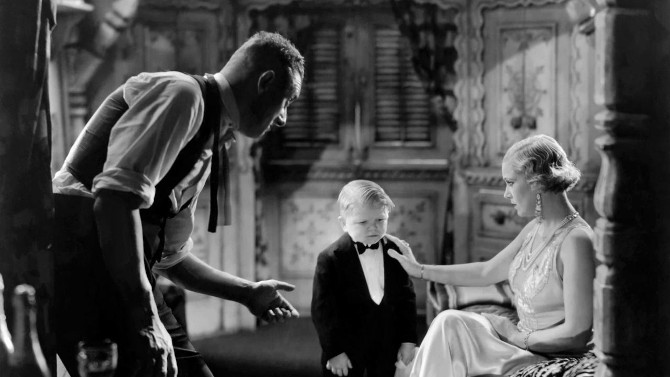
FreaksOctober 23, 2020One of the most infamous horror films of all-time, 1932's Freaks can arguably be called the most daunting watch of the pre-Code era. Transporting the viewer inside the private part of the very public lives of a Great Depression era traveling circus, the film is populated by only a few professional actors, most of the cast featuring sideshow performers with real disabilities. So controversial was it that negative test screenings forced the MGM studio execs to edit out some of its more disturbing elements, chopping twenty-six minutes of its (at that time) ninety minute runtime – the original cut has sadly been lost. Further adding to its dark mystique, the picture’s director, Tod Browning, fresh off of the success of his gargantuan hit of the previous year, Dracula, was able to choose the project he wanted (and he, in retrospect, made the wrong choice with this unusual horror drama with romantic tinges). So repulsed were some critics, sections of America (and the world), as well as Hollywood elites, that it brought forth the end of his career at the prime age of fifty-two.